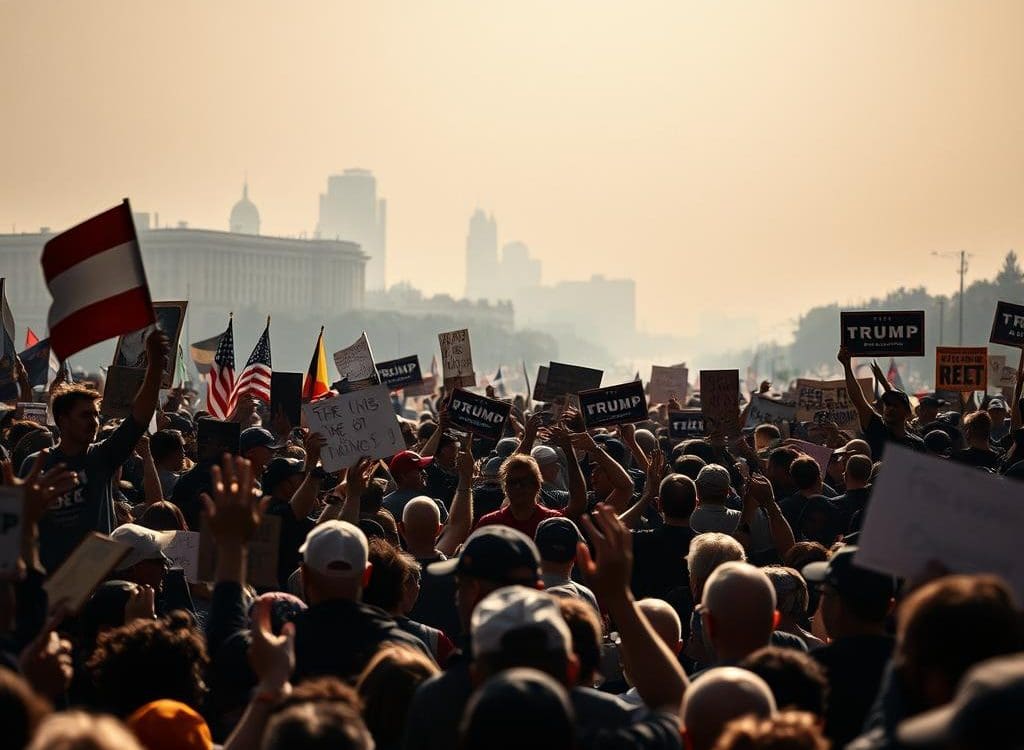
Why Are We So Divided? The Truth About Political Polarization
Did you know that more Americans now hold strong conservative or liberal views? This number has doubled from 10% in 1994 to 21% today. This change shows how our political views have become more fixed, making it hard to find common ground.
For example, 92% of Republicans are more conservative than the median Democrat. On the other side, 94% of Democrats are more liberal than the median Republican. This division has made 43% of Republicans and 38% of Democrats view the other party unfavorably. This has been growing, starting in the 1990s.
This division affects how we talk about politics and makes it hard to work together. It makes us focus more on our differences than our similarities.
The left vs right divide is complex. Many of us want to live with people who share our beliefs. For instance, 66% of consistent conservatives and 77% of consistent liberals want neighbors who think like them. Yet, despite some common ground on issues like abortion and gun control, we often see more division than there is.
In this first section, I want to explain the deep roots of political polarization. I’ll look at its history, how it affects society, and the role of dislike between parties.
Key Takeaways
- Political polarization in the U.S. has led to a doubling of consistent conservative or liberal opinions from 1994.
- Most Republicans and Democrats are significantly ideologically separated, with 92% and 94% respectively positioned away from the median of the opposing party.
- Emotional dislike for the opposite political party, known as affective polarization, is on the rise.
- A large majority prefer living in politically uniform communities—66% of conservatives and 77% of liberals.
- Despite perceived ideological divisions, substantial policy overlap exists between American voters.
- The media has exacerbated affective polarization, which is more common among older Americans who watch traditional news.
Understanding the Roots of Political Polarization
The roots of political polarization in the United States go back to key historical events and changes in society. It’s important to understand this history to see how we got to where we are today. The 1950s saw a big change, with less difference between the two main parties. Barry Goldwater’s 1964 campaign called for clearer choices, starting the path to today’s divisions.
Historical Context of American Political Divisions
The 1980s saw a shift back to more extreme views. Tax cuts for the rich led to lower wages and more division. This made people choose sides more strongly. Donald Trump’s 2016 win made things even worse, with his words causing more hate between groups.
The Role of Ideological Siloing
Ideological siloing is a big part of the problem. People now only look at information that agrees with them, creating echo chambers. This makes it hard to understand and care for other views. Social media has made this problem worse, changing how we talk and vote.
Impact of the Two-Party System on Voter Perceptions
The two-party system shapes how voters see politics. As politics has become more about culture and values, things have gotten very divided. There are fewer moderate voices in Congress now, showing how far apart we’ve gotten. This makes many think the U.S. is not a true democracy, as studies and surveys show.
The Influence of Elections on Divisive Sentiments
Elections make people more loyal to their political parties in the United States. More and more, people see themselves as part of a party, not just voting for a candidate. A big 79% of Americans think politics is negative, using words like “divisive” and “polarized.”
Hyper-partisanship, or strong party loyalty, makes politics more tense. It shapes our political world and makes people angrier at each other.
How Elections Fuel Partisan Identity
Elections make divisions worse. People who are really into politics often feel tired and angry. This shows how strong feelings can make us see ourselves as part of a group.
Candidates focus on issues that divide people to show they’re on the right side. This makes voters stick to their parties even more.
The Consequences of Hyper-Partisanship on Policy Making
Hyper-partisanship really slows down making laws. It makes it hard for people to work together. Senators focus more on divisive topics when elections are near.
This makes policy-making very tough. Politics is a big stress for 40% of Americans. Open talks are less common, with 78% saying debates are less fact-based and 84% saying they’re less respectful.
Hyper-partisanship not only divides us but also stops us from making good laws in America.
Political Polarization and Social Issues
Exploring how politics and social issues connect shows us key factors. Emotional ties to these issues can make divisions worse. This pushes people into radical camps, leaving moderates feeling left out.
Emotional and Identity-Based Factors Driving Hostility
Hostility often comes from deep emotional connections to social issues. Both sides use these issues to turn opponents into enemies. Politicians use real problems or create fears, like the “invading army” of refugees.
This makes it hard to have calm talks. Emotional polarization grows, making finding common ground tough.
Population Trends in Ideological Consistency
More people are sticking to their party’s views. This makes the gap between them bigger. It seems like agreeing with others is harder, as more people take extreme stands.
Shared Policy Preferences Among Citizens
Even with more division, many people agree on some policies. For example, most Republicans and Democrats want racial equality. But, many also dislike the opposing party.
This shows that public opinion is complex. Similar views are often hidden by loud, divisive talk.
The Effects of Social Media on Public Discourse
Social media’s role in politics is huge. It makes divisions worse by creating echo chambers. People see fewer different views, making their opinions stronger.
Emotional reactions to issues are common online. This leads to more misunderstandings and anger.
Conclusion
In this summary, I look at the deep divisions in American society today. Understanding these divisions is key to coming together. The history and current state of our politics show how extreme views can spread.
Democracy faces big challenges, like the influence of a few loud voices on social media. Over 73% of political tweets come from a small group. This makes it hard for the majority to be heard.
Initiatives like the Truth, Racial Healing & Transformation movement aim to change this. They focus on real understanding, not just reconciliation. By sharing stories and fighting misinformation, we can reduce polarization’s harm.
Research, like Felipe De Brigard’s work on emotional reappraisal, offers hope. It shows we can build bridges across our differences. Working towards bipartisanship and dialogue is not just a dream; it’s necessary for a healthy democracy.
To heal our society, we must understand and tackle these complex issues. This will help us move forward together, overcoming our deep divisions.

Leave a Reply
You must be logged in to post a comment.