Are We All Addicted? The Dark Side of Social Media
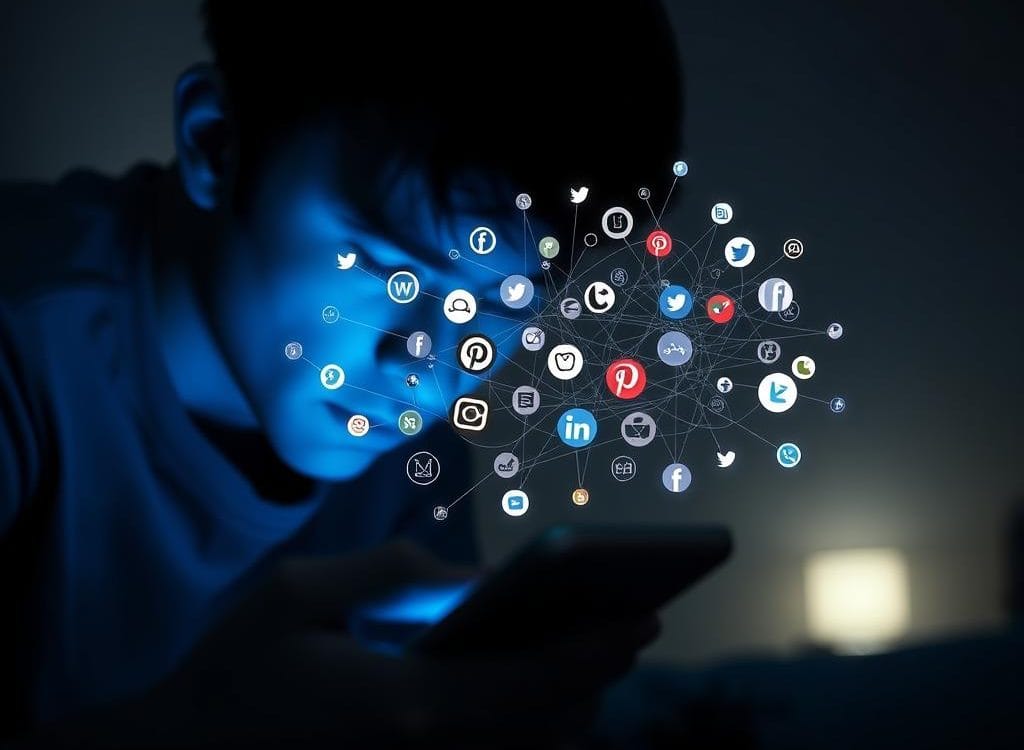
Did you know 10% of the U.S. population struggles with social media addiction? This fact shows a big problem in our digital world. Social media changes how we interact and see ourselves. It uses tricks like notifications and likes to keep us hooked.
Young people are hit hard by social media’s effects on mental health. We often feel we must stay online to avoid missing out. This article will look at how social media can make us feel bad about ourselves and lonely.
We’ll also talk about how social media addiction affects our feelings and society. Let’s explore the dark side of social media together.
Key Takeaways
- Social media addiction affects an estimated 10% of the U.S. population.
- Fear of missing out (FOMO) drives excessive online engagement.
- Online interactions can lead to feelings of disconnection and inadequacy.
- Social media platforms are designed to be addictive through features like notifications and likes.
- 27% of children spending over three hours a day on social media report poor mental health.
- Gender differences exist, with women being more likely to experience social media addiction.
The Rising Concern: The Impact of Social Media on Mental Health
Social media has changed how we connect and talk to each other. But it also raises big worries about mental health, mainly for young people. It’s scary that these platforms, meant to bring us together, can make us feel alone, anxious, and depressed. Many studies show a link between social media and mental health problems, showing we need to be aware.
Understanding the Connection Between Social Media Use and Mental Health Issues
Using social media a lot can harm our mental health. Studies show that too much time on these sites is linked to more depression and anxiety in teens. The need to look perfect online can lead to body image issues. Young women, in particular, feel more anxious because of these online pressures.
Cyberbullying on these sites makes things even worse. It can make people feel bad about themselves and cause emotional pain.
Statistics Reflecting the Mental Health Crisis Among Youth
Numbers show a worrying trend in youth mental health. About 36% of young people show signs of depression, and 23% have anxiety. This is often because of their social media use. Canadian youth spend over two hours a day on social media, a trend likely seen in the U.S. too.
This data shows we need to act fast. Cutting down on social media can help improve sleep and mental health. It shows we can make a difference.
Social Media Addiction: A Global Phenomenon
Understanding social media addiction means looking at its definition and what makes it problematic. It’s about spending too much time on social media, which can hurt other parts of life. This addiction is shown by always checking notifications and ignoring real-life tasks.
As time goes on, not being able to use social media can cause feelings of restlessness or anxiety. This shows how addictive it can be.
Defining Social Media Addiction and Problematic Usage
Social media addiction shows up in many ways, like preferring online chats over face-to-face ones. Research shows that people’s moods can change based on what happens online. Many users know they should cut down but can’t.
This addiction can make people pull away from friends and family. It can damage real-life relationships.
Research Findings on Social Media Addiction and Its Effects
Studies worldwide have shown the harm of social media addiction, mainly in teens and young adults. A big number of users show signs of addiction, which harms their mental and physical health. It’s linked to more depression, anxiety, and loneliness.
It also causes physical problems like eye strain and sleep issues. The fear of missing out (FOMO) and comparing oneself to others (SCO) make people stay online too much. This leads to more stress and lower self-esteem.
Consequences of Social Media Addiction
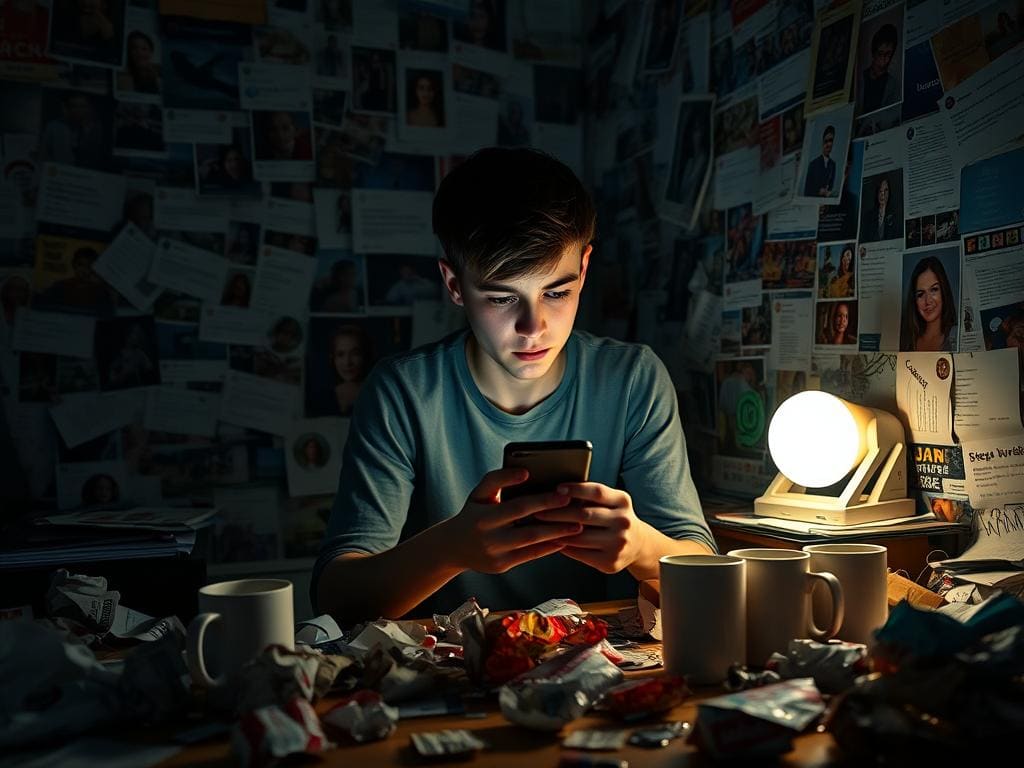
Social media has made it easier to connect with others but also brings problems. It affects our mental health, mainly for the young. Seeing perfect lives online makes us feel bad about ourselves and lonely.
This feeling is called “Facebook depression.” It also makes us worry about missing out (FoMO). Studies show that too much social media can make teens anxious and depressed.
Emotional and Psychological Impacts of Excessive Use
Too much social media can lower our self-esteem, more so for teens. Seeing perfect images and lifestyles online hurts our body image. It also makes us more vulnerable to bullying and comparing ourselves to others.
Teens often choose online friends over real-life ones, hurting their relationships. Research links too much social media to depression and anxiety. It also messes with our sleep, making us tired and less productive.
The Role of Dopamine and the Brain’s Reward System
There’s a science behind why we get hooked on social media. Every like, comment, or share gives us dopamine, making us feel good. This makes us want more, leading to addiction.
Young people seek approval online, which can harm them. Research shows a link between social media addiction and depression in 18- to 25-year-olds. Many spend hours a day on social media, showing how hard it is to stop.
Conclusion
Social media addiction has many effects on our mental health. It’s important to find ways to deal with it. About 5 to 10% of Americans are addicted to social media, which is a big problem.
Children who spend over three hours a day on social media often show poor mental health. This shows we need to act fast. We must teach them and ourselves to use social media wisely.
Reducing screen time and making real-life connections can help. It’s also key to understand how social media can make us feel lonely and depressed. It can even affect our brains like drugs do.
We need more research and support to fight this issue. We should promote better social media habits and mental health strategies. Small steps can lead to big changes in how we use technology.

Leave a Reply
You must be logged in to post a comment.