Will Robots Take Over the Workforce?
Studies show that adding one robot for every 1,000 workers in the U.S. can lower wages by 0.42%. It also leads to a 0.2 percentage point drop in employment. This highlights a big debate: how will automation affect jobs? As robots enter more sectors, we face questions about job loss, career value, and what work means.
Automation is good at doing the same thing over and over. But it can’t match human creativity and emotional smarts. This is key in many jobs.
Technology has grown fast, changing jobs and pay, mainly for those without college degrees, from 1980 on. I’ll look into trends, expert views, and data to see if robots will rule our jobs. Understanding AI and robotics is vital for seeing the future of work.
Key Takeaways
- The introduction of robots often leads to a decline in wages and job opportunities.
- Automation typically affects low-skilled workers more than high-skilled workers.
- Robots excel in repetitive tasks but struggle in unstructured or creative environments.
- The automotive industry demonstrates the highest adoption of robots.
- COVID-19 has accelerated the trend towards increased automation.
- Regions like the Rust Belt exhibit higher robot adoption rates, impacting local employment.
- Future projections warn of significant job losses and wage stagnation due to rapid automation.
The Rise of Robot Workers
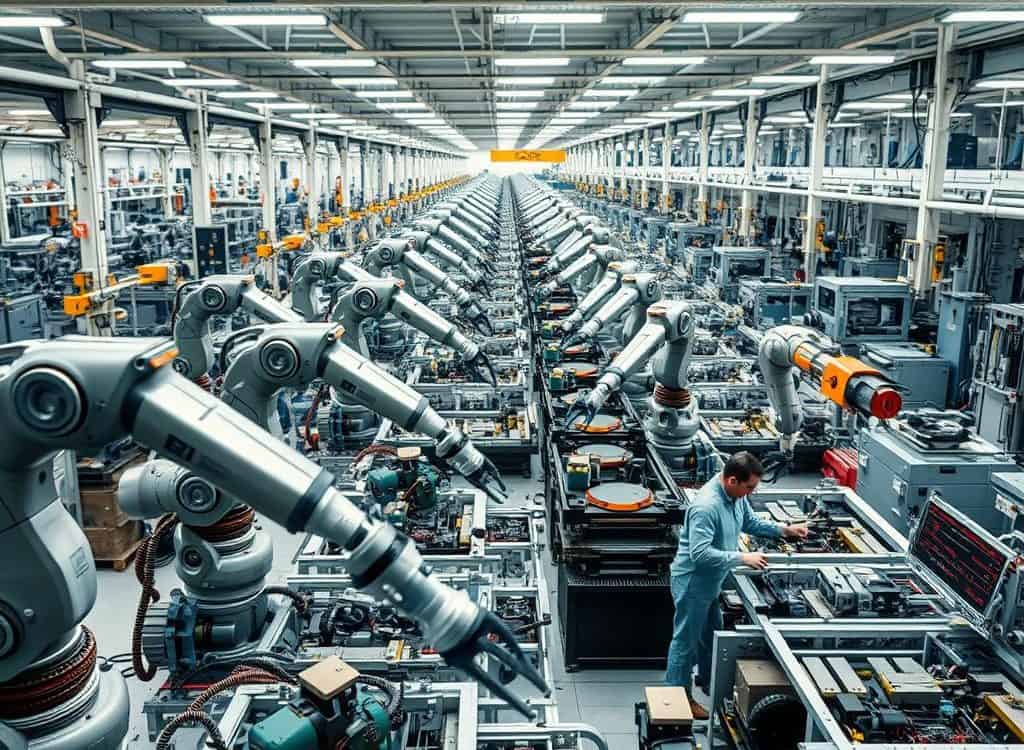
Robot workers are changing how we see work and productivity. Automation is making tasks more efficient in many fields. This includes manufacturing, logistics, and even customer service.
Understanding Automation in the Workplace
Automation is more than just replacing people. It makes work better and easier. For example, e-commerce warehouses use many robots to help with tasks.
Amazon uses over 100,000 robots to sort and move orders. Studies show robots can make warehouses run smoother. This lets businesses keep up performance with fewer people.
Statistics on Job Displacement and Career Value
Job loss due to automation is a big worry. Experts think about 20 million jobs could go. This will hit low- and middle-skilled jobs the hardest.
Adding one robot for every 1,000 workers can lower a job’s value by thousands. From 2004 to 2008, this meant a loss of $3,900. From 2008 to 2016, it was $2,480.
Impact on Low-Skilled vs. High-Skilled Workers
Automation affects workers differently. Low-skilled workers find it hard to find new jobs. But high-skilled workers can adapt better.
Up to 80% of U.S. workers might see big changes in their jobs. Nearly 19% could lose half or more of their job to AI. Understanding these changes is key for the future of work.
How Automation Affects Job Prospects
The job market is changing fast because of automation. New tech, like AI and robotics, might not always create new jobs. Some jobs are more likely to be replaced, and knowing this can help us plan for the future.
Job Displacement Trends and Future Predictions
Many jobs could be lost due to automation, experts warn. Jobs like driving cars, working in retail, and in healthcare might be at risk. People without advanced education or special skills will find it hard to keep up.
But, those with higher education might find new chances. This is true in areas where humans and machines work together.
Industries Most Likely to Be Affected by Automation
Automation will hit different industries hard, but manufacturing, retail, and transport are most at risk. These jobs often involve manual work, making them easy targets for automation. Yet, this also brings new job chances, like in robotics and programming.
The need for skills in data analysis and AI is growing. This shows how important it is to keep learning and adapting to stay relevant in the job market.

Long-Term Implications of Robotics on Employment
Robots and automation are changing jobs in many fields. This change could make economic gaps wider. It seems that jobs for those with higher skills are growing, but not for everyone.
Automation’s Influence on Economic Inequality
Robots make things more efficient, but not everyone gets a job. Some jobs, like in AI, are growing fast. But, jobs that need less skill are at risk of being taken over by robots.
This makes the gap between rich and poor bigger. People who lose their jobs might not get to learn new skills or find new work.
Political Consequences of Job Loss Due to Robots
Job losses from robots can change who votes for whom. For example, losing jobs in factories can make people support new, radical leaders. This shows that people are unhappy with the job market.
As more people lose their jobs, they might look for politicians who promise to fix things. The talk in politics is now about jobs and the economy.
Future Job Creation vs. Job Lost Due to Automation
Even though robots might take some jobs, they also create new ones. Jobs like teaching robots, analyzing data, and checking quality are new. These jobs need people with new skills.
This is a big challenge. We need to make sure there are enough new jobs for everyone. Businesses need workers who can handle new technology.
Conclusion
Looking at the future of work, we see big changes coming. Robots and jobs will play a big role in this. While they bring challenges, like less meaningful work, they also offer chances for growth.
From 2005 to 2022, robot use went up by 389%. This shows we need to adapt quickly to new job trends. It’s important to find ways to make work meaningful again.
Studies show that robots can make jobs less fulfilling, mainly for those doing simple tasks. But, robots can also make work more efficient. This could lead to more jobs and higher pay.
It’s key for workers to keep learning to stay ahead. This way, they can take advantage of new opportunities. Robots can help make work more productive and open up new career paths.
The future of work will be shaped by how we handle robots and automation. If we focus on training and upskilling, we can make the most of these changes. By embracing new technology and education, we can find good jobs in this new world.

Leave a Reply
You must be logged in to post a comment.