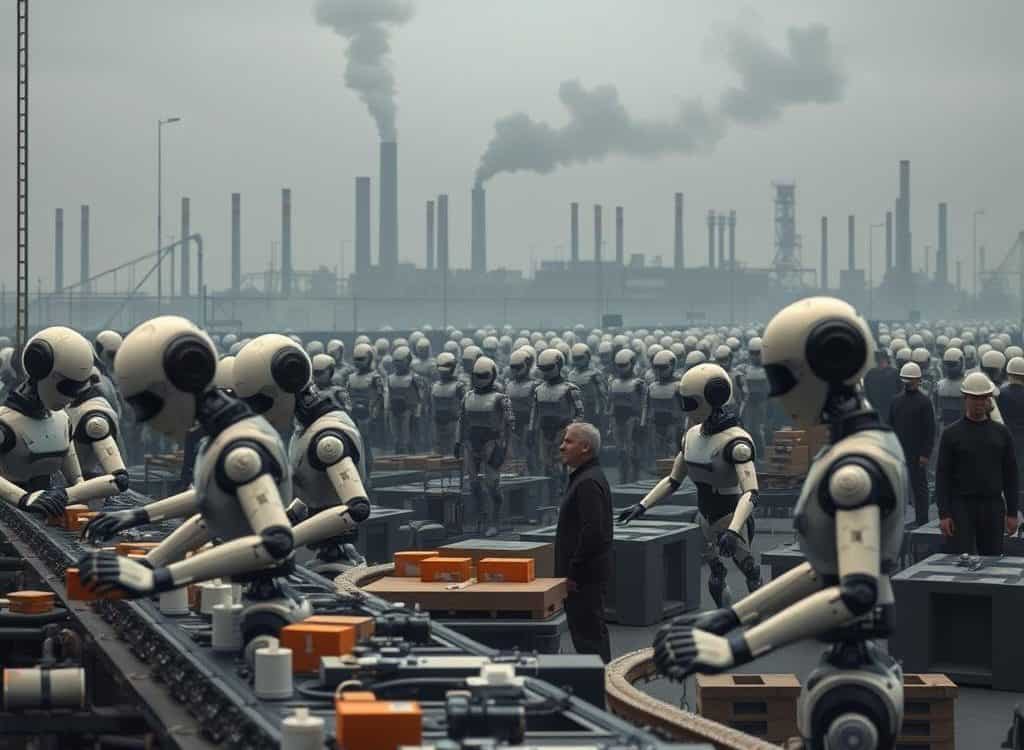
Will AI Take Your Job? The Future of Employment
Did you know that by 2030, AI and automation might take 85 million jobs? But, they could also create 97 million new ones. This mix shows the big debate about AI’s role in work. As we explore AI’s power, we see its double effect. It might replace some jobs, but it also opens up new ones.
We need to understand how AI is changing our jobs. It’s not just about losing jobs, but also about gaining new ones. Knowing this is key for success in the AI world.
Key Takeaways
- The World Economic Forum predicts 85 million job displacements by 2030 but also 97 million new jobs.
- McKinsey reports that up to 45% of work activities could be automated.
- AI is set to augment professions like healthcare and law by assisting with data analysis and document summarization.
- High-demand roles are emerging, including machine learning engineers and AI ethics specialists.
- Human expertise will be essential in training and refining AI systems, leading to new job opportunities.
- New job categories, such as AI and cybersecurity researchers, are on the rise.
Understanding the Impact of AI on Employment
AI technology has changed the job market a lot. It brings both challenges and chances. Many people worry about how AI affects jobs. As AI grows, it changes how we work and interact with different industries.
The good news is that AI could create many new jobs. Looking back helps us understand this big change.
The Transformative Power of AI
AI has already changed many areas, not just by automating jobs. It has also created new roles. By 2030, AI could lead to 20 to 50 million new jobs worldwide.
New jobs like AI Trainers, Data Analysts, and AI Ethics Specialists are emerging. It’s key to learn new tech skills to keep up with these changes.
AI’s Contribution to Global GDP Growth
AI’s financial impact is also significant. It’s expected to add about $15.7 trillion to the global GDP by 2030. This shows AI’s double effect on jobs and the economy.
While AI might replace some jobs, it could also create 133 million new ones by 2025. This means AI could actually boost economic growth and productivity.
AI Replacing Jobs: The Automation vs. Augmentation Debate
The talk about automation and AI jobs often focuses on jobs and technology. Automation mainly targets simple tasks, causing big changes in employment. Jobs like data entry, bank tellers, and factory workers are at high risk of being replaced.
Looking into this debate, it’s important to see both sides. This will help us understand how the workforce can adjust.
Automation and Its Effect on Routine Tasks
Automation is moving fast, aiming to get rid of many repetitive jobs. Retail, manufacturing, and finance are leading in this area. Jobs like cashiers and telemarketers are at risk because they’re simple and predictable.
About 40% of workers might need new skills because of AI. It’s clear we need to act fast to deal with these changes.
How AI Can Augment Human Skills
But there’s a bright side to AI jobs augmentation. It’s creating new chances for jobs that need creativity and problem-solving. Fields like healthcare, education, and engineering are seeing more demand for AI experts and cybersecurity analysts.
AI helps make decisions better and work more efficient. For example, in legal research and marketing, AI makes tasks easier. This lets professionals do more important work. It also makes workplaces safer and encourages creativity and learning.

The Future of Work in an AI-Dominated Landscape
AI is changing many industries, bringing both job loss and new opportunities. About 30% of workers worldwide fear losing their jobs to AI soon. It’s important for everyone to understand this change.
Potential Job Displacement Across Sectors
Jobs in manufacturing, retail, and logistics face big challenges. Robots might replace up to 20 million manufacturing jobs by 2030. In the U.S., 45 million jobs could also be at risk by then.
British Telecom plans to use AI to replace 10,000 staff in seven years. In India, 74% of workers worry about AI replacing them. This shows job loss is a big worry everywhere.
New Job Opportunities Created by AI
Even with job loss, new roles are being created. The World Economic Forum says 85 million jobs might be lost by 2025. But, 97 million new jobs could come from AI and automation.
In healthcare, new jobs like telehealth coordinators and data managers are needed. These roles help with AI solutions and reduce admin tasks. Manufacturing is also changing, needing skills in robotics and AI management.
Upskilling is key, as skills like critical thinking and problem-solving are more valuable. This is important in the changing job market.
Conclusion
As we explore the AI future job market, it’s key to understand what we’ve learned. AI might change jobs, but it also brings new chances to shape work. By 2030, AI could add $13 trillion to the world’s economy, boosting GDP a lot.
But, about 85 million jobs could be lost by 2025. This means we need a smart plan to help workers keep up.
Getting ready for AI is important for everyone. It’s not just about employees but also companies and governments. We need to focus on learning new skills for life.
This way, people can do well in a world where machines do more. We should also work on soft skills, like communication and teamwork. This will help us fit into new jobs that AI and machines will make, like AI ethicists and robotics techs.
In the end, working together is the key. Governments, businesses, and people must support those who lose jobs and create new ones. By seeing the good side of technology, we can make work better with AI, not just replace it.
By embracing these changes, we’re not just ready for the future. We’re also ready to benefit from an AI-driven economy.

Leave a Reply
You must be logged in to post a comment.