
Is TikTok Destroying Attention Spans?
Did you know nearly 50% of TikTok users find videos over a minute stressful? TikTok has become the most downloaded app in 2022. This raises big questions about our digital habits and their impact on our attention spans.
TikTok’s short-form content has changed how we use social media, mainly for Gen Z. They make up 67% of TikTok users. Critics say this addictive pattern leads to “TikTok Brain,” where we focus on quick entertainment instead of deep engagement.
This article will look into how TikTok affects our attention spans. We’ll see if our brains are at risk from this trend.
Key Takeaways
- Nearly half of TikTok users feel longer videos are stressful.
- Over half of Douyin users reported addiction-like symptoms.
- Attention span has noticeably decreased over recent years.
- Unpredictable rewards from TikTok’s algorithm fuel obsessive behavior.
- Content captures attention quickly but is just as quick to lose it.
- Approximately 67% of teens are active on TikTok.
The Rise of TikTok and Short-Form Content
TikTok changed the game in social media. It became famous in 2018 after merging with Musical.ly. Now, it leads in short videos. This shift has made short content very popular, with platforms like Instagram and YouTube following suit.
Evolution of Social Media Platforms
Vine was a big step towards shorter videos. Today, people want content that’s quick and easy to consume. TikTok’s success shows how much we love short, engaging videos.
It makes creating content easy for everyone. This has both good and bad sides. But it’s great for those who want information fast.
Engagement Statistics
TikTok users spend 95 minutes daily on the app. That’s a lot of time. Almost half of the videos they watch are about mental health.
This is a big deal. It shows TikTok’s influence on our lives. While I love the fun of short videos, we need to think about their impact on our minds and focus.
The Dark Side of TikTok
TikTok’s negative effects on users are clear. It’s more than just fun; it’s addictive. The app’s algorithm keeps users hooked, showing harmful content fast. This leads to a cycle of addiction, as people keep coming back for more.
The Psychological Impact on Users
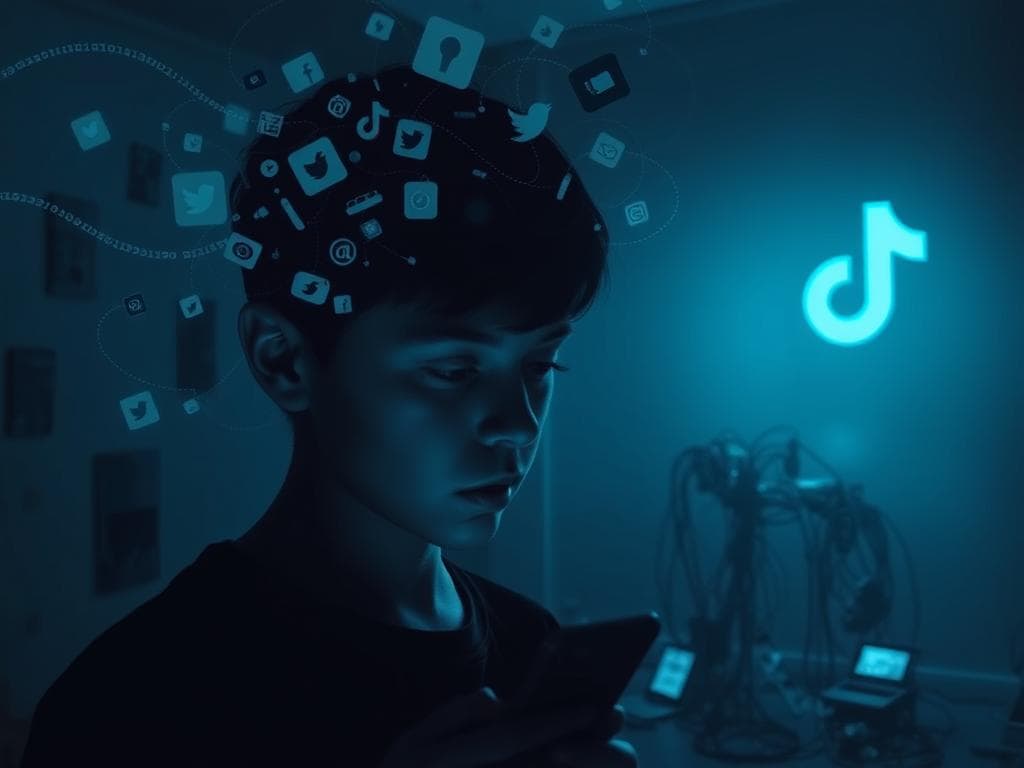
“TikTok Brain” is a real thing. Users get lost in endless videos. This makes it hard to focus on things that take longer, like studying. I’ve lost hours without even noticing.
The app’s addictive nature worries experts. It could harm our brains over time with its quick fixes.
Research on Attention Span Reduction
Research shows TikTok use can shorten attention spans. The app pushes for fast content, making it hard to focus. Creators feel the pressure to make sensational videos to get views.
This leads to a preference for quick, engaging content over deeper interactions. It makes it tough to concentrate on harder tasks, causing frustration.
Effects on Younger Generations
Younger users face even bigger challenges. They’re exposed to high-stimulation content early on. This can hurt their focus and school performance.
Users like Lauren Hemmings show how TikTok can be addictive. It’s hard to stop and focus on other tasks. This addiction could affect their development and concentration skills.
Conclusion
TikTok has changed how we enjoy entertainment, but it also affects our attention span. Its algorithm keeps users hooked for a long time. This can be tough for young minds that are just starting to learn.
With nearly half of TikTok’s 1 billion users being 10 to 29 years old, this is a big problem. Also, 63% of teenagers use the app every week. This shows how important it is to watch how much time they spend on it.
Watching too many short videos can harm our digital habits. In 2021, one in seven teens struggled with mental health. TikTok’s users often feel anxious or depressed because of social comparison.
TikTok’s addictive nature can make people feel lonely. It’s key for parents to keep an eye on how much their kids use it. This can help prevent these negative feelings.
The future of social media is uncertain, but we need to think about our mental health. We must find a balance between fun and taking care of our brains. Research will help us understand the effects of TikTok on our minds.
Being careful about what we watch can make our relationship with technology better. We should support different types of media and focus on mental health. This way, we can enjoy technology without losing ourselves in it.

Leave a Reply
You must be logged in to post a comment.