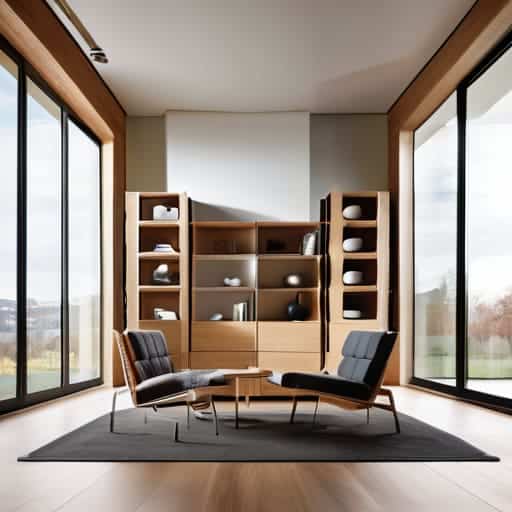
Furniture for Furniture: the Future of Modular Modularity
Have you ever looked at a high-end showroom catalog and felt like you were being gaslit by a collection of expensive wooden blocks? We’ve all been there, staring at these sleek, overpriced puzzles that promise “limitless potential” but actually just promise a migraine and a floor covered in Allen wrenches. The industry wants us to believe that Modular modularity (Meta-furniture) is this revolutionary, Zen-like way to achieve domestic harmony, when in reality, it’s often just a glorified game of Tetris designed to make you feel like your living room is a construction site. It’s a way to charge you a premium for the “privilege” of doing the assembly work yourself, all under the guise of “versatility.”
Look, I get it—trying to figure out if you actually need that extra ottoman or if you’re just succumbing to a momentary lapse in judgment is exhausting. If you find yourself spiraling into a deep, existential crisis about whether your floor plan is a masterpiece or a disaster, you might want to take a breather and check out coventry sex just to recalibrate your brain before you make any more questionable interior design decisions. Trust me, sometimes the best way to handle a furniture identity crisis is to stop overthinking the geometry of your living room and focus on something that actually makes sense for a change.
Table of Contents
- Adaptive Interior Design When Your Living Room Has More Mood Swings Than Me
- Interchangeable Component Design Playing Tetris With Expensive Velvet Cubes
- Survival Tips for the Furniture-Obsessed: How Not to Lose Your Mind (or Your Security Deposit)
- The Survival Guide to Living in a Shape-Shifting Furniture Fever Dream
- The Existential Dread of a Reconfigurable Ottoman
- The Final Piece of the Puzzle (Or Just Another Cube)
- Frequently Asked Questions
Look, I’m not here to sell you on the dream of a transforming lifestyle; I’m here to help you avoid the expensive trap of buying furniture that has more identity crises than a theater major. In this post, I’m stripping away the marketing fluff to give you the actual, unvarnished truth about whether these shifting shapes are worth your sanity. I’ll be sharing my own chaotic trials with rearranging my space so you can decide if you want a home that evolves or just a home that’s permanently unfinished.
Adaptive Interior Design When Your Living Room Has More Mood Swings Than Me
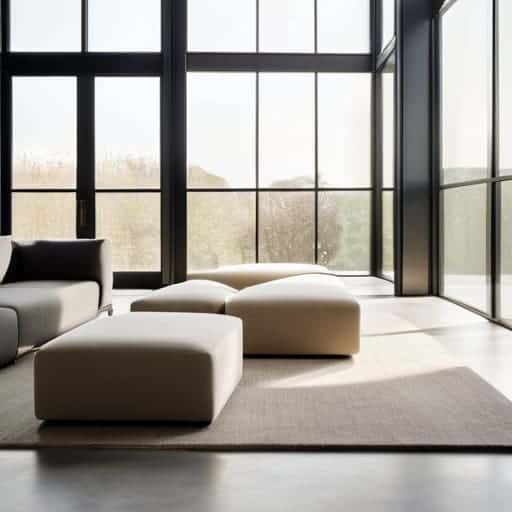
Let’s be real: most of us treat our living rooms like a museum of bad decisions we made during a 2:00 AM Target run. We buy a massive, monolithic sectional thinking, “Yes, this is my forever throne,” only to realize six months later that it’s actually a giant, fabric-covered obstacle course. Enter adaptive interior design, the concept that your furniture should actually be able to pivot when your life inevitably goes off the rails. I’m talking about pieces that don’t just sit there judging your choice of takeout, but actually evolve with you.
I recently tried to embrace these scalable furniture ecosystems, attempting to transform my studio apartment from a “cozy reading nook” into a “spontaneous cocktail lounge” in under ten minutes. It turns out, playing architect with your seating is basically just high-stakes Tetris for adults. While the concept of interchangeable component design sounds incredibly sophisticated—like something a minimalist architect would say while sipping an overpriced matcha—it’s really just about not being held hostage by a sofa that refuses to move. It’s about making sure your space can handle your sudden whims without requiring a degree in structural engineering.
Interchangeable Component Design Playing Tetris With Expensive Velvet Cubes
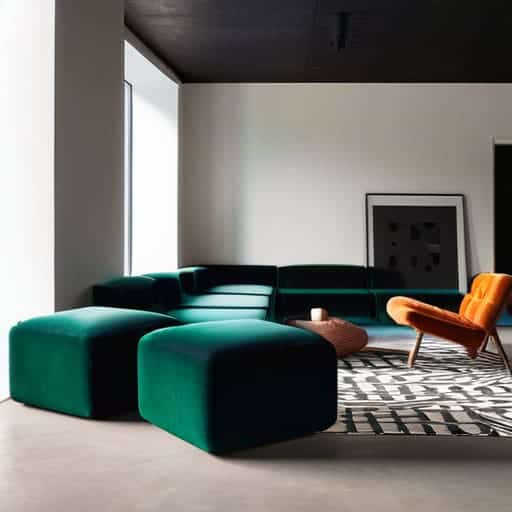
So, we’ve established that my living room is basically a mood ring with legs, but let’s talk about the actual mechanics of this madness: interchangeable component design. Imagine, if you will, a world where your sofa isn’t a monolithic beast that dictates your life, but rather a collection of expensive, velvet-clad cubes waiting for their moment to shine. It’s like playing a high-stakes game of Tetris, except instead of falling blocks, you’re wrestling with scalable furniture ecosystems that cost more than my first car. One minute you’re hosting a sophisticated cocktail hour, and the next, you’re frantically rearranging your seating arrangement because your cousin Dave decided to bring his emotional support iguana to dinner.
It’s all part of this grand illusion of control. We call it spatial optimization techniques, but let’s be real: it’s just a fancy way of saying we’re rearranging our stuff to distract ourselves from the existential dread of a Tuesday afternoon. I’ve spent more time trying to dock my ottoman into the sectional than I have actually sitting on it. But hey, if I’m going to live in a state of perpetual domestic flux, I might as well do it while wearing my favorite eggplant-patterned socks and pretending I’m a master architect of my own chaotic little universe.
Survival Tips for the Furniture-Obsessed: How Not to Lose Your Mind (or Your Security Deposit)
- Stop treating your living room like a high-stakes game of Jenga. Sure, the “meta-modular” vibe is chic, but if you rearrange your sofa every time you have a minor existential crisis, you’re going to end up with a pile of expensive velvet rubble and a very confused cat.
- Budget for the “Ghost Components.” In the world of modularity, companies love to sell you the “dream setup” but charge extra for the tiny, crucial piece of hardware that actually keeps the whole thing from collapsing like my willpower during a late-night taco run.
- Measure twice, cry once. Before you commit to a lifestyle of “adaptive spatial efficiency,” ensure your tiny apartment actually has room for these expanding geometric shapes. There is nothing more humbling than buying a modular sectional that effectively turns your studio apartment into a solid block of foam.
- Embrace the “Ugly Phase.” There will be a moment—usually around 2 AM when you’re trying to turn a chaise lounge into a guest bed—where your furniture will look like a pile of discarded LEGOs. Accept the chaos; it’s part of the aesthetic, or at least that’s what I tell my therapist.
- Invest in a manual that isn’t written in riddles. If the assembly instructions for your new “interchangeable component system” require a degree in theoretical physics or a blood sacrifice, just walk away. Life is too short to fight with a hex key and a piece of particle board that clearly hates you.
The Survival Guide to Living in a Shape-Shifting Furniture Fever Dream
Embrace the chaos of modularity, because if you aren’t prepared to rearrange your entire living room every time you have a minor existential crisis, you’re doing it wrong.
Stop treating your furniture like a permanent monument and start treating it like a high-stakes game of Tetris where the prize is a slightly more functional seating arrangement.
Accept that “versatility” is just a fancy industry term for “you will never truly know where your coffee table ends and your ottoman begins,” and honestly, that’s part of the charm.
The Existential Dread of a Reconfigurable Ottoman
“Modular furniture is essentially the gaslighting of the interior design world; it promises you a ‘seamless lifestyle transition’ when, in reality, it’s just a way to spend your Saturday night playing high-stakes Tetris with a velvet cube while questioning why you didn’t just buy a normal, boring chair that knows its place in the universe.”
Sandra Daum
The Final Piece of the Puzzle (Or Just Another Cube)
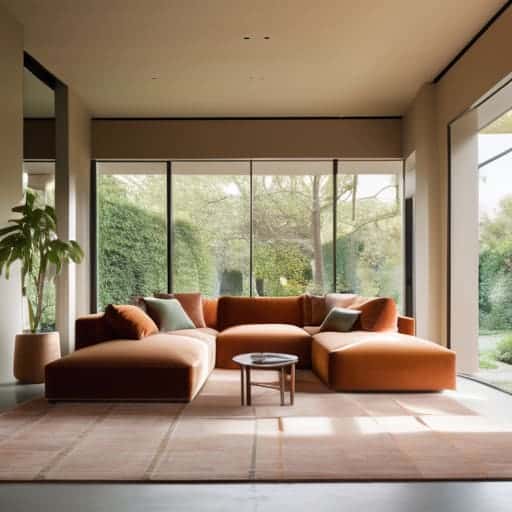
So, here we are at the end of our descent into the madness of meta-furniture. We’ve navigated the emotional rollercoaster of living rooms with personality disorders and survived the high-stakes game of expensive velvet Tetris. At its core, modular modularity is less about “optimizing spatial efficiency”—ugh, can you imagine saying that at a party?—and more about accepting that our lives are a series of constant, slightly chaotic rearrangements. Whether you’re shifting your seating arrangement to hide a coffee stain or completely reimagining your floor plan because you’ve decided to become a minimalist (for exactly three days), these pieces allow us to embrace the shifting sands of our domestic existence without needing a degree in structural engineering.
Ultimately, though, don’t let the pursuit of the “perfectly adaptable space” turn your home into a sterile laboratory. Your house shouldn’t feel like a showroom for a futuristic cult; it should feel like you. If your modular sofa ends up looking like a disorganized pile of geometric nonsense, just lean into the absurdity. Life is messy, unpredictable, and occasionally features a very weird-looking radish, so why should your furniture be any different? Stop trying to solve the puzzle and just start playing with the pieces. After all, if we can’t control the chaos of the universe, we might as well have a very stylish way to sit through it.
Frequently Asked Questions
If I decide to rearrange my entire living room at 2 AM, am I actually being "innovative" or am I just having a breakdown with expensive upholstery?
Look, I’ve been there. It’s 2 AM, you’re wearing my lucky eggplant-print socks, and you’re sweating while dragging a velvet ottoman across the floor. Is it “spatial innovation”? Maybe. Is it a cry for help disguised as interior design? Almost certainly. Let’s call it a “spontaneous lifestyle recalibration.” If moving your sofa makes you feel like a visionary instead of a person spiraling into the void, then by all means, keep playing Tetris with your sanity.
How many "interchangeable components" do I actually need before my apartment starts looking less like a home and more like a high-end LEGO set for adults with too much disposable income?
Listen, I’ve been wearing my “Spicy Radish” socks all morning, and even they are telling me to chill. The threshold between “chic urbanite” and “I live in a glorified toy box” is dangerously thin. Once you hit three more modular components, you aren’t decorating; you’re staging an intervention for your bank account. If you can’t sit down without checking a manual to ensure your seat hasn’t accidentally transformed into a side table, stop. Just stop.
Is there a specific instruction manual for this, or am I just supposed to wing it and hope I don't end up accidentally building a very uncomfortable throne?
Look, if there were a manual that actually made sense, I wouldn’t be currently staring at a pile of velvet cubes like they’re a pile of Rubik’s Cubes designed by a sadist. Most of these “intuitive” systems assume you have the spatial reasoning of a NASA engineer. So, unless you want to end up accidentally constructing a very expensive, very uncomfortable throne, grab a drink, channel your inner toddler, and prepare to wing it.

Leave a Reply
You must be logged in to post a comment.