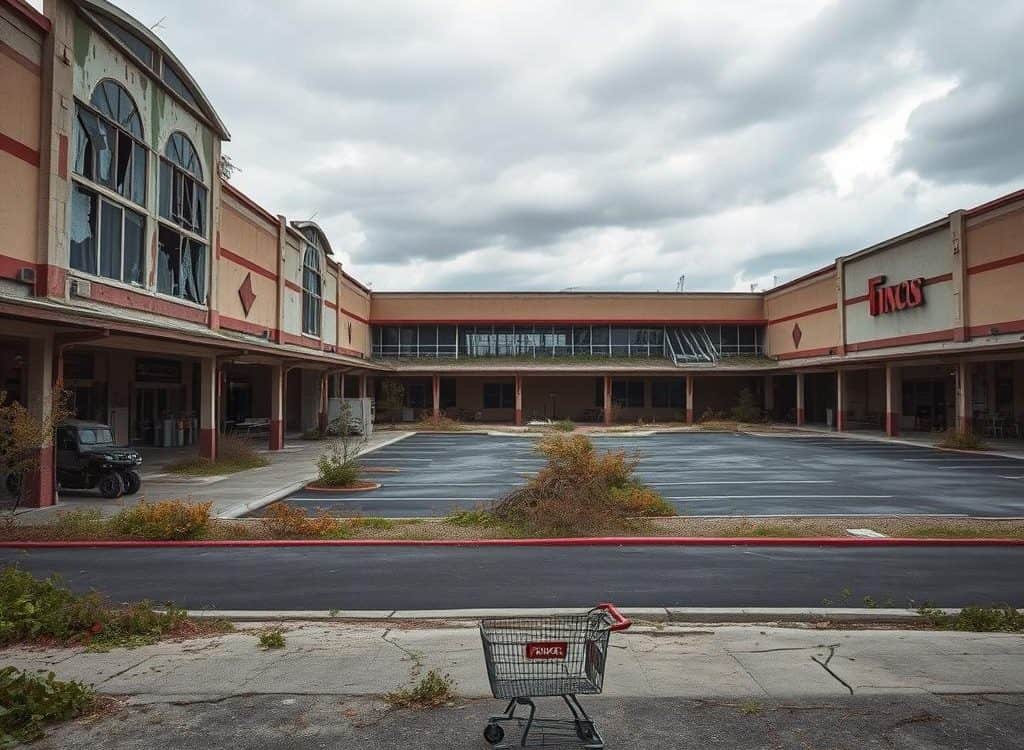
Why Are Shopping Malls Disappearing?
Did you know over 12,000 retail stores closed in 2020? This number shows the decline of malls in the U.S. Malls, once busy with shoppers and social events, now face big challenges. The rise of online shopping has changed how people shop, making mall visits less common.
Other issues like low household incomes and high upkeep costs also hurt malls. To stay alive, malls need to offer something new and exciting to today’s shoppers.
Key Takeaways
- Over 12,000 retail stores closed in 2020, signaling the decline of shopping malls.
- A 2017 report indicated that 20-25% of U.S. malls were expected to close by 2022.
- Non-store retailers experienced a 30% increase in sales in 2020 compared to the previous year.
- The COVID-19 pandemic has accelerated the closure of many malls, including prominent locations.
- Shifts in consumer preferences, focusing on convenience, have favored online shopping over in-store visits.
- The percentage of malls classified as “dying” is increasing, highlighting growing vacancy rates.
- Economic factors, including high maintenance costs and stagnant incomes, are adding to the challenges faced by malls.
Understanding the Factors Behind The Death of Malls
Shopping malls are declining, and many factors are at play. These elements help us understand the changing retail world.
Rise of Online Shopping
Online shopping is a big reason malls are losing visitors. People prefer buying from home, leading to fewer mall visits. Big stores are closing, making malls even emptier.
The pandemic made online shopping even more popular. This change has hurt malls a lot.
High Maintenance Costs
As malls lose stores, maintenance costs go up. Owners must keep up with security and upkeep, even with less income. Without tenants, these costs are hard to handle.
This makes it tough for mall owners to keep their properties running well.
Changing Consumer Preferences
Today, people want unique shopping experiences. Millennials and Gen Z like independent shops and restaurants. But malls can’t offer these special experiences.

The Economic Impact of Disappearing Malls
The decline of shopping malls has big economic effects on communities and industries. As these retail spaces shrink, the economy feels it. This change is seen across the board.
Job Losses in Retail and Supporting Industries
Stores like Sears and J.C. Penney closing has led to many job losses. Jobs in maintenance, security, and logistics used to be stable in malls. But with online shopping on the rise, these jobs are now at risk.
This affects not just the workers but also their families and communities. It creates a cycle of economic stress.
Declining Tax Revenue
Malls have always been key sources of tax money for local governments. They help fund property and sales taxes, which support public services. But as malls empty and stores shut down, this tax money drops.
This makes it harder for cities to pay for things like roads, police, and schools. To keep these services, cities might raise taxes on businesses and people. This makes the economic hit from malls disappearing even harder.
Conclusion
Malls are at a turning point, facing big changes in the retail world. Online shopping and high costs have made things tough. But, malls can adapt and come back stronger.
They’re now becoming places for fun and food, not just shopping. This shift is attracting more people. It shows malls can evolve and stay relevant.
Some malls are being turned into mixed-use spaces, which is good for the economy. Companies like Brookfield Properties are making old malls into community centers. This not only saves jobs but also adds to our community’s culture.
The number of malls has dropped from 2,500 in the 1980s to about 700 today. But, malls can survive by focusing on community and shared experiences. Stores like J.C. Penney are already adapting, showing malls can meet the needs of all ages.

Leave a Reply
You must be logged in to post a comment.