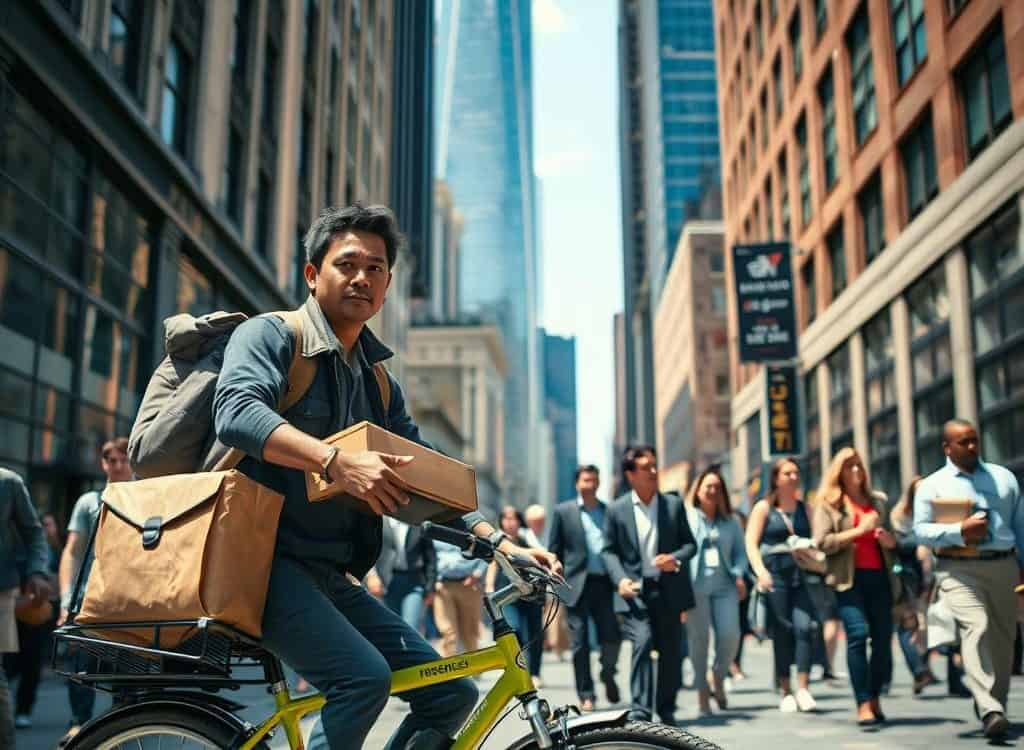
Is the Gig Economy Empowering or Exploiting Workers?
Did you know gig workers make 58% less than regular employees? This fact from the Economic Policy Institute shows a big problem in the gig economy. Many people try to find power through freelancing and side jobs. But, they often lose job security and fair pay in the process.
The gig economy has changed how we see work, bringing both good and bad. In this article, we’ll look at the gig economy’s two sides. We’ll see how it can help workers but also lead to exploitation. It’s important to think about how we can help gig workers without taking away their rights.
Key Takeaways
- 58% of gig workers earn less than traditional employees.
- 77% of gig workers report work-related stress.
- Flexibility in work hours offers a chance for empowerment.
- Inclusive policies can improve worker rights in the gig economy.
- Worker exploitation is a problem, even with side hustle opportunities.
The Gig Economy: An Overview
The gig economy has changed how we see work and jobs. It’s a market where people work short-term or freelance, not just full-time jobs. This shift is big for millions of Americans who want flexible work.
Definition and Evolution
The gig economy shows a big change in work culture. It started with musicians, but now includes jobs like Uber drivers and freelancers. This change lets people work on their own terms, setting their own hours.
Growth Statistics
More and more people in the U.S. are joining the gig economy. About 64 million Americans, or 38% of workers, are freelancing or have side jobs. They add $1.27 trillion to the economy each year. The number of gig workers has grown from 10.1% in 2005 to 15.8% in 2015. This growth is huge, with 1.6 million workers worldwide making a living this way.
Pros of the Gig Economy: Empowerment and Opportunities
The gig economy offers many benefits for individuals. It combines flexibility, autonomy, and chances to earn extra money. This makes it welcoming and open to a wide range of workers.
Flexibility and Autonomy
The gig economy is known for its flexibility. I can work when and where I want. This lets me balance work and personal life easily.
It also gives me the freedom to do things my way. This boosts creativity and makes work more enjoyable.
Supplementing Income
The gig economy is great for earning extra money. It’s perfect for retirees or anyone wanting more income. I can find gigs that match my skills and interests.
This way, I can earn money doing things I love. Sites like Uber, Fiverr, and TaskRabbit offer many ways to make money.
Inclusivity and Accessibility
The gig economy is inclusive and accessible. It offers jobs to people with disabilities, older adults, and those in remote areas. This empowers individuals and builds a sense of community.
It lets me and others support each other in the gig world. This creates a supportive environment for everyone.

The Dark Side of Flexibility: The Gig Economy’s Shadow
The gig economy has two sides. On one hand, it offers flexibility and freedom. But, on the other, it hides exploitation and unfair treatment. This raises big questions about fairness, job security, and who has the power.
Lack of Labor Protections
Gig workers are often seen as independent contractors. This means they miss out on important benefits like sick pay and maternity leave. They also lack paid time off. This leaves them without a safety net, making them feel less valued than regular employees.
Income Instability
Income is unpredictable for gig workers. They can lose their jobs on platforms for no clear reason. Many struggle to get health insurance or plan for retirement. This makes it hard for them to manage their finances and plan for the future.
Power Dynamics and Control
Power in the gig economy often lies with the companies, not the workers. Workers face unfair algorithms that control their jobs and pay. They often work in bad conditions for low pay. This shows how the gig economy can be unfair, focusing on profits over people’s well-being.
Conclusion
The gig economy has grown a lot, showing both great chances and big problems. Many people like the flexible hours and extra money, like those with family duties. But, there’s a dark side: many earn less than the minimum wage and miss out on benefits like sick pay and holidays.
While choosing work places and times is empowering, gig jobs can be stressful. More people in this market raise worries about fairness and peace. We need to find a way to balance freedom with worker safety.
To make the gig economy fair, we need talks between lawmakers and business leaders. They should talk about rules that protect workers. This way, we can make a gig economy that really helps workers and avoids exploitation. It’s urgent to fix these problems for a better work environment for everyone.

Leave a Reply
You must be logged in to post a comment.