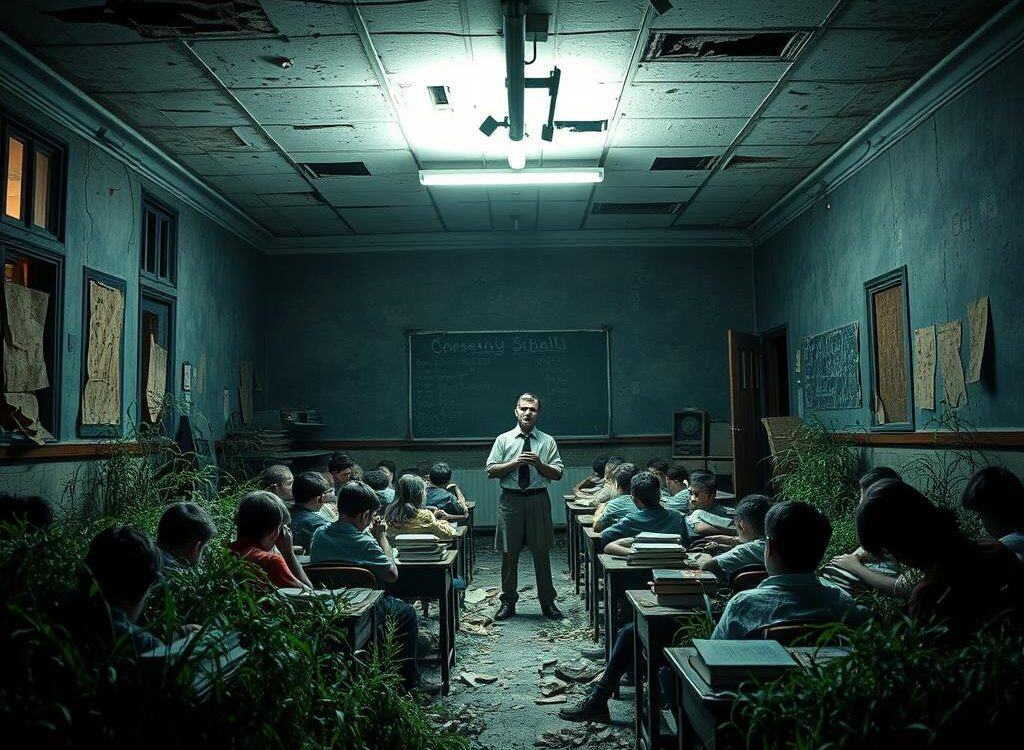
Is Our Education System Failing the Next Generation?
Did you know about 65% of students want more hands-on learning? Yet, schools often focus on long lectures and memorization. This shows a big problem with our education today: it doesn’t encourage creativity or curiosity.
Students face outdated teaching methods and a one-size-fits-all approach. This doesn’t meet their different learning needs. The federal government only spends 4% of its budget on education. This leads to huge funding gaps and unfair opportunities for students.
We need to change our education system to help students grow. By focusing on creativity, critical thinking, and practical skills, we can make learning more meaningful. This way, we can prepare students for the real world.
Key Takeaways
- Many students prefer engaging play over structured lectures, reflecting the need for reform.
- Limited funding in low-income areas leads to fewer resources and less experienced teachers.
- High teacher-to-student ratios hinder personalized attention in traditional classrooms.
- Outdated teaching methods result in student disengagement and a disconnect from real-world applications.
- Reforms must emphasize individualized learning to foster creativity and critical thinking.
- The education system often penalizes failure, discouraging innovation in student learning.
Understanding the Root Causes of Education System Failures
The education system faces many challenges that affect students and their learning. One big problem is the outdated curriculum and old teaching methods. These focus too much on tests and not enough on creativity and critical thinking.
Teachers often work in a system that doesn’t let them be creative. This makes learning boring. Also, too many students in classrooms make it hard for teachers to help each one. This leads to students feeling left out and not engaged.
Outdated Curriculum and Teaching Methods
Many seniors struggle with basic skills like reading and math. Less than 40 percent can show they’re proficient. This shows the education system isn’t readying students for the future.
Old teaching methods focus too much on memorizing and not enough on thinking. This hurts students, like black young men in urban schools, who often don’t graduate. This links to bigger problems like the school-to-prison pipeline.
The One-Size-Fits-All Approach
The education system’s standardization makes teaching less effective and less engaging for students. It treats students like empty vessels, as Paulo Freire said. This approach is designed for following rules, not for creativity.
Students often get easier projects because of fear of bad grades. This makes their learning experiences less valuable and limits their skill growth.
Impact on Student Mental Health
These old teaching methods and curricula harm students’ mental health. Even though 80 percent of students graduate, less than half feel ready for life. Sir Ken Robinson’s work shows how important creativity is in education.
To help students’ mental health and learning, we need to change how we teach and structure education. It’s time to rethink our approach to education.
Consequences for Students and Society
The effects of a failing education system are far-reaching. They impact both individual students and society as a whole. One major problem is the link between growing student debt and higher dropout rates. Many students, mainly from low-income families, find it hard to handle college. This leads to big financial troubles.
Only 51% of lower-income students go to college, compared to 89% of richer students. This gap in access to education means more student debt.
Increased Student Debt and Dropout Rates
Students who do go to college often face huge financial stress. They might drop out because of too much debt. This problem is worse for students who are different in some ways, like those with neurodivergent conditions.
These students often don’t get the help they need. This can make them leave school early. For example, only 67% of native Spanish-speaking students finish high school. This is because of language barriers and limited resources.
Students who don’t fit the traditional school mold end up with more debt. But they don’t get a degree. This creates a cycle of debt without a way out.
Lack of Individual Support
The economic effects of poor education go beyond just students. Lower-performing students face extra challenges. The curriculum is not well put together, and teachers aren’t trained well enough.
This has led to the lowest math and reading scores in decades for 13-year-olds. This makes students feel they’re not good enough. It often leads to them dropping out, which makes the debt problem worse.
Without the right support, students get stuck in a cycle of debt and financial struggles. This affects not just them but society as a whole.
Conclusion
Our education system faces big challenges. Issues like outdated curriculums and a one-size-fits-all approach need fixing. These problems lead to high dropout rates and a lot of student debt.
Funding problems also make things worse. Local funding is a big part of school budgets. This means rich and poor areas get different amounts of money. This leaves some students without the tools they need to succeed.
We need to change how we teach and support our students. We should focus on critical thinking and mental health. By fixing these problems, we can make education better for everyone. It’s important to keep talking about these issues and push for changes that will help our students succeed.

Leave a Reply
You must be logged in to post a comment.