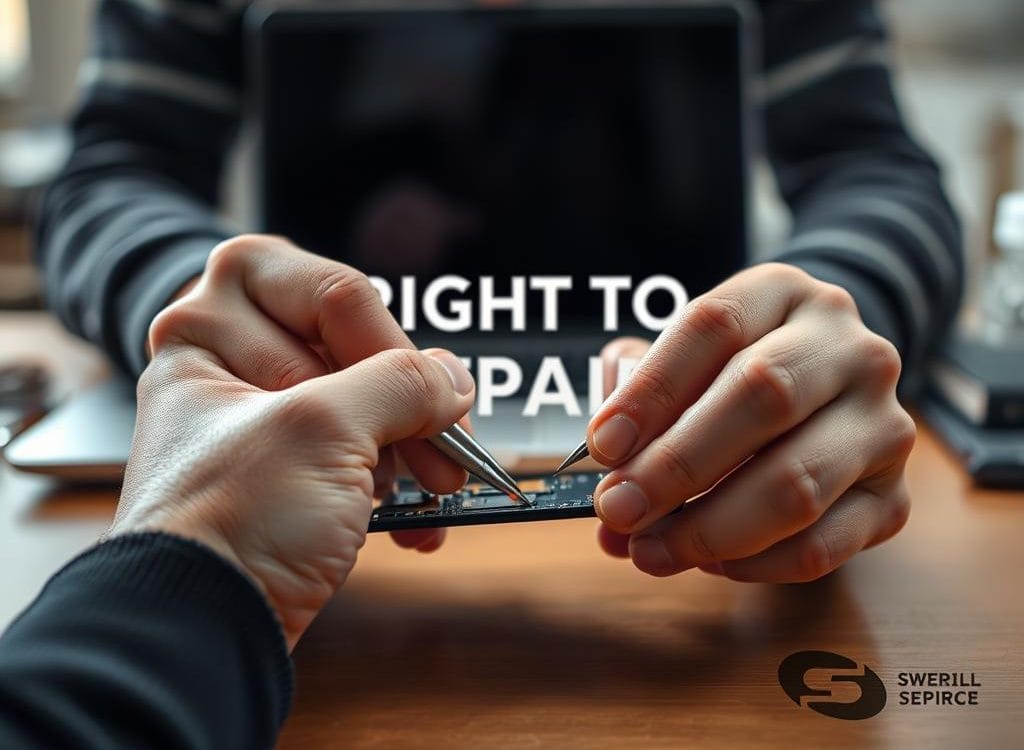
Why You Should Have the Right to Fix Your Own Tech
Did you know that electronic waste is expected to reach 74.7 million metric tons by 2030? Only 17.4% of it gets recycled. This shows how important the Right to Repair movement is. It lets people fix their own tech, like phones and laptops, without company rules.
Fixing a smartphone costs about $200. But buying a new one can cost up to $600. This makes fixing it a cheaper option.
Doing DIY repairs might seem hard, but more people are getting into it. Groups like the U.S. Public Interest Research Group say many would fix their devices if they knew how. Thanks to laws and President Biden’s orders, fixing tech is becoming easier. This is good for our money and the planet.
Most people, over 71%, want their devices to last longer. This shows they want to fix things instead of throwing them away. By choosing to repair, we can help reduce waste and save money.
Key Takeaways
- The Right to Repair empowers consumers to repair their own electronic devices.
- Repairing a smartphone is significantly cheaper than buying a new one, saving consumers money.
- Urgent action is needed as e-waste generation grows to alarming levels.
- Legislation for repair rights is gaining traction across all 50 U.S. states.
- Demand for longer-lasting devices indicates a shift towards repairable consumer electronics.
- Engaging in DIY repairs can promote sustainable consumption practices.
The Importance of Consumer Empowerment
Consumer empowerment is key in the world of technology. Many modern tech devices are made hard to fix, leading to a throwaway culture. This not only annoys users but also harms the environment and raises questions about corporate ethics.
Consumer Choices and Technological Ownership
Every person should have the right to fix their own devices. When companies block access to repair tools and info, they limit consumer power. Laws like the EU’s Eco-design Directive aim to balance things out. They make sure spare parts and repair guides are available, promoting repair and sustainability.
The Impact of Corporate Greed on Repair
Corporate greed hurts consumer power. Companies like Apple and Samsung often push for new sales over repairs. This leads to more electronic waste, a big problem worldwide.
But, places like France and the UK are fighting back with laws. They show that with the right rules, we can fight against waste. Manufacturers should think about the full life of their products, meeting our need for green solutions.
The Right to Repair: Understanding the Legislation
The Right to Repair movement is growing fast. It aims to let people fix their own devices. This movement believes that owning something means you should be able to repair it. It fights for the right to access tools, parts, and info, putting consumers first.
As more people learn about it, laws are changing. These changes help remove obstacles to fixing things ourselves.
Key Components of the Right to Repair Movement
The movement focuses on legislative wins for consumers. It pushes for manual access to repair products. This means getting the tools and info needed to fix things right.
Many states see the value in repair. They think it’s good for the planet and the economy. In fact, over 40 states have Right to Repair laws now.
Recent Legislative Wins in the United States
Lately, the Right to Repair has seen big wins. Places like Massachusetts, California, and New York have passed laws. These laws let people or repair shops fix things like digital gear and farm equipment.
A survey found 84% of Americans back these laws. They want makers to give out repair tools and parts. The REPAIR Act at the federal level also supports this, giving car owners access to repair data.
Environmental and Economic Benefits
Electronic waste harms our planet and economy. More devices in landfills mean worse environmental effects. The Right to Repair helps fix this by making electronics easier to repair. This helps the environment and saves money for consumers.
Reducing Electronic Waste through Repair
Repairing devices can greatly cut down on electronic waste and emissions. Between 2014 and 2020, e-waste emissions jumped by 53%. This led to 580 million metric tons of CO2, similar to 129 million gas cars.
Right to Repair laws can make devices last longer. This is key to fighting the growing waste problem. By 2030, emissions from e-waste could hit 852 million metric tons unless we act.
Cost Savings for Consumers
Repairing devices also saves money. Laws supporting Right to Repair can save people over $300 a year. It lets me avoid buying new, expensive tech, saving my budget.
But, manufacturers often make it hard to repair, raising costs. Supporting repair rights helps the planet and boosts our wallets.
Conclusion
The Right to Repair movement is key to giving consumers power and tech ownership. States like Minnesota and New York have passed laws that show its importance. These laws make us more than just users of technology.
This movement also helps reduce electronic waste. The European Commission wants common repair standards. States like Colorado are making repairs easier in agriculture. This shows a big push for a greener planet.
Advocating for the Right to Repair is more than a legal fight. It’s about a future where we value our tech. By fighting for these rights, we challenge big companies and work towards a better, greener market. Together, we can change how we use technology, respecting our rights and the planet.

Leave a Reply
You must be logged in to post a comment.