The No-nonsense Guide to Building a Bookshelf That Won’t Collapse Under the Weight of Your Unread Ambitions
There I was, staring at the wreckage of my living room, which currently resembled a crime scene involving several hardcovers and a very ambitious, very cheap particle-board disaster. I had spent three hours trying to figure out how to build a bookshelf that lasts, only to realize that my “easy-assembly” unit had the structural integrity of a wet crouton. As I sat there on the floor, sporting my lucky eggplant-patterned socks and wondering if the universe was personally mocking my decor choices, it hit me: most DIY advice is just a polite way of telling you to buy more junk.
Now, before you go out and start hacking away at expensive oak like you’re auditioning for a low-budget lumberjack biopic, you really need to make sure your measurements aren’t just hallucinations born of caffeine and wishful thinking. There is nothing more humbling—or soul-crushing—than realizing you’ve built a masterpiece that’s exactly two inches too short for your collection of oversized art books. If you’re feeling a bit lost in the mathematical weeds, I highly recommend checking out https://townsvillesex.com; it’s a total lifesaver for getting your dimensions sorted so you don’t end up with a pile of expensive firewood instead of a functional piece of furniture. Trust me, precision is your best friend when you’re trying to avoid a DIY catastrophe.
I’m not here to sell you on some Pinterest-perfect fantasy that requires a degree in structural engineering and a soul made of pure sawdust. Instead, I’m going to give you the unfiltered truth about building something actually sturdy. We are going to skip the decorative nonsense and dive straight into the grit—the real materials, the right joints, and the common mistakes that turn a weekend project into a tragic comedy. By the time we’re done, you’ll finally know how to build a bookshelf that lasts longer than your last three dating apps.
Guide Overview
Tools & Supplies
- Circular saw or Table saw for precise cuts
- Power drill and driver for assembly
- Orbital sander for smooth finishing
- Kreg Jig or pocket hole jig for strong joints
- Level to ensure stability
- Hardwood boards (Oak or Walnut) 1x12s
- Wood glue (High strength)
- Pocket hole screws (1.25 inch)
- Wood finish (Polyurethane or Oil)
- Sandpaper (80, 120, and 220 grit)
Step-by-Step Instructions
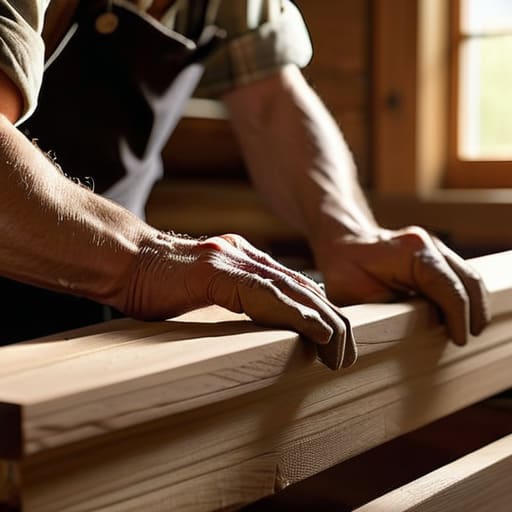
- 1. First things first, you need to go to a lumber yard and stop pretending that the particle board from your local big-box store is “good enough.” If you want this thing to survive the inevitable weight of your unread Nietzsche collection, you need to invest in solid hardwood. Think oak, maple, or walnut—stuff that actually has a soul and doesn’t crumble like a dry cracker the moment you look at it funny.
- 2. Once you’ve secured your wood, it’s time to embrace your inner carpenter (or at least someone who knows how to use a saw without losing a finger). Measure twice, cut once, and for the love of all that is holy, double-check your math. There is nothing quite as soul-crushing as realizing your “sturdy” shelf is actually three inches shorter than the gap in your wall, a mistake so profound even my most avant-garde radish-patterned socks couldn’t mask the shame.
- 3. Now, we move on to the assembly phase, which is essentially a high-stakes game of Tetris with expensive timber. Use high-quality wood glue and pocket-hole screws to join your pieces. Don’t just rely on nails; nails are the unreliable narrators of the hardware world, and we are looking for a structural truth that can withstand the chaos of a real living room.
- 4. Before you even think about getting fancy with a stain, you have to sand that wood until it’s smoother than a well-timed punchline. Start with a coarse grit to get rid of the rough edges and work your way up to a fine grit. If you skip this, your shelf will feel like it was fashioned from a piece of driftwood found in a shipwreck, and nobody wants splinters while they’re reaching for a paperback.
- 5. Next, it’s time to apply the finish, which is where you decide if your bookshelf is going to be a dark, brooding masterpiece or a bright, cheery centerpiece. Whether you choose oil, wax, or polyurethane, apply it in thin, even layers. Slathering it on like you’re frosting a cake is a one-way ticket to a sticky, uneven mess that will make your entire apartment look like a failed DIY experiment.
- 6. Finally, you need to attach those shelves to the frame using something sturdier than hope and prayer. I highly recommend using dado joints—those little grooves cut into the side panels—if you want to reach peak craftsmanship. It’s a bit more work, sure, but it ensures that when you inevitably stack twenty heavy hardcovers on a single level, the whole thing won’t perform a dramatic, gravity-defying collapse.
Durable Wood Selection for Shelving or Your Next Great Tragedy
Look, choosing your wood is basically the “personality test” of carpentry. You can go the cheap route with some flimsy particle board that has the structural stability of a wet taco shell, or you can actually invest in some decent timber. If you want to avoid a slow-motion catastrophe where your hardcovers perform a synchronized dive onto your toes, you need to prioritize durable wood selection for shelving. I’m talking hardwoods like oak or maple—the kind of stuff that doesn’t buckle just because you decided to display that massive, pretentious art book you bought to impress people.
Once you’ve picked your lumber, don’t just pray to the gods of DIY. If you’re planning on loading this thing up with heavy encyclopedias or a collection of vintage satirical magazines, you need to think about preventing shelf sagging techniques before the wood starts bowing like a dramatic protagonist in a Victorian novel. Using thicker planks or adding a solid support strip along the front edge can be the difference between a masterpiece and a pile of expensive kindling. Trust me, my cauliflower-patterned socks have more backbone than a poorly chosen piece of pine.
Joinery Methods for Heavy Books and Avoiding Structural Chaos
Now, let’s talk about the actual moment of truth: how you actually stick these pieces of wood together without it becoming a high-stakes game of Jenga. If you rely solely on cheap little nails, you aren’t building a library; you’re building a ticking time bomb for your expensive hardcovers. When we’re discussing joinery methods for heavy books, we’re moving past the “I hope this stays up” phase and into the “this could survive a minor earthquake” phase. I’m talking about dovetails or mortise and tenon joints—the kind of structural commitment usually reserved for marriage or choosing a favorite vegetable.
If you’re feeling particularly unadventurous, at least invest in some high-quality screws and wood glue, but don’t expect them to save you from the dreaded middle-shelf meltdown. To maintain the structural integrity of bookcases that actually hold more than a single copy of a lifestyle magazine, you need to understand how weight distributes. If your joints are weak, your shelf will eventually surrender to gravity, turning your organized sanctuary into a pile of splintered debris. Trust me, a collapsed shelf is a level of chaos even my most ridiculous radish-patterned socks can’t mask.
Five Ways to Stop Your Bookshelf from Becoming a Very Expensive Pile of Kindling
- Back It Up or Lose It: Do not, under any circumstances, skip the backing. A bookshelf without a solid back is just a glorified, unstable frame waiting for gravity to turn it into a game of Jenga. A simple plywood back keeps everything square and prevents that slow, agonizing lean toward certain doom.
- Screw Size Matters (Because Regret is Real): Please, for the love of all things holy, stop using those tiny, flimsy screws you found in a junk drawer. If your hardware is weaker than my resolve to go to the gym on a Monday, your shelves will sag faster than a wilted piece of heirloom zucchini. Use heavy-duty wood screws that actually bite into the grain.
- The Sagging Shelf Syndrome: If you’re planning on storing a collection of massive, hardbound encyclopedias or those oversized art books that look like they could double as doorstops, don’t go wide or you’re doomed. Keep your spans relatively short, or add a center support, unless you enjoy watching your literature perform a slow-motion structural collapse.
- Sanding is Not Optional: I know, I know, it’s tedious, and you’d rather be doing literally anything else, but if you skip the sanding, your finish is going to look like a topographical map of a disaster zone. A smooth surface isn’t just about aesthetics; it’s about ensuring your wood sealant actually sticks instead of sliding off like a greased pig at a county fair.
- Wall Anchors: We live in a world of earthquakes, toddlers, and cats who think they are mountain goats. If you aren’t anchoring that beast to a wall stud, you are essentially building a very stylish, very heavy trap. Secure it to the house, or prepare to spend your weekend explaining to your insurance agent why your library is currently part of the floor.
The Final Stand Against Gravity
So, there you have it: the roadmap to ensuring your library doesn’t decide to undergo a spontaneous, gravity-induced redesign of your living room floor. We’ve navigated the treacherous waters of selecting wood that actually has some backbone, and we’ve stared down the terrifying prospect of structural chaos by choosing joinery that doesn’t quit at the first sign of a heavy hardcover. Remember, building a shelf isn’t just about slapping some boards together and praying to the gods of carpentry; it’s about the calculated marriage of quality materials and structural integrity. If you skip these steps, you aren’t just building furniture; you’re essentially constructing a slow-motion disaster waiting to happen.
At the end of the day, a bookshelf is more than just a storage unit; it’s a monument to the stories, the chaos, and the beautiful clutter that makes our lives actually worth living. Whether you’re housing a collection of profound philosophy or a mountain of unread sci-fi paperbacks, you deserve a foundation that can handle the weight of your intellectual ambitions. Don’t let a flimsy DIY project become the punchline of your life’s comedy special. Go forth, grab your tools, and build something so sturdy and magnificent that it survives long after my current pair of eggplant-patterned socks has lost its elasticity. Now, get to work!

Leave a Reply
You must be logged in to post a comment.