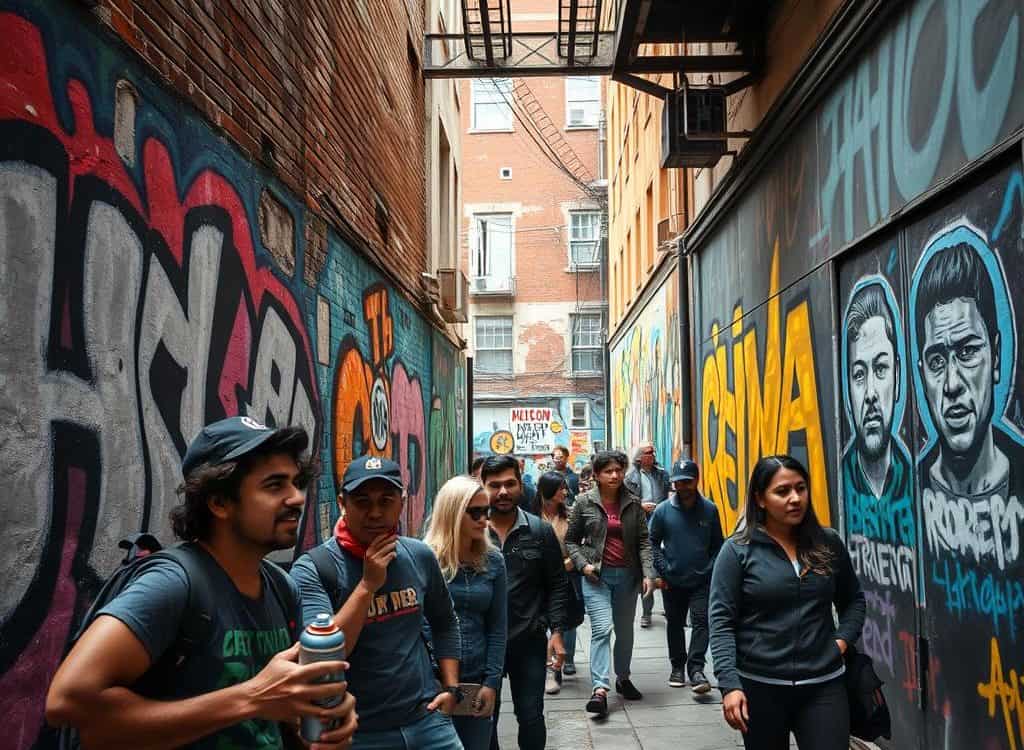
Street Art: Vandalism or Cultural Revolution?
Did you know street art is a big deal in cities worldwide? It’s not just a gray area in the law; it’s a cultural phenomenon worth billions. Starting in the 1970s and 1980s in New York City, street art was seen as vandalism. But now, people see it as a cultural revolution and a key way to express creativity.
These vibrant murals are now powerful comments on social and political issues. They often spark debates about their legality and what they mean.
Street art is more than just cool visuals; it gives a voice to those who are often ignored. Artists like Banksy and Keith Haring have shown how street art can be more than graffiti. It’s a way to challenge our views of public spaces and society. Through bold paint, it captures the complexity of human life.

In this article, we’ll dive into how street art shapes community identity and artistic stories. We’ll also look at the debate over its acceptance. Is street art a cultural revolution or just vandalism?
Key Takeaways
- Street art exists in a legal gray area, often created without permission.
- It serves as a powerful medium for political and social commentary.
- Renowned artists like Banksy have bridged street art with mainstream recognition.
- Street art is a form of beautification and engagement in neglected urban areas.
- Its ephemeral nature challenges perceptions about permanence in art.
- Street art often opposes dominant cultural narratives, acting as resistance.
- Digital media has revolutionized the way street art is preserved and shared globally.
The Evolution of Street Art & Graffiti
Street art’s journey is both fascinating and complex. It began in urban culture, influenced by social and political changes in the late 20th century. Over time, it has evolved, showing the power of grassroots movements. Each phase of its growth helps us understand its role in today’s culture.
The Roots of Street Art
The history of street art starts in the 1970s and 1980s in New York City. Young people from tough backgrounds used public spaces to express themselves. They created bold, colorful tags, seeking a voice in a society that often ignored them.
This early period set the stage for street art’s rebellious spirit. It combined visual art with the quest for identity.
From Vandalism to Artistic Recognition
Street art’s path from vandalism to art has faced many hurdles. It was once seen as a crime, but artists pushed boundaries with new techniques. Figures like Banksy used street art to spark conversations on big issues.
Shows and galleries helped bring street art into the mainstream. Yet, debates on its authenticity and commercialization continue.
Influence of Hip Hop Culture
Street art and hip hop culture are deeply connected. Both emerged from similar social and economic challenges. Hip hop’s impact on street art is clear, blending storytelling, music, and visuals.
Artists shared their stories on city walls, strengthening both art forms. They reflect the hopes and struggles of marginalized groups, showing their resilience through art.
Street Art & Graffiti as Social Commentary
Street art has become a powerful way to share opinions and stories. It gives a voice to those who are often ignored. Artists use murals and graffiti to talk about big issues like fairness and how we see ourselves.
This art form changes how we see public spaces. It turns empty areas into places that tell our stories and share our history.
Empowering the Voiceless
Artists use street art to let people share their true stories. Places like Union Market in D.C. show off inspiring quotes and art, like Yoko Ono’s. These displays start important talks about our lives, justice, and who we are.
Street art brings different views together. It makes cities more interesting and helps us think about big issues.
Political Activism and Street Art
Street art is a strong way to show political views, during protests and movements. Artists like Banksy and Shepard Fairey show how important it is. Their work makes us think about power, fairness, and standing up for what’s right.
Street art has grown from just being seen as graffiti. It now tackles big topics like rights, the environment, and fairness. From Wynwood Walls in Miami to messages against government policies, it calls for change.
Conclusion
Street art is more than just a form of creative expression. It’s a cultural revolution in urban areas. Starting as graffiti, seen as vandalism, it has become a respected art form. It’s now shown in galleries around the world.
This change shows how street art impacts society. It challenges and changes cultural stories in cities.
Today, street art is a key way to express social and political views. It gives a voice to those who are often ignored. It connects with hip hop, showing its power in sharing community struggles and creating a sense of belonging.
With social media, I can see and share street art from everywhere. It shows its deep impact and encourages others to see its beauty.
Looking ahead, I’m interested in the debates on legality, access, and cultural value. Street art’s evolution into “viral art” shows it reflects our values. It’s a key way to see change and empower communities.
Street art is not just about looks. It’s about staying strong, finding identity, and having ongoing conversations that shape our cities.

Leave a Reply
You must be logged in to post a comment.