
Fake News: How to Spot Lies in Today’s World
Did you know that about 70% of people have been tricked by false information they thought was real? In today’s world, telling fact from fiction is more important than ever. The spread of fake news on social media is making this task harder.
We need to learn how to spot lies and think critically. Knowing the signs of false information is key. When we emotionally invest in a story, we might believe lies without question.
It’s important to think before we share or react to content. This way, we protect ourselves and our communities from false information. Let’s be careful and verify the truth before we share.
Key Takeaways
- 70% of people encounter misinformation they believe to be true.
- Emotionally charged misinformation is often more believable.
- Repeated exposure to false information can make it seem more credible.
- Assessing source credibility is key in spotting lies.
- Using reputable news outlets helps verify information accuracy.
- Always trace back to the original claim to check its context.
- Take a pause before sharing to avoid spreading misinformation rapidly.
Understanding Fake News and Its Impact
Fake news is more than just lies. It’s also about misleading information and biased reports that shape our view of the world. These tactics are often driven by money, where sensational headlines get more clicks than truth. It’s key to understand these tricks in our world filled with false information.
Defining Fake News
Fake news is when false content looks like real news. It twists facts to create false stories. Sources of this false information range from social media to traditional news, making it hard to trust what we read. Knowing the difference is vital in today’s complex world.
How Fake News Is Used to Mislead
Fake news is a powerful tool for manipulation. It’s used in politics and marketing to get people’s emotions on their side. For example, during the COVID-19 pandemic, false claims about cleaning products led to many calls to poison control. This shows how dangerous false information can be.
Public health efforts often face challenges from fake news. It can make people doubt important health advice and even vaccines. This is a big problem for keeping communities safe.
Media Influence on Public Perception
The media greatly shapes what we think. In uncertain times, it can spread false ideas and stories. A study found that believing in false information can harm our health and even lead to death.
It’s important to know the difference between true and false news. As news consumers, we must be careful and critical. This helps us stay informed and protect ourselves from fake news.
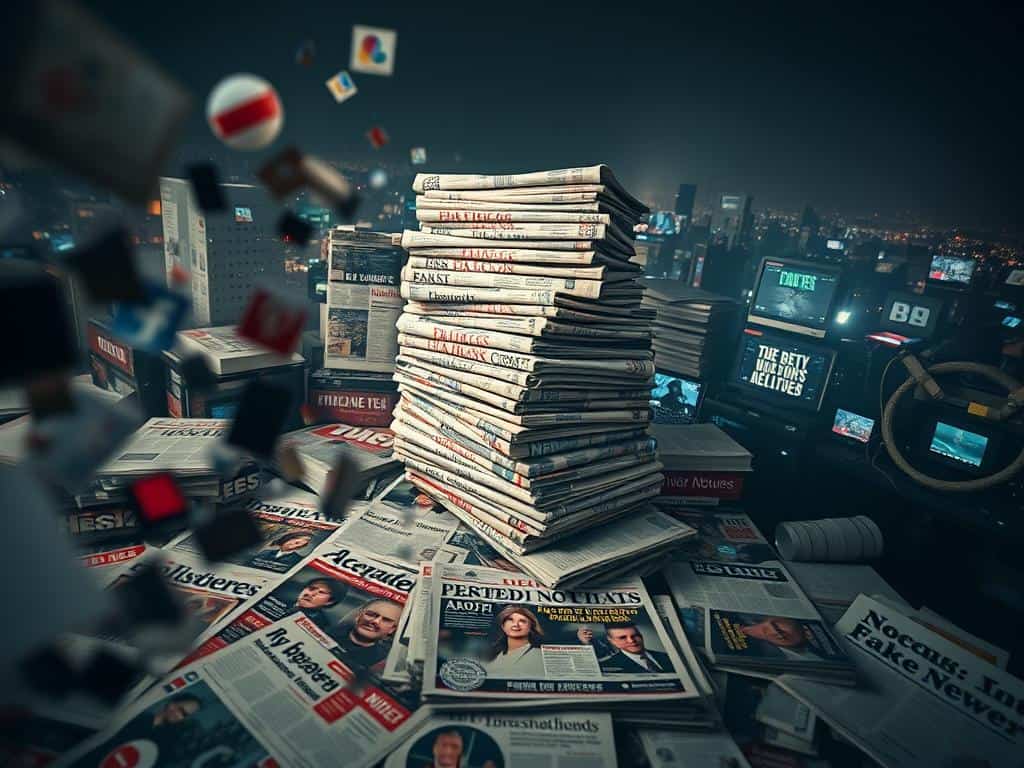
The Misinformation Epidemic: Identifying the Lies
Today, we face a mix of misinformation and disinformation. It’s key to learn how to spot lies. Knowing the difference between these two helps us use media wisely. Misinformation is when we share wrong info without meaning to. Disinformation is when someone tries to trick us on purpose.
Understanding these helps us look at info more critically. It boosts our media literacy and how we check sources.
Types of Misinformation: Misinformation vs. Disinformation
It’s important to know the difference between misinformation and disinformation. Misinformation comes from mistakes or misunderstandings. Disinformation is made to trick people.
Knowing this helps us find reliable news sources. The “continuing influence effect” shows how hard it is to stop false info. It highlights the need for careful fact-checking.
Using Fact-Checking Tools Effectively
Fact-checking tools are key in finding out what’s true. Sites like Snopes and FactCheck.org help a lot. They check claims quickly and accurately.
Using these tools helps us fight fake news. Knowing about them helps us challenge false stories and have smart discussions.
The Importance of Lateral Reading
Lateral reading means checking news from different sources. It makes us better at understanding info. By doing this, we can spot false info and build our critical thinking skills.
Using these methods helps us fight misinformation. It also makes us smarter about the media world.
Conclusion
In today’s world, fighting misinformation is a big deal for all of us. I’ve looked into how false information, mainly in health, can really slow us down. It can even cause problems like more people not getting vaccinated and wasting health resources.
It’s key to tell misinformation apart from disinformation. This shows we need to think more about what we see and hear, not just accept it.
To get better at spotting false info, we need to use tools like lateral reading and fact-checking. By asking questions and seeking out reliable sources, we help build a society that values truth. This is important for making sure we’re all well-informed.
As we move forward, we must focus on clear and strong public health messages. Working together, we can tackle the problem of too much false information. This teamwork is essential for keeping accurate info ahead of false stories.
Our future health depends on us working together and learning more about media. By doing this, we can face challenges with strength and understanding.

Leave a Reply
You must be logged in to post a comment.