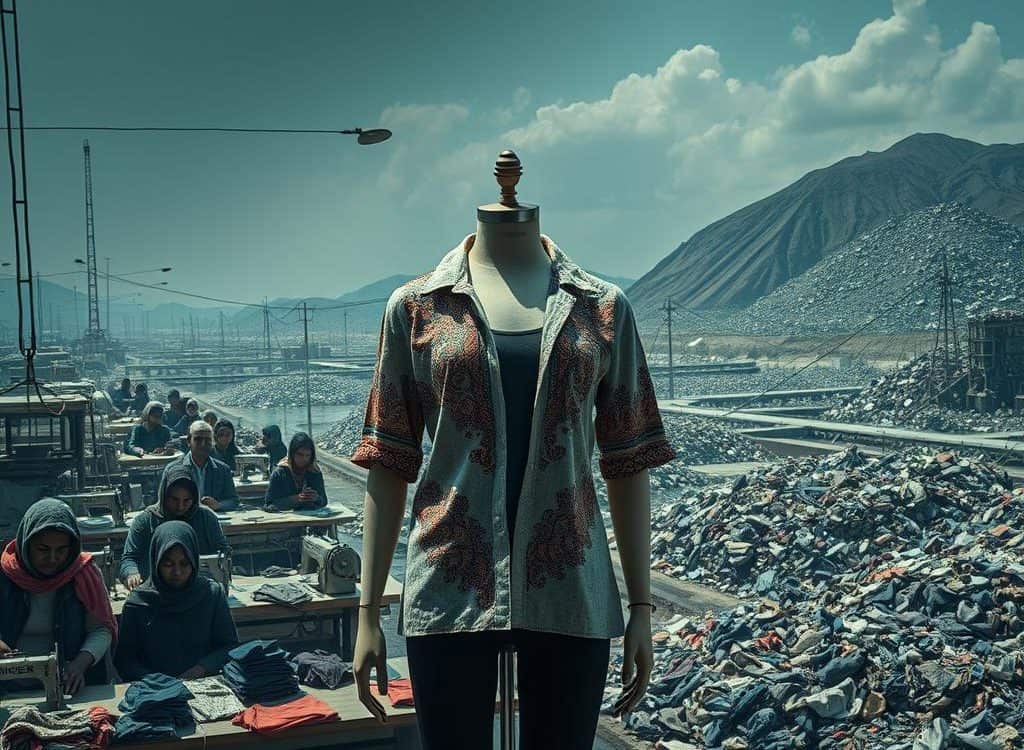
The Dark Side of Fast Fashion: What Brands Don’t Tell You
Did you know that a staggering 92 million tonnes of clothes end up in landfills every year? This huge number shows the dark side of fast fashion. It’s an industry known for cheap, trendy clothes. But it comes with a high environmental and social cost.
Brands like H&M, Zara, and Shein focus on fast production and low prices. This approach harms our planet and society. It’s time to change to more sustainable and ethical fashion for a better future.
Key Takeaways
- 92 million tonnes of fashion waste are discarded globally every year.
- The fast fashion industry is responsible for significant environmental impact, including 10% of global carbon emissions.
- Fast fashion often exploits labor, with garment workers earning less than the living wage.
- Synthetic materials like polyester contribute heavily to microplastics in oceans.
- A portion of clothes may involve forced or child labor in their production.
The Definition of Fast Fashion
Understanding fast fashion is key to seeing its effects. It’s about making cheap clothes quickly to follow the latest trends. Big stores like Zara and H&M put out new collections fast, making us want to buy more often. This changes how we shop and makes us throw things away more.
Understanding the Fast Fashion Model
The fast fashion model is all about being fast and cheap. It uses quick production and low-quality materials like polyester. This means clothes are worn just 14 times before they’re tossed. It makes us want new things all the time, leading to waste.
How Fast Fashion Affects Consumer Behavior
Fast fashion changes how we shop. Brands keep pushing new trends and low prices, making us buy on impulse. We feel like we need to keep up with the latest styles, spending too much and wasting more. In the U.S., each person throws away about 82 pounds of clothes a year, showing how fast fashion hurts our planet and society.
Fast Fashion Problems: The Environmental Impact
The effects of fast fashion on our planet are huge and complex. Fast production leads to a lot of waste and pollution. This harms ecosystems worldwide. It’s key to push for green practices in fashion.
Massive Textile Waste and Landfill Issues
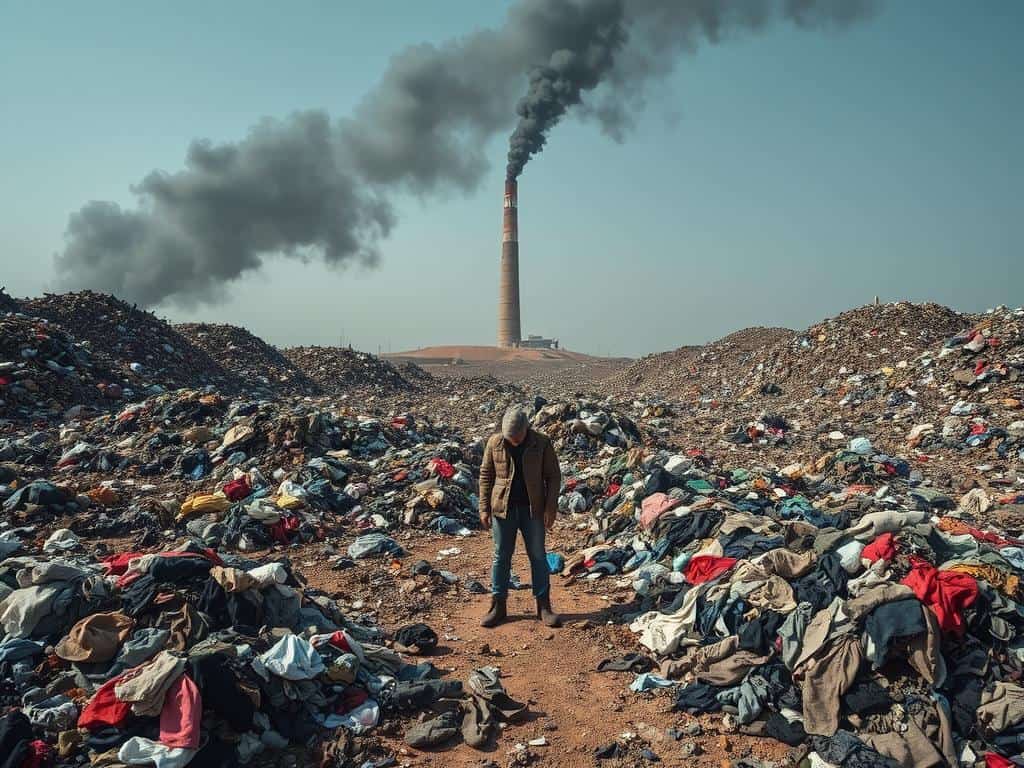
Fast fashion creates a lot of waste every year. About 92 million tons of clothes go to landfills worldwide. This shows how unsustainable fast fashion is.
Most of the clothes made are thrown away. This causes big problems in landfills. It also hurts our environment a lot.
The Role of Synthetic Materials in Pollution
Synthetic materials like polyester and nylon are big in fast fashion. They pollute for a long time. It takes them hundreds of years to break down.
These materials release harmful microplastics into our oceans. Washing them adds 500,000 tons of microfibers to our oceans each year. That’s like 50 billion plastic bottles.
Water Usage and Scarcity Concerns
Fast fashion uses a lot of water. It’s the second-biggest water user in the world. It takes about 2,000 gallons to make one pair of jeans.
This water use leads to water scarcity, mainly in farming areas. Dyeing clothes also pollutes water. It’s toxic and harms fish and other sea life.
Ethics and Human Rights Violations in Fast Fashion
The fast fashion industry looks good on the surface, with cheap and trendy clothes. But, it hides serious problems like labor exploitation and human rights issues. Millions of workers, mostly in poor countries, face tough conditions in the garment industry. About 75 million factory workers are in this field, but only 1.8% earn enough to live on.
This shows a big problem that needs to be fixed. We must make sure workers are treated fairly and their rights are respected.
Exploitation of Labor in Developing Countries
Labor exploitation is a big issue in the fast fashion world. Women make up about 80% of garment workers, facing unsafe work and harassment. A 2023 study found that 91% of Bangladeshi garment workers can’t afford basic needs, despite the industry’s big role in the country’s economy.
This shows a big gap between making money and doing the right thing.
Sweatshops and Working Conditions
The Rana Plaza building collapse in 2013 was a tragic reminder of the dangers in garment work. Over 1,100 workers died because of ignored warnings. This shows how much some companies don’t care about human rights in sweatshops.
During the COVID-19 pandemic, brands canceled $40 billion in orders. This led to lower wages and job losses for many workers. It’s important for brands to take responsibility for the well-being of workers in their supply chains.
Conclusion
The effects of fast fashion are huge and worrying, harming the environment and human rights worldwide. We need to work together to make fashion more sustainable and fair. The fast fashion industry is a big problem, causing up to 10% of global carbon dioxide emissions.
It’s time for us to choose better and support green fashion. In the US, people throw away about 80 pounds of clothes each year. By picking quality over quantity, we can help the planet and our clothes last longer.
We, as consumers, have the power to change fashion for the better. By asking for clear information from brands and backing slow fashion, we can make a difference. This shift towards quality over quantity will lead to a more sustainable and just fashion world.

Leave a Reply
You must be logged in to post a comment.