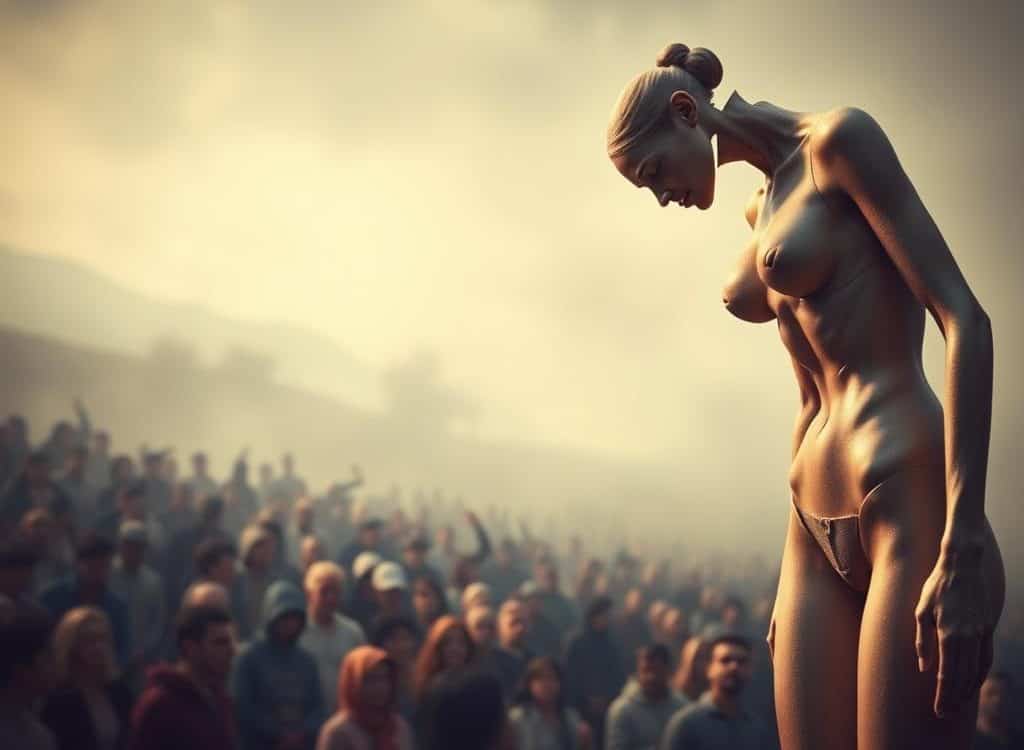
How Society Warps Our Idea of Beauty
Did you know 70% of women feel unhappy with their bodies because of unrealistic beauty standards on social media? Beauty standards are shaped by more than just fashion magazines and TV. Our daily use of photo editing apps like Photoshop and Facetune also plays a big role. These apps can make us doubt our looks and worth.
Now, with “selfie dysmorphia,” Gen Z is more worried about small flaws. This is because of the filters and perfect lives they see online. It’s important to see how these factors come together.
The history of beauty standards is complex and deeply rooted in culture. This history, combined with the constant exposure to edited images, makes us question self-love and acceptance. The Dove Real Beauty campaign is a positive example, showing that beauty comes in many forms.
But, the pressure to look perfect can harm our mental health. It can lead to anxiety and unhealthy habits, mainly in young people. It’s time to change how we view beauty and embrace authenticity.
Key Takeaways
- 70% of women feel dissatisfied with their bodies due to unrealistic beauty standards.
- Social media contributes to “selfie dysmorphia,” raising anxiety over appearance.
- The Dove Real Beauty campaign challenges conventional beauty norms.
- Exposure to altered images can negatively impact mental health in adolescents.
- Body-positive content can boost self-esteem but may lead to self-objectification.
- Men exposed to fitness-centric imagery often report body comparison issues.
- Online interactions with peers can perpetuate negative body image perceptions.
The Historical Evolution of Beauty Standards
Beauty standards have changed a lot over time. This shows how culture and society shape what we find beautiful. These changes often lead to unrealistic beauty ideals that affect how we see ourselves.
Understanding Changing Trends in Beauty
Beauty has changed a lot. In ancient times, like the Paleolithic era, beauty was about being fertile. Women were seen as beautiful if they had big breasts and clear skin.
In Ancient Egypt, round figures and bright skin were key. Today, we see more acceptance of different body types. This is a big change from the past.
Influential Models and Icons Through History
Beauty icons have shaped how we see beauty. Artists like Peter Paul Rubens showed off curvy figures in the 17th and 18th centuries. The 1920s brought androgynous beauty.
In the 1950s, the hourglass figure was all the rage. The 1990s saw the rise of waif-like models, like Kate Moss. These changes show how beauty ideals have shifted over time.
The Impact of Media on Perceptions of Beauty
Media has a big impact on how we see beauty. TV, magazines, and social media spread beauty images fast. Ads often show beauty that’s hard to reach, hurting our self-image.
There’s been a rise in eating disorders, mainly among the young. Media’s narrow view of beauty is a big problem. We need to accept more diverse beauty standards.
Body Image & Society
In today’s world, many things shape how we see our bodies. Social media sites like Instagram and TikTok are big players. They show beauty standards that are often too high, hurting self-esteem, mainly in the young.
The push to meet these perfect looks can make us unhappy with our bodies. It can even lead to serious mental health problems.
The Role of Social Media in Shaping Beauty Ideals
Social media makes us compare and criticize ourselves. We see perfect images and lifestyles that are hard to reach. A 2021 study found a link between social media comparison and body dissatisfaction.
This constant seeing of perfect beauty can harm us. But, studies show that positive body content can help. It can improve how we see ourselves and fight off negative media effects.
Celebrity Influence and Unrealistic Expectations
Celebrities set beauty standards that are hard to meet. Women are expected to be thin, and men to be muscular. These ideals harm us by making us feel bad about our bodies.
But, social media lets us see many different types of beauty. This can help us accept and love ourselves more, no matter what we look like.
Cultural Differences in Beauty Standards
Beauty standards vary by culture. Some cultures value curvy bodies, while others prefer thin ones. These differences affect how we feel about ourselves and how society sees us.
Showing diverse beauty in media can help. It encourages us to see and love our unique qualities. This can improve body image and self-esteem in many cultures.
Conclusion
Beauty standards deeply affect our self-worth and how we see our bodies. Studies show that 86% of women are unhappy with their bodies. They feel pressured to meet impossible beauty ideals. It’s time to rethink what beauty means to us.
Accepting ourselves is key to beating these insecurities and finding strength in our differences. The gap between real women and models shows how unrealistic these standards are. This pushes 98% of women to extreme measures.
But, we can change this by valuing diversity and individuality. Programs and campaigns that teach media literacy and promote positive body image are helping. They show us that we can fight these harmful standards together.
It’s important to love ourselves and focus on our well-being, not comparisons. By understanding the harm of beauty ideals and supporting each other, we can change. Let’s move towards a world where we celebrate our true selves and find empowerment in self-acceptance.

Leave a Reply
You must be logged in to post a comment.