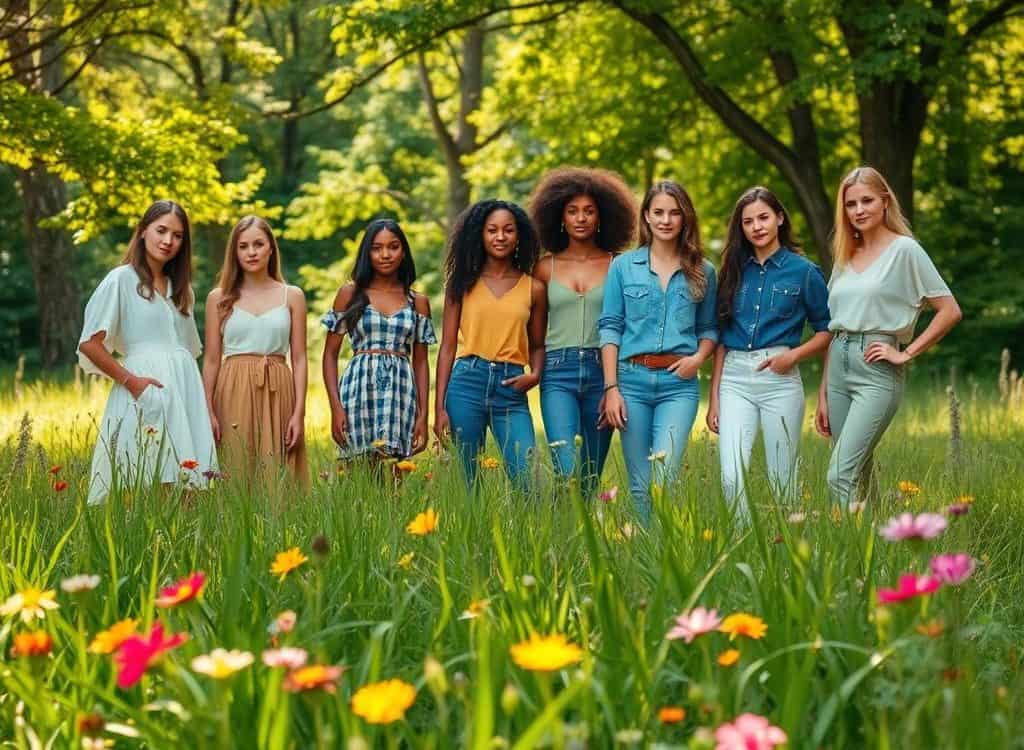
The Future of Fashion is Green – Here’s Why
Did you know the fashion industry is responsible for 8-10% of global carbon emissions each year? Clothing production has doubled in the last two decades. Today, people buy 60% more clothes than they did 20 years ago. This shows we need sustainable fashion more than ever.
The old way of making clothes is harming our planet. But, there’s hope. Sustainable fashion is becoming more popular.
More people are choosing eco-friendly clothes and supporting brands that care about the environment. Companies are using recycled materials and new textile technologies. This change is not just a trend; it’s a must for a greener future.
Key Takeaways
- The fashion industry accounts for 8-10% of global carbon emissions, highlighting the need for sustainable practices.
- Consumer purchasing habits have increased by 60% in the last 20 years, leading to overproduction and waste.
- 85% of textiles end up in landfills each year, showing the need for sustainable fashion.
- New materials like biodegradable TENCEL and carbon-negative leather are transforming the textile world.
- The secondhand clothing market is expected to grow by 127% by 2026.
- Brands are using recycled materials to make eco-friendly clothes, reducing environmental harm.
- More people are choosing to buy clothes that are made ethically and sustainably.
The Rise of Sustainable Fashion
The fashion world is changing fast as people focus more on the planet. More folks want clothes that are good for the environment. This change is about understanding how old ways of fashion harm our planet and wanting better choices.
Understanding the Impact of Traditional Fashion
Old ways of making clothes are causing big problems. Every year, over 100 billion clothes are made. This leads to 15 million tons of waste in the U.S., with 85% of it going to landfills.
Clothing production has doubled in 20 years, but we use clothes less. This shows a culture that values throwing things away. The fashion world also causes 8-10% of global carbon emissions, making climate change worse. Workers are also suffering, with 4 million in Bangladesh demanding better pay and conditions in 2023.
Consumer Awareness and Demand for Change
More people are thinking about how their clothes affect the planet. 67% of shoppers look for clothes made in sustainable ways. 63% also want brands that care about the environment.
Stars and influencers are helping guide these choices, with almost 49% following their advice. Brands like Levi’s and Patagonia are leading the way with their sustainable efforts. Fast fashion may be cheap and trendy, but it’s bad for the planet. Slow fashion, on the other hand, values quality and lasts longer, promoting a more personal and ethical style.
Innovative Materials and Practices in Sustainable Fashion
The fashion world is changing, moving towards more eco-friendly ways. New materials are being used that are good for the planet. These changes are not just a trend; they are key to solving environmental problems in fashion.
Recycled and Biodegradable Fabrics
Recycled materials are changing the way we make clothes. For example, recycled polyester comes from old plastic bottles. This reduces the need for new resources. Big names like Patagonia and Nike are using it in their clothes.
ECONYL is another example. It’s made from waste like fishing nets and can be recycled forever. Even luxury brands like Gucci and Prada are using it, showing that you can be green and stylish.
Biodegradable fabrics are also becoming popular. Tencel, made from eucalyptus, is soft and eco-friendly. It’s made in a way that doesn’t harm the environment. New technologies like BioCir are making production cleaner, showing the benefits of eco-friendly fabrics.
Seaweed-Based Textiles and Eco Yarns
Seaweed-based textiles are a new and exciting area in sustainable fashion. Seaweed grows without needing water, land, or fertilizers. Companies like Pangaia use it to make clothes that are good for the planet.
Other eco yarns are made from organic and recycled materials. These materials help reduce the environmental impact of fashion. New ways of making clothes, like waterless dyeing and 3D printing, are also helping. These methods use less waste and resources, moving fashion towards a greener future.

Slow Fashion Movement: A Shift Towards Conscious Consumption
The slow fashion movement is all about quality over quantity. It focuses on making clothes that last longer and are better made. This way, we don’t need to buy new clothes as often.
It also means fair wages and safe work for everyone making our clothes. This is important to me as a buyer who cares about ethics.
Slow fashion also cares about the planet. I choose clothes made from organic cotton, linen, and recycled materials. These choices help the environment and match my values.
Timeless designs are key too. I like clothes that don’t go out of style quickly. This makes it easier to have a wardrobe that lasts.
Supporting local makers and small businesses is also important. I love creating a small wardrobe with pieces that can be worn in many ways. This reduces my need for fast fashion.
I also like to fix and upcycle my clothes. This way, I can make them last longer and avoid throwing them away.
Knowing where my clothes come from is important to me. I look for brands that are open about their making process and how they treat workers. Learning about fast fashion’s harm motivates me to choose better.
Brands like Patagonia and Stella McCartney inspire me with their commitment to sustainability. Seeing big names like H&M and Adidas join in makes me hopeful. The rise of circular fashion shows we’re all moving in the right direction.
Slow fashion and ethical buying are my way of making a difference. My journey as a conscious buyer is ongoing, and I’m excited to see the positive changes we can make.
Conclusion
The future of Sustainable Fashion looks bright and is very important. The fashion world is a big polluter, so making smart choices about clothes is key. Using eco-friendly materials like organic cotton and recycled fabrics is a big step forward.
These materials help reduce harm to our planet. They show us hope for a greener future. Supporting brands that treat workers well is also important. It shows we care about more than just looks.
Being open about where clothes come from helps us make better choices. It shows we value clothes that match our values. Choosing sustainable fashion is part of a bigger movement against fast fashion.
Thinking about how our choices affect the planet is important. By choosing eco-friendly options, we help create a better future. This change can make the fashion world better for everyone, now and in the future.

Leave a Reply
You must be logged in to post a comment.