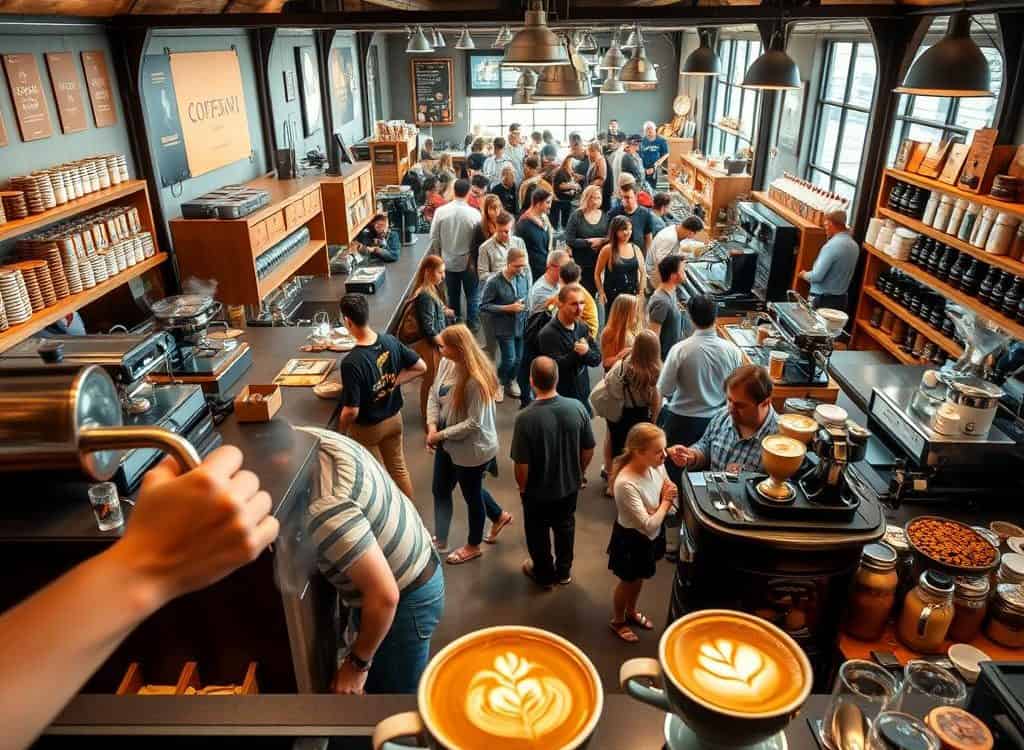
Why Everyone is Obsessed With Specialty Coffee
Did you know nearly three in four Americans drink coffee every day? A 2024 survey by Drive Research found this out. This shows how coffee is a big part of American life. The love for specialty coffee is growing, with the market expected to hit $152.69 billion by 2030.
Platforms like TikTok, with 75.5 billion views on #coffee, show people’s growing interest. This interest is making specialty coffee more popular.
In recent years, people have moved from generic coffee to specialty coffee. The third-wave coffee movement focuses on quality and craftsmanship. Beans must score at least 80 on a Q grader scale to be considered specialty.
The COVID-19 pandemic has made people want to brew coffee at home more. They’re also looking for specialty brands.
In this article, we’ll look at why people love specialty coffee so much. We’ll explore its history, how it affects social connections, and its role in mindfulness. Let’s see why specialty coffee is more than just a drink; it’s a way of life.
Key Takeaways
- Specialty coffee consumption reflects a significant cultural shift towards quality over convenience.
- Social media, specially TikTok, plays a vital role in popularizing specialty coffee.
- The COVID-19 pandemic has fueled interest in home brewing and specialty brands.
- Quality coffee beans must score 80 or higher on the Q grader scale.
- The U.S. coffee market is expected to grow at a rate of 3.01% between 2024 and 2028.
- Specialty coffee enhances social connections and mindfulness experiences.
The Rise of Specialty Coffee
The specialty coffee market has grown a lot over the years. This growth is exciting to watch. It’s moved from mass-produced coffee to high-quality, ethically sourced brews.
Now, people want unique flavors and craftsmanship. The Third Wave of coffee, led by Trish Rothgeb, focuses on sourcing. Specialty coffee shops aim to offer single-origin beans and sustainable practices.
The COVID-19 pandemic changed how we enjoy coffee. With cafes closed, many started brewing coffee at home. This shift allowed people to learn about brewing techniques and quality equipment.
On social media, influencers like Morgan Eckroth made DIY coffee popular. They created communities around this interest.
Coffee is also good for our health, improving metabolism and mental focus. It’s more than just a drink. It connects farmers and consumers through direct trade, ensuring fair prices and sustainability.
Coffee’s cultural significance is huge. It brings people together, like in the Ethiopian coffee ceremony. This tradition shows coffee’s role in community gatherings.
The specialty coffee movement is all about quality, culture, and ethics. Home brewing and impactful coffee experiences will keep shaping the coffee world. The future looks bright with new trends and ways to enjoy coffee.
Coffee Culture and Social Connection
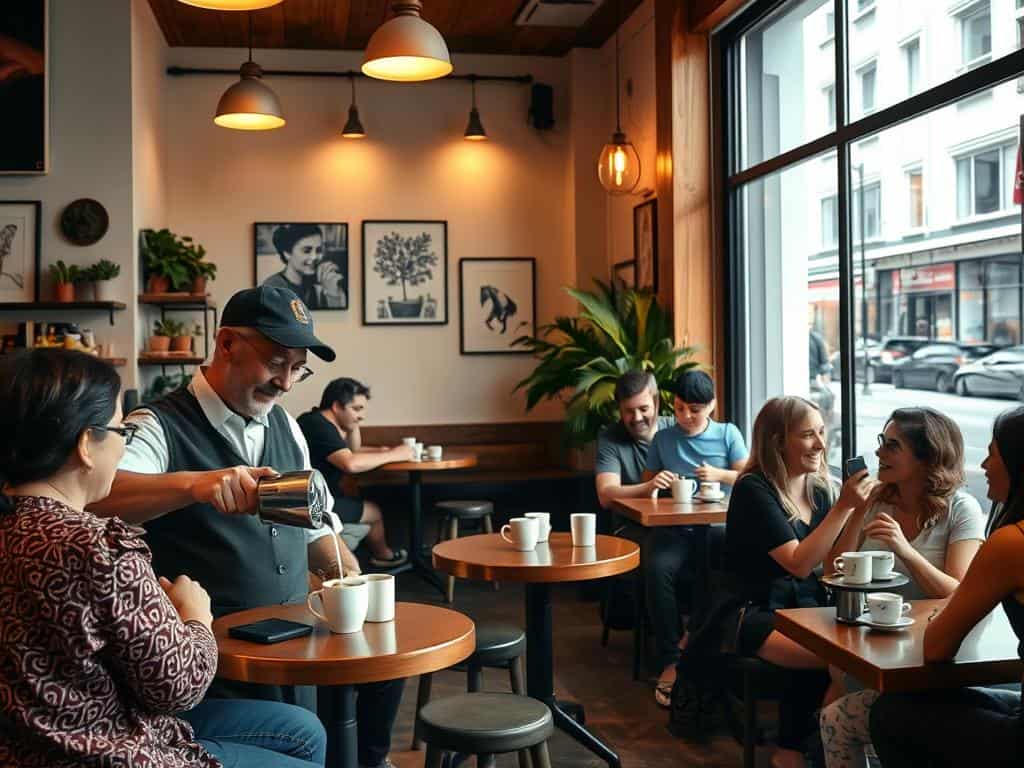
Coffee is key in bringing people together in the United States. It connects us through coffee meet-ups, casual talks, and deep conversations in cafes. The act of brewing and sharing coffee makes simple moments special, building strong bonds.
Each cup of coffee sets the stage for social gatherings. It creates a welcoming space for open conversations.
Meeting Places and Rituals
Independent coffee shops are community centers where people from all walks of life meet. The cafe lifestyle makes it easy to connect over great coffee. I enjoy coffee tastings and “bring your own mug” events that bring the community together.
With more people setting up home coffee stations, cozy spaces for friends and family are becoming common. These spaces turn coffee into a spark for deep talks.
The Mindfulness Aspect
Coffee meditation is becoming more popular as a way to practice mindfulness in the morning. It helps me focus on the present, letting go of distractions. Studies show that coffee may help lower depression feelings.
By being mindful, my morning coffee becomes a peaceful moment. It boosts my overall happiness.
Conclusion
The future of coffee looks bright, with a focus on quality and sustainability. Coffee lovers are now seeking premium and ethically-sourced coffee. This trend is expected to grow, with the market expanding by 3.01% each year until 2028.
Enjoying coffee is more than just getting a caffeine boost. It’s about building connections in our daily lives. Artisan coffee shops have changed how we see coffee, making it a key part of our community and mindfulness.
As more people enjoy unique coffee experiences, the social side of coffee will keep growing. Coffee has become a global phenomenon, bringing creativity, community, and well-being to our lives. It shows that my love for coffee is shared by many worldwide.

Leave a Reply
You must be logged in to post a comment.