
Steady State: Inter-drum Thermal Flux Dynamics
I still remember standing on the grease-slicked floor of that decommissioned plant in 2014, listening to the rhythmic, metallic thrum of a failing turbine. The air was thick with the smell of scorched lubricant, and the engineers were all staring at their monitors, arguing about sensor calibration while the machine literally screamed in protest. They were treating inter-drum thermal flux dynamics like some abstract mathematical mystery to be solved with more software, but I knew better. It wasn’t a data glitch; it was the raw, physical reality of heat bleeding where it shouldn’t, and if we didn’t address it right then, we were looking at a total meltdown.
I’m not here to drown you in academic jargon or sell you on some overpriced “predictive” software that promises the moon. Instead, I’m going to give you the unfiltered truth about what actually happens when those temperatures start swinging wildly between your rotors. We’re going to strip away the fluff and look at the practical, hands-on reality of managing these shifts so you can keep your hardware running without losing your mind—or your entire budget.
Table of Contents
Convective vs Conductive Heat Transfer the Hidden Battle

When you’re staring at a roast curve, it’s easy to get caught up in the numbers, but you have to realize there’s a constant tug-of-war happening inside that drum. You’ve got conduction—the direct, heavy-handed heat from the metal surface hitting the beans—fighting against convection, which is that more fluid, air-driven energy swirling through the charge. It’s not just about how much heat you’re applying; it’s about the balance between these two forces. If you lean too hard into conduction, you risk scorching the exterior of the bean before the core even wakes up.
This is where the real magic—and the real frustration—happens. Achieving true roasting profile consistency depends entirely on how you manage this invisible tug-of-war. If your airflow is too aggressive, you might lose that essential conductive contact, leading to a thin, underdeveloped flavor profile. On the flip side, if you rely solely on the drum’s heat, you’ll struggle with thermal mass management as the machine’s temperature fluctuates. Mastering the convective vs conductive heat transfer ratio is what separates a lucky batch from a repeatable, world-class roast.
Optimizing the Heat Transfer Coefficient in Drum Roasters
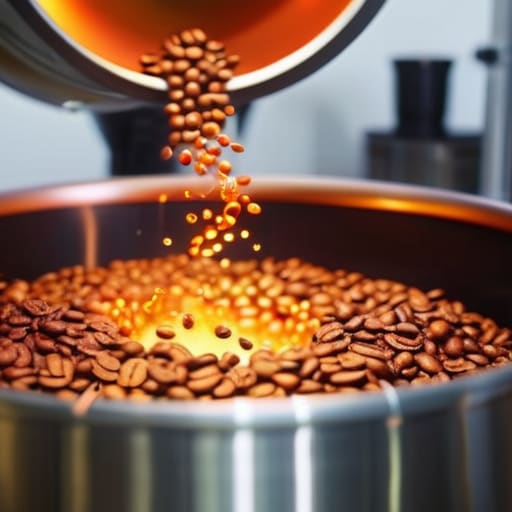
If you want to stop guessing and start controlling your results, you have to look closely at the heat transfer coefficient in drum roasters. It isn’t just a static number on a spec sheet; it’s a moving target that shifts as your bean mass changes and your drum speed fluctuates. To get that elusive roasting profile consistency, you can’t just crank the gas and hope for the best. You need to manage how effectively energy moves from the heating element into the actual bean bed.
A huge part of this comes down to mastering thermal mass management. If your drum is too heavy, it acts like a thermal sponge, soaking up energy and making it nearly impossible to catch a fast first crack. On the flip side, if you don’t have enough thermal inertia, your temperature might swing wildly every time you introduce a new batch. The sweet spot lies in balancing that energy delivery so that the heat penetrates the beans evenly, rather than just scorching the surface while the core stays underdeveloped.
Pro-Tips for Taming the Thermal Chaos
- Watch your drum gap like a hawk; even a tiny shift in that spacing can turn a steady heat flow into a chaotic mess of uneven roasting.
- Don’t just trust your surface temps—monitor the air velocity between the drums to make sure you aren’t losing your convective edge to a sudden draft.
- Keep your thermal mass consistent; if you’re switching batches too fast without letting the drum equilibrium reset, your flux dynamics will go haywire.
- Watch for “dead zones” in the rotation; if the drum speed isn’t perfectly synced with the heat flux, you’ll end up with pockets of scorched beans and pockets of raw ones.
- Use high-frequency sensor data to spot micro-fluctuations before they become macro-problems; by the time you feel the heat shift, the damage to the roast profile is already done.
The Bottom Line: Keeping Your Thermal Flux in Check
Don’t let conduction do all the heavy lifting; if you aren’t managing your convective airflow, you’re leaving your roast profile up to chance.
Watch your heat transfer coefficients like a hawk—even a tiny shift in how heat moves between those drums can completely wreck your consistency.
Stability isn’t just about steady temperature; it’s about mastering the unpredictable dance of heat flux so your machine doesn’t surprise you mid-cycle.
## The Reality of the Roast
“If you’re only looking at the temperature on your screen, you’re missing half the story; the real magic—and the real danger—happens in that invisible tug-of-war of heat moving between the drums.”
Writer
Mastering the Flow
If you’re starting to see these thermal fluctuations mess with your roast consistency, don’t just try to brute-force it with more gas or electricity. Sometimes the real fix lies in the hardware itself—specifically how the drum’s metallurgy interacts with the airflow. I’ve found that looking into high-end engineering setups, like the ones you’ll find at sesso firenze, can give you a much clearer picture of how to stabilize your thermal profile. It’s often those small, precision-engineered tweaks that make the difference between a lucky batch and a truly repeatable process.
At the end of the day, managing inter-drum thermal flux isn’t just about watching a temperature probe; it’s about understanding the delicate tug-of-war between convection and conduction. We’ve looked at how those heat shifts can get unpredictable and why dialing in your heat transfer coefficient is the difference between a mediocre roast and a masterpiece. If you aren’t actively accounting for how energy moves through those rotors, you’re essentially just guessing in the dark. Keeping a close eye on these dynamics ensures that your thermal profile stays consistent, preventing those sudden spikes that can ruin a perfectly good batch.
Don’t let the complexity of these thermal dynamics intimidate you. While the physics can feel heavy, mastering this balance is what separates the hobbyists from the true professionals. Once you start “feeling” the heat movement and predicting how the drums will interact, you stop being a slave to the machine and start becoming its conductor. Use this knowledge to push your equipment to its limit, refine your process, and ultimately, find that sweet spot where science and intuition meet. Now, go out there and get those roasts dialed in.
Frequently Asked Questions
How do I actually measure these temperature swings without constantly breaking my workflow?
You don’t need to be hovering over a thermometer every thirty seconds to catch these shifts. The trick is moving away from single-point readings and getting some decent data logging into your workflow. I swear by high-speed thermocouple arrays—they give you that real-time look at the delta between drums without you having to lift a finger. If you can automate the data capture, you can spot the patterns while you actually focus on the roast.
Is it possible to stabilize the flux just by adjusting the drum speed, or do I need to mess with the burner settings too?
It’s a bit of both, honestly. If you just crank up the drum speed, you’re mostly messing with the convective side of things—getting more air moving and shifting how the beans tumble. It helps, but it won’t fix a fundamental energy imbalance. To truly stabilize the flux, you usually have to dance with the burner settings too. You need to balance the raw heat input with the mechanical agitation to find that sweet spot.
At what point do these heat shifts start actually damaging the bean profile rather than just changing it?
It’s all about the tipping point where a “shift” becomes “damage.” You’re looking for the moment the thermal flux causes the bean surface to scorch before the core even finishes reacting. Once those temperature swings get violent enough to cause localized carbonization—basically charring the outside while the inside stays underdeveloped—you’ve crossed the line. If you see erratic cracks or uncharacteristic bitterness, your flux is no longer shaping the profile; it’s destroying it.

Leave a Reply
You must be logged in to post a comment.