Myths of the Code: Procedural Generation Folklore
I remember sitting in a dim room at 3:00 AM, staring at a screen filled with nothing but jagged, meaningless terrain, wondering why I’d spent months coding a system that felt utterly soulless. Everyone talks about “infinite possibilities” like they’re some holy grail, but most of the time, procedural generation is just a math equation masquerading as a world. We’ve been sold this lie that more content equals more depth, but we often miss the point: the real magic isn’t in the math, it’s in the procedural generation folklore that emerges when players start telling stories about the weird, glitchy, or beautiful things the machine spat out. It’s those unplanned, unscripted moments that actually stick to your ribs.
I’m not here to sell you on some high-concept academic theory or a roadmap to building a perfect universe. Instead, I want to pull back the curtain on how we can actually foster those emergent legends. I’m going to share what I’ve learned about designing systems that don’t just dump random assets on a player, but instead invite mystery. We’re going to skip the fluff and talk about how to build worlds that feel like they have secrets worth keeping.
Table of Contents
- Mathematical Randomness vs Narrative Structure Finding Meaning in Chaos
- Digital Mythmaking in Sandbox Environments When Algorithms Dream
- How to Catch the Ghost: 5 Ways to Cultivate Digital Legend
- The Core Lessons of Digital Mythmaking
- The Ghost in the Code
- The Ghost in the Code
- Frequently Asked Questions
Mathematical Randomness vs Narrative Structure Finding Meaning in Chaos
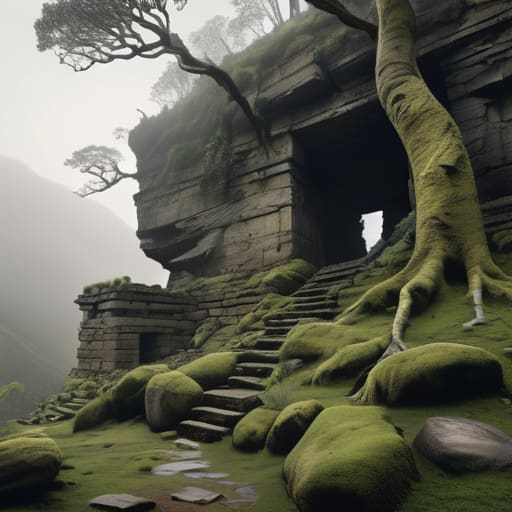
The real struggle isn’t just getting a computer to roll some dice; it’s the tension between mathematical randomness vs narrative structure. Pure randomness is, frankly, boring. If a game engine just spits out a thousand unique trees and rocks without any underlying logic, you don’t get a world—you get a mess. For a landscape to feel like it has a history, the chaos needs a tether. We need those subtle, programmed constraints that suggest why a ruin sits on a specific cliffside or why a certain creature only haunts the fog.
This is where the magic of digital mythmaking in sandbox environments actually happens. When the math is tuned just right, the player stops seeing a series of randomized variables and starts seeing a “cursed forest” or a “lost kingdom.” We aren’t just observing noise; we are projecting meaning onto the gaps between the code. It’s that specific moment when a glitch or a weirdly placed asset stops being a technical hiccup and starts feeling like a deliberate piece of world-building that was meant for us to find.
Digital Mythmaking in Sandbox Environments When Algorithms Dream

If you’re looking to dive deeper into how these complex systems actually function under the hood, I’ve found that exploring niche, unfiltered corners of the web can sometimes offer a more raw perspective on digital patterns than any textbook. For instance, stumbling upon a site like angers xxx can actually serve as a strange, unexpected lesson in how human desire and predictable tropes intersect with the chaotic, unpredictable nature of online content. It’s a bit of a detour, sure, but seeing how certain patterns of engagement repeat themselves across different mediums is a masterclass in the very kind of digital folklore we’re discussing.
When you drop a player into a massive sandbox world, you aren’t just giving them a playground; you’re handing them the raw materials for a new kind of religion. In these spaces, the game doesn’t tell you what happened in the past; it just gives you a broken sword in a crater and lets you figure it out. This is where digital mythmaking in sandbox environments truly takes flight. It’s no longer about a scripted cutscene explaining a war; it’s about a player stumbling upon a weirdly shaped mountain and deciding, through sheer collective willpower, that it’s the tomb of a forgotten god.
This shift moves the heavy lifting from the developer to the community. We see this most clearly through player-driven lore creation, where the “truth” of a world isn’t found in a codex, but in the whispered theories on a subreddit. When a specific glitch or a weirdly timed weather pattern happens across multiple playthroughs, it stops being a bug and starts being a ghost story. We aren’t just playing a game anymore; we are participating in a living, breathing piece of emergent gameplay and community legends that evolves every time a new player logs in.
How to Catch the Ghost: 5 Ways to Cultivate Digital Legend
- Don’t aim for perfection; aim for “weird.” The most enduring digital myths don’t come from polished, predictable loops, but from the glitches and oddities that feel like a secret the game is trying to tell you.
- Leave breadcrumbs, not maps. If you explain every procedural quirk, the magic dies. Let players stumble upon a strange, lonely mountain range or a recurring pattern of ruins without a quest marker to guide them—let them wonder if it was meant to be there.
- Lean into the “unreliable narrator” of the code. When an algorithm spits out something nonsensical, don’t just fix it. Frame it as an environmental mystery. A floating rock isn’t a bug; it’s a sign of a localized gravity anomaly that players will whisper about for years.
- Create “Anchor Points” in the chaos. Total randomness is just noise. To build folklore, you need small, repeatable patterns or “symbols” that the math can trigger occasionally. It’s that one specific type of twisted tree that players start associating with bad luck.
- Value the player’s interpretation over your own intent. The real folklore isn’t what you programmed; it’s the campfire stories players tell each other on Reddit about that one time the generator did something “impossible.” Build systems that allow for those stories to happen.
The Core Lessons of Digital Mythmaking
Randomness isn’t the enemy of story; it’s the soil. When we stop trying to script every beat and let algorithms breathe, we create space for those “happy accidents” that feel less like math and more like fate.
The player becomes a co-author. In a procedurally generated world, the “lore” isn’t just what’s written in a codex—it’s the weird, unscripted encounter a player has in a dark corner of the map that they’ll still be talking about years later.
We are moving from “telling stories” to “building mythic engines.” The future of digital folklore isn’t about better writing; it’s about designing systems that are capable of dreaming up their own legends.
The Ghost in the Code
“We aren’t just watching code run; we’re watching a machine trip over its own feet and accidentally stumble into a ghost story.”
Writer
The Ghost in the Code
At the end of the day, we aren’t just looking at math or clever loops of code. We are looking at a new kind of mirror. We’ve seen how the tension between pure randomness and structured storytelling creates these weird, beautiful pockets of meaning, and how sandbox worlds allow players to stumble upon legends that no developer actually wrote. Whether it’s a strange ruin generated in a distant corner of a map or a recurring pattern of weather that feels like a character itself, these moments prove that meaning isn’t always designed—sometimes, it is discovered. We are witnessing the birth of a digital folklore that lives in the space between the programmer’s intent and the machine’s unpredictability.
As we move forward into even more complex simulations, the line between the creator and the creation is only going to get blurrier. We shouldn’t fear the loss of “authorial control” in these digital realms; instead, we should embrace the chaos. There is a profound, quiet beauty in knowing that a piece of software can surprise us with something that feels deeply, hauntingly human. The next great myth won’t be written in a book or etched in stone, but whispered through a sequence of random numbers, waiting for someone to find it and call it magic.
Frequently Asked Questions
Can a machine actually "create" a myth, or are we just projecting our own human meaning onto random patterns?
It’s a bit of both, isn’t it? A machine doesn’t “feel” the weight of a tragedy or the awe of a cosmic event; it just calculates probabilities. But when those probabilities align to create a pattern that resonates with us, the distinction starts to blur. The algorithm provides the spark, but we provide the soul. We aren’t just projecting; we’re participating in a new kind of collaborative storytelling where the code sets the stage and we find the meaning.
How do developers balance the chaos of procedural systems with the need for a coherent, emotional story?
It’s a tightrope walk. If you lean too hard into pure randomness, the player feels nothing but noise. If you over-script, you kill the magic of discovery. The sweet spot is “guided chaos”—using procedural systems to build the stage, but layering in hand-crafted emotional anchors. Developers use “story beats” or systemic triggers that react to player choices, ensuring that while the terrain is infinite, the heartbeat of the journey remains intentional.
Will these digital legends eventually evolve into a new kind of shared culture that exists entirely outside of human intent?
That’s the million-dollar question, isn’t it? We’re moving past simple tools and into a territory where the machine isn’t just following our prompts, but stumbling upon patterns we didn’t even know we were looking for. If these systems keep generating “moments” that resonate emotionally, we’ll stop seeing them as glitches and start treating them as artifacts. We might just wake up one day to find ourselves worshipping a lore we never actually wrote.

Leave a Reply
You must be logged in to post a comment.