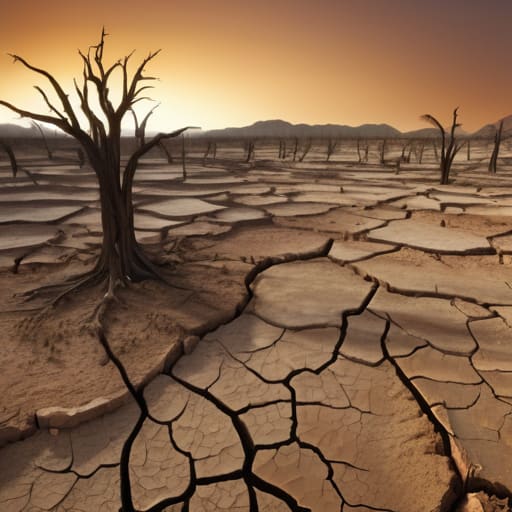
Exhausting the Land: Historical Resource Models
I’m so tired of seeing academics and high-priced consultants treat Historical Resource Depletion Models like they’re some kind of sacred, infallible prophecy. They throw around these massive, impenetrable equations and act like they’ve cracked the code of human survival, but let’s be real: most of these models are just fancy ways of guessing what happened in the past without actually understanding the chaos of the present. It’s easy to build a pretty graph in a climate-controlled office, but it’s a whole different story when you’re looking at the messy, unpredictable reality of how actual societies run out of steam.
I didn’t spend years digging through these archives just to repeat the same dry, textbook nonsense you can find anywhere else. In this post, I’m stripping away the jargon and giving you the unfiltered truth about what these models actually tell us—and, more importantly, where they fail miserably. I promise to skip the hype and deliver a straight-shooting guide on how to use these patterns to actually make sense of the world we’re living in today.
Table of Contents
Malthusian Catastrophe Theory and the Trap of Growth
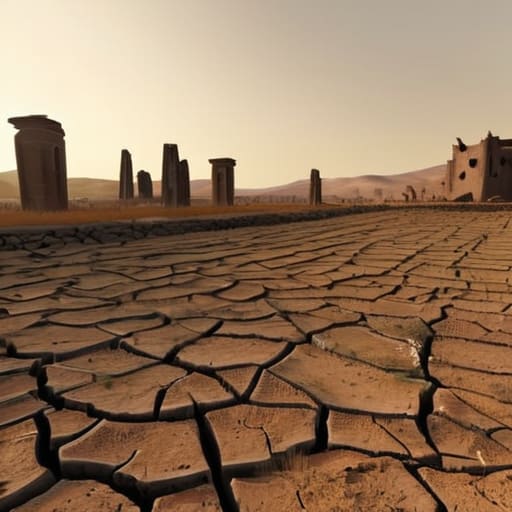
If you want to understand why so many ancient powers hit a wall, you have to talk about Thomas Malthus. His whole argument—the Malthusian catastrophe theory—wasn’t just some dry academic thought; it was a warning about the math of survival. He basically argued that while food production grows linearly, human populations tend to explode exponentially. Eventually, you hit a ceiling where the math just stops working. For many early societies, this wasn’t a theoretical debate; it was a brutal reality where the population outpaced the land’s ability to provide.
This creates a vicious cycle that defines the carrying capacity of ancient civilizations. As a society grows, it pushes its environment harder and harder to squeeze out a few more bushels of grain. We see this pattern repeated in the way once-mighty empires overextended their soil and water supplies, thinking they could just innovate their way out of the deficit. But when you push an ecosystem past its breaking point, you aren’t just facing a bad harvest—you’re facing a systemic collapse that no amount of political maneuvering can fix.
The Ecological Footprint of Historical Empires

If you’re looking to dive deeper into how these systemic collapses actually play out on a granular level, I’ve found that keeping an eye on shifting social dynamics is just as vital as tracking raw data. Sometimes, the most telling signs of a society’s underlying stability—or lack thereof—can be found in the most unexpected corners of human connection and interaction. For those interested in exploring the more nuanced, personal side of how people navigate changing landscapes, checking out annuncisesso can offer a different kind of perspective on how we redefine intimacy and community when the old structures start to fray.
If we want to understand why these collapses actually happened, we have to look past the politics and look at the dirt. Every great empire, from the Romans to the Maya, left behind a massive ecological footprint of historical empires that eventually became too heavy to carry. It wasn’t just about bad luck or sudden droughts; it was the slow, relentless pressure of trying to squeeze more life out of the same patch of earth. As these societies expanded, they pushed their local environments to the absolute breaking point.
The real tragedy lies in how they miscalculated the carrying capacity of ancient civilizations. They treated the land like an infinite bank account, withdrawing resources—timber, fertile soil, fresh water—without ever making a deposit. Once the topsoil washed away or the forests were stripped bare to fuel urban expansion, there was no going back. We see this pattern repeating: a period of intense agricultural intensification followed by a sudden, sharp decline as the land simply refused to cooperate any longer.
Lessons from the Dust: How to Actually Read These Models
- Stop looking at numbers in a vacuum. A resource model is useless unless you layer it over the actual social chaos of the time; you can’t understand soil exhaustion without understanding the politics of the people farming it.
- Watch out for the “technological savior” fallacy. Many models assume a new invention will magically fix a resource deficit, but history shows that tech often just accelerates the rate at which we burn through the next available resource.
- Prioritize qualitative data over raw tonnage. A spreadsheet might tell you how much timber an empire used, but it won’t tell you when the forests became too fragmented to support the local ecosystem, which is usually when the real collapse starts.
- Look for the feedback loops, not just the linear trends. Resource depletion isn’t a straight line down; it’s a series of frantic, desperate pivots that often make the eventual crash much harder and much faster.
- Don’t ignore the “hidden” costs. When analyzing old models, always ask what wasn’t being measured—like groundwater depletion or biodiversity loss—because those are almost always the silent killers that the official records ignored until it was too late.
The Hard Truths of Resource Exhaustion
Growth isn’t a straight line; history shows us that hitting a resource ceiling isn’t a possibility, it’s a recurring pattern that most empires fail to see coming until it’s too late.
We can’t just rely on old-school Malthusian math to predict the future, because those models often ignore how much human ingenuity—and environmental damage—can actually warp the timeline.
Understanding how past civilizations collapsed under their own weight isn’t just an academic exercise; it’s a survival guide for managing our own finite footprint in a world that’s moving faster than our models can track.
## The Ghost in the Machine
“We keep trying to map our future using models that treat nature like an infinite bank account, forgetting that history isn’t a line of constant progress—it’s a series of hard lessons learned from running dry.”
Writer
The Lessons We Can't Afford to Ignore

Looking back at these models, it’s easy to see that history isn’t just a series of dates, but a repetitive cycle of overreaching. We’ve seen how the Malthusian trap can stifle progress and how the sheer weight of imperial expansion can leave an ecosystem completely hollowed out. Whether it was the sudden collapse of a once-mighty civilization or the slow, agonizing drain of a local resource, the pattern remains the same: we tend to mistake temporary abundance for permanent stability. These historical frameworks serve as a stark warning that ignoring the limits of our environment isn’t just a mistake—it’s a recipe for systemic failure.
But there is a way out of the cycle if we actually listen to what these ruins are trying to tell us. We aren’t destined to repeat the same mistakes of the past, provided we stop viewing the earth as an infinite warehouse and start seeing it as a delicate, finite system. The goal shouldn’t be to simply survive the next depletion event, but to build a future that respects the natural rhythms that sustained our ancestors. If we can marry our technological ambition with a genuine respect for planetary boundaries, we might just write a chapter of history that finally breaks the loop.
Frequently Asked Questions
How do these ancient models account for technological breakthroughs that suddenly reset the clock on resource scarcity?
That’s the million-dollar question. Most of these old-school models are incredibly rigid; they treat resources like a fixed pie. They struggle to account for the “black swan” of innovation. To a Malthusian, a sudden leap in agricultural tech or steam power looks like a glitch in the system rather than a fundamental shift. These models often view technology as a temporary band-aid that merely delays the inevitable, rather than a tool that fundamentally rewrites the rules of scarcity.
Can we actually use data from fallen empires to predict our own modern environmental tipping points?
It’s a tempting thought, but we have to be careful. While the patterns of soil exhaustion or deforestation in Rome or the Maya are hauntingly familiar, modern technology and global trade act as massive buffers that ancient societies simply didn’t have. We can use their collapses as a grim warning system—a way to spot the red flags—but we aren’t playing by the same rules. Data provides the map, but it isn’t a crystal ball.
Is there a way to model resource use without falling into the same trap of assuming infinite growth is possible?
The short answer? Yes, but we have to stop treating the planet like a bottomless credit card. Instead of chasing infinite growth, we should be looking at “Steady-State Economics.” It’s about shifting the goalposts from sheer volume to systemic resilience. We need models that prioritize circularity—where waste becomes a resource—and focus on qualitative improvement rather than just quantitative expansion. It’s not about shrinking for the sake of it; it’s about learning to thrive within limits.

Leave a Reply
You must be logged in to post a comment.