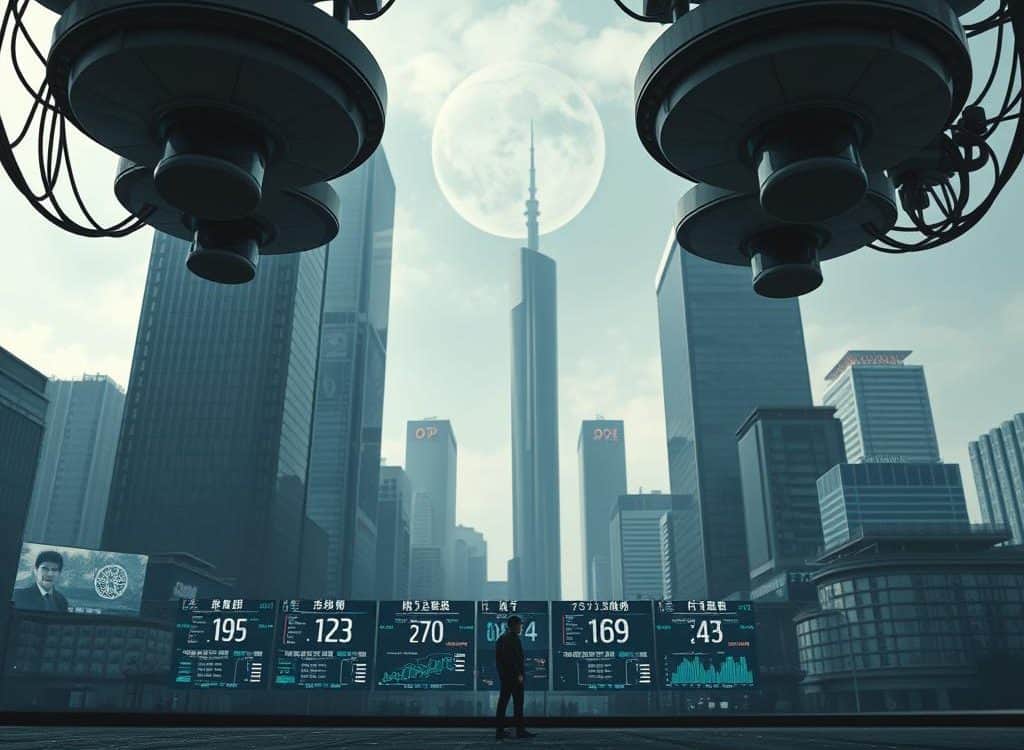
Social Credit Scores: Could It Happen Here?
Did you know a bill in Utah was passed to stop social credit systems like China’s? The Utah House Business and Labor Committee supported HB281. This move shows growing worries about privacy and personal freedom.
HB281 is a big warning for many. Representative Cheryl Acton said our personal actions could soon affect our scores. This score could decide what opportunities we get.
Introducing a social credit system in the U.S. context is a big deal. Critics fear it could lead to a “tech-induced totalitarianism.” This would mean rewards for those who follow the rules and penalties for those who don’t.
This is a key time for us to understand these new technologies. We need to watch out for government control in our digital lives.
Key Takeaways
- Utah’s HB281 seeks to ban government social credit systems to protect against discrimination.
- Potential scoring criteria may include aspects like political affiliations and social interactions.
- Digital payment trends could facilitate governmental control over financial systems.
- Concerns over surveillance increased with legislative actions like the EARN IT Act.
- Resistance to such systems may arise from decentralized technologies and platforms.
Understanding Social Credit Systems and Their Implications
Social Credit Systems have sparked a lot of talk worldwide. They show how actions can lead to rewards or penalties. This raises big questions about privacy and how much power governments should have.
Overview of China’s Social Credit System
China’s Social Credit System started in the 1980s. It aimed to create a system for rating people’s financial health in rural areas. The first tests began in 2009, and by 2014, it was a national program with eight companies.
People with good scores get perks like better loans and fewer checks. But those with low scores face harsh penalties. This includes travel bans, school restrictions, and even job troubles. It makes us think about how much privacy we really have.

Dystopian Concerns in the U.S. Context
In the U.S., Social Credit Systems seem like a scary idea. They make us worry about government watching us too closely. The 2022 trucker protests in Canada are a warning.
During the protests, the government could freeze bank accounts. This shows how quickly our rights could be taken away. It makes us think about how important it is to keep our privacy safe.
The Role of Government and Surveillance in Social Credit Systems
The role of government in social credit systems raises big questions about privacy and control. As I explore the implications, it’s clear that surveillance tech can limit our freedoms. In the U.S., laws are being made to track our behavior, hinting at more government control.
Government Oversight and Control
Recently, laws like the EARN IT Act have been proposed to fight child exploitation online. Though the goal is good, such laws could lead to government watching our online activities. This could make us think twice about what we say and do online.
Regulations and government interest in watching our behavior make us question our freedom. It seems like our personal rights might take a backseat to keeping society in line.
Surveillance Technology and Privacy Concerns
Surveillance tech plays a big role in Social Credit Systems. Tools like facial recognition show how big data and AI can watch us. These advancements mean we might face more scrutiny in our daily lives.
Looking at China’s example, we see social credit systems that mix financial trust with watching our social actions. This makes me worry about privacy in the U.S. too.
Conclusion
The rise of social credit systems in the U.S. worries many about privacy and government watching. No such system is here yet, but new tech and government plans are scary. China’s system, where people’s trust fell from 53% to 29%, shows the dangers.
Chinese people are very worried about being watched by the government. This shows we need to talk about privacy in the U.S. too. China’s system, started in 2014, aims to rebuild trust but has faced a lot of criticism.
We must find a balance between feeling safe and keeping our freedom. It’s important to be open and answerable for our actions. This way, we can avoid a future that looks like a bad sci-fi movie. By talking and working together, we can create a fair society that values everyone’s rights.

Leave a Reply
You must be logged in to post a comment.