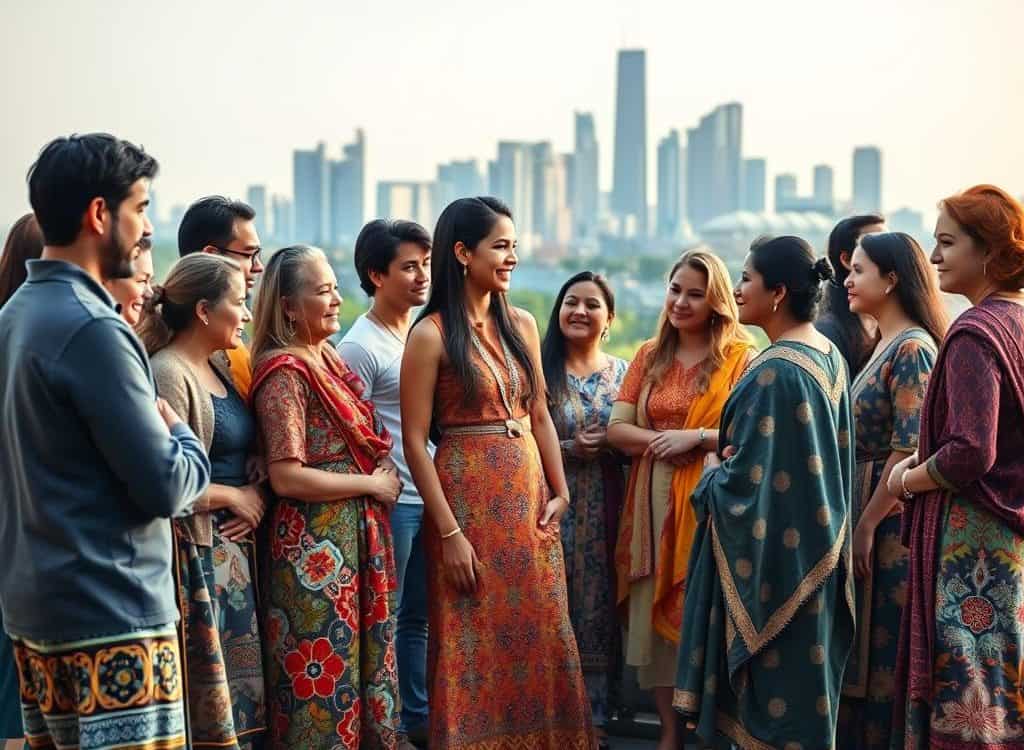
Is Multiculturalism Helping or Dividing Us?
Did you know that 78% of immigrants in Canada feel more at home in their new country than their old one? This fact challenges the idea that multiculturalism leads to division. Instead, it makes us think about belonging, fitting in, and what it means to be part of a nation.
In our world that’s more connected than ever, the question of whether multiculturalism brings us together or tears us apart is key. This article dives into the complex world of multiculturalism. We’ll look at its history, today’s impact, and how education shapes our views. As we explore, it’s clear that multiculturalism can bring people together but also makes us wonder about unity in our communities.
Key Takeaways
- Multiculturalism is a powerful force shaping modern national identities.
- While many immigrants integrate successfully, debates surrounding national unity persist.
- Education plays a critical role in fostering understanding and acceptance among different cultures.
- Political stories greatly shape how people see multiculturalism.
- Most immigrants embrace their new lives and contribute to society.
The Definition of Multiculturalism and Its Historical Context
Multiculturalism is key in today’s world. It helps different cultures live together in one place. It’s about recognizing and valuing all cultures, not just one.
This idea helps fix past wrongs by giving everyone a say in how things are run. It also protects and includes everyone.
Understanding Multiculturalism as a Policy Framework
Multiculturalism is a new way of thinking about society. It moves away from the idea of everyone being the same. Instead, it celebrates the differences between cultures.
It’s a big change from old ideas that didn’t see the value in diverse groups. Now, we understand that everyone’s worth is equal, no matter who they are.
Historical Adoption of Multiculturalism in the U.S.
In the U.S., multiculturalism has grown over time. It started with tough rules for minority groups. They were not allowed to share their cultures freely.
But, as society changed, so did its views. Now, we celebrate our differences and include everyone’s stories in our history.
The Role of Immigration in Shaping Multicultural Policies
Immigration has made the U.S. a richer place. It brings in new cultures and ideas. The rules about immigration have shaped how we live together.
As more people come, we need to make sure everyone is treated fairly. Understanding their stories helps us make better rules for everyone.
Multiculturalism Today: Fostering Unity or Division?
Today, we see multiculturalism as a delicate balance between unity and division. Community integration helps people from different backgrounds feel they belong. Organizations with multicultural policies aim for a society where everyone’s identity is respected.
This integration is key for strong relationships and social cohesion. It makes communities stronger and more united.
Evidence of Integration and Belonging in Diverse Communities
Multicultural frameworks celebrate diversity and promote equal citizenship. Scholars like Bikhu Parekh and Tariq Modood stress the value of equal membership. They believe in a society where everyone’s identity is valued.
Sports, like football, help bridge cultural gaps. They promote understanding and fight against narrow-mindedness. International tourism also plays a big role in breaking down prejudices and fostering community integration.
Challenges and Criticisms of Multicultural Policies
Despite its benefits, multiculturalism faces challenges. Critics say it can fragment national identity. John Rawls’ political concept of unity might exclude minorities.
David Miller’s national conception often ignores the history of marginalized groups. This focus on distinct identities can create parallel societies. It makes social integration and mutual understanding harder.
The Impact of Multiculturalism on Social Cohesion
The emphasis on separate identities can harm social cohesion. It makes governance and collective action harder. Immigrants face barriers to full labor market integration, leading to underemployment and economic inefficiencies.
Dealing with these issues requires ongoing dialogue and commitment. We must recognize the importance of diversity and unity for a thriving society.

The Role of Education in Promoting Multiculturalism
Education is key in creating a place where many cultures can thrive. It teaches students to be tolerant and to appreciate different cultures. With more minority students in U.S. schools, it’s clear that understanding and inclusivity matter a lot.
Goals of multicultural education help students succeed in a world full of differences. It gives them the skills to live well in a diverse society.
Multicultural Education Goals: Tolerance and Understanding
The main goals of multicultural education are to promote understanding and tolerance. By celebrating different cultures, students learn to be empathetic and open-minded. This is important because over 20% of U.S. kids speak a language other than English at home.
Introducing multilingual education and dual language programs is vital. It helps students do better in school and prepares them for a diverse workplace.
Teaching Diverse Cultural Perspectives in Schools
There are many ways to teach multicultural education in schools. For example, by using diverse literature, music, and art. This approach makes learning richer and improves student behavior and grades.
Teachers can make lessons more engaging by staying in touch with students and being culturally sensitive. They can also be flexible with their plans. Working with families and community groups helps students connect with their roots, showing the value of diversity.
Conclusion
Multiculturalism has a big impact on our society today. It can help people feel part of a community and belong. But, it’s not always easy. It can lead to misunderstandings and divisions, making it hard to unite.
These issues show that multiculturalism is not always as deep as it seems. It can turn diverse cultures into stereotypes, focusing on appearance over substance. This can make it hard to truly connect with others.
To move forward, we need to talk openly about multiculturalism’s challenges. We must be open-minded, tolerant, and empathetic. This way, we can overcome the superficial judgments and cultural exoticism that divide us.
By doing this, we can build stronger connections with each other. We can go beyond just seeing differences and truly understand each other. This will make our society more inclusive, innovative, and vibrant.
We also need to tackle historical inequalities and fight for social justice. Our efforts must truly reflect the values of diversity and inclusion. As we dive deeper into multiculturalism, I’m hopeful that we can use our diversity to create a united and inclusive society.

Leave a Reply
You must be logged in to post a comment.