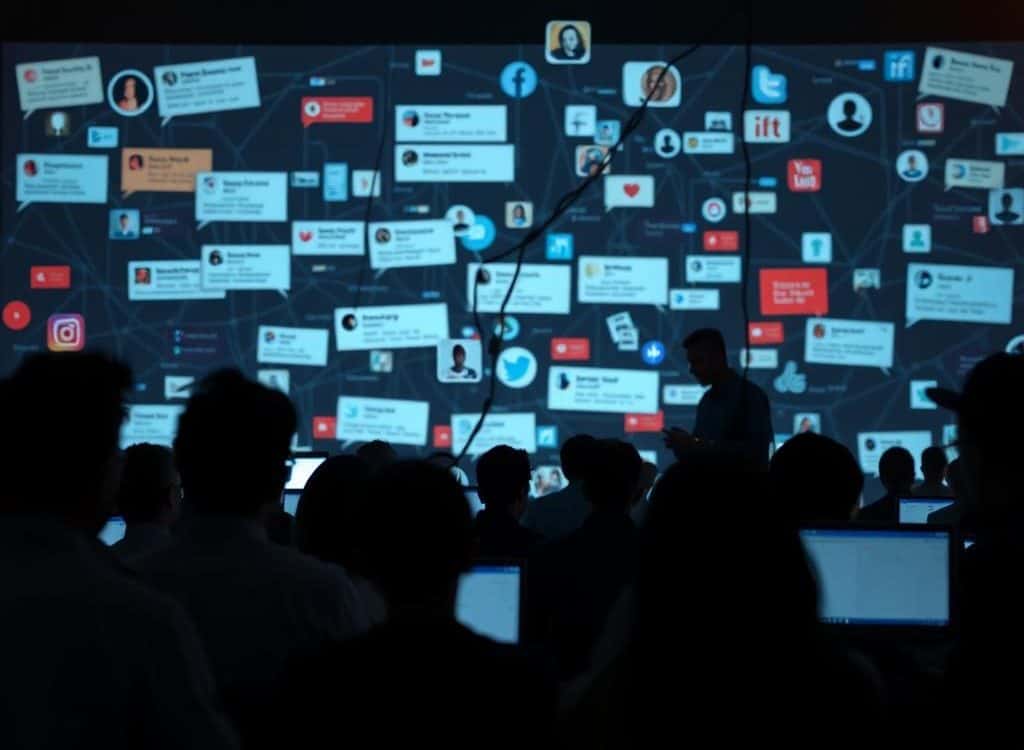
Is Free Speech in Danger? The Debate Raging Online
Did you know 62% of Americans get their news from social media? This shows how online debates shape our views of the world. It also highlights the growing concerns about free speech online.
In today’s digital world, the balance between saying what we think and avoiding censorship is tricky. The question of what’s okay to say online is complex. It affects everyone, from individuals to big groups, as they face the rules of social media.
Platforms like YouTube quickly remove content, and online bullying hurts many. A 2017 Pew Research Center survey found that a quarter of black Americans face online attacks because of their race. This is much higher than the 3% of white Americans who do.
Looking into this, we see the serious effects of social media rules. These rules can silence people who are speaking out lawfully. It’s important to think about these issues and how they affect us all.
Key Takeaways
- The majority of Americans rely on social media for news, influencing their perception of free speech.
- Automated content moderation can inadvertently suppress lawful speech.
- Racial disparities in online harassment continue to be a significant concern.
- Content moderation practices must strive for transparency and equity.
- Echo chambers intensify inflammatory discourse, complicating online debate.
Current Landscape of Free Speech Issues
The world of free speech faces big challenges, mainly online. Digital censorship is growing, making social media a key place for political talks. Finding a balance between keeping society safe and protecting free speech is hard.
Rise of Censorship in Digital Spaces
Laws in many places push tech companies to control content tightly. The European Union’s Digital Services Act (DSA) aims to stop hate speech and disinformation. Companies like Meta and Google could face big fines if they don’t follow these rules.
This effort to control speech might seem good at first. But it could also mean too much control and silence of legal opinions.
Political Rhetoric and Its Impact on Dialogue
Political words shape how we talk to each other. Accusing someone of “hate speech” can really chill the conversation. Places like Denmark have laws that punish “hate preachers,” which can silence important debates.
When being critical is seen as hostile, good talks often stop.
Case Studies of Social Media Bans
Looking at social media bans shows their impact. For example, journalists’ posts being taken down for defamation shows how fragile online speech is. In Germany, the NetzDG law requires fast removal of illegal content, leading to many hate speech charges.
These examples show that relying on machines to decide what’s okay can hurt free speech. It can silence voices instead of encouraging open talks.
The Role of Internet Laws in Free Speech
Internet laws are being created to understand the balance between online freedom and rules. The National Commission on Online Platforms and Homeland Security Act is a new law. It aims to make rules for digital platforms based on data, not just reactions.
Overview of Proposed Legislation
This new law tries to tackle the unique problems of online platforms. It wants to protect speech but also deal with harmful content. The First Amendment protects the right to information, setting a legal standard for these laws.
The National Commission on Online Platforms
The National Commission is key in making internet laws. It aims to protect free speech and hold platforms responsible. It uses research to guide its recommendations, ensuring laws are based on facts, not just stories.
Even offensive speech is protected, as seen in Matal v. Tam. This shows that all speech, no matter how unpopular, needs protection in laws.
Challenges in Implementing New Regulations
Creating new internet laws is hard, balancing user rights with regulatory needs. The Supreme Court is looking at laws from Texas and Florida. These laws would make social media platforms share certain content.
Critics, like the ACLU, say this could harm both the First Amendment rights of platforms and users. Past cases, like Miami Herald v. Tornillo, show the legal issues that can arise from such rules.

Free Speech Issues: Balancing Rights and Responsibilities
Free speech is a big topic today. We need to find a balance between our rights and our duties. By embracing different voices, we create a space where everyone’s opinions can be heard. This helps our society grow by sharing ideas.
We should respect people’s freedom to choose what they want to hear or see. This freedom lets us decide what ideas we want to explore.
Arguments for Protecting Diverse Perspectives
The government should not control what ideas we can access. John Stuart Mill said that hearing different views helps us grow. It’s important to allow free speech, even if it makes us uncomfortable.
The case of Indian Express Newspapers (Bombay) Pvt. Ltd. v. Union of India showed how important press freedom is. It proves that the media keeps us accountable by telling us the truth.
The Dangers of Censoring Speech
Censorship can have bad effects. When we block certain views, they might become more popular. This can hurt our democracy and make people doubt the news they get.
A good press should tell the truth and give a voice to those who are often ignored. This helps us understand and get along with each other better.
Public Trust and the Importance of Unfettered Debate
Trust is key to a healthy democracy. Open discussions are what make our system strong. When there’s unrest, like after George Floyd’s death, we see how important free speech is.
Police have to balance protecting our right to protest with keeping everyone safe. Using new technologies and working together helps them do this. It shows that we can protect our rights while facing big challenges.
Conclusion
Reflecting on free speech, we see how vital dialogue is. Freedom of speech is key to our democracy, letting people debate and check power. Justice Oliver Wendell Holmes called it the “marketplace of ideas,” where truth wins through diverse views.
This idea is critical for our society and democracy. It shows how important free speech is for growth and self-rule.
The fight against censorship and rules shows we need places where all opinions can be heard. The Supreme Court’s ruling on social media content shows we must keep editorial freedom online. Thinking about free speech’s future, we must weigh protecting our rights and the impact of limiting voices.
We need to talk more about free speech, involving everyone. By supporting open dialogue, we can handle free speech’s challenges and keep our society strong. It’s important to be open to all views, even the extreme ones, for a healthy public conversation.

Leave a Reply
You must be logged in to post a comment.