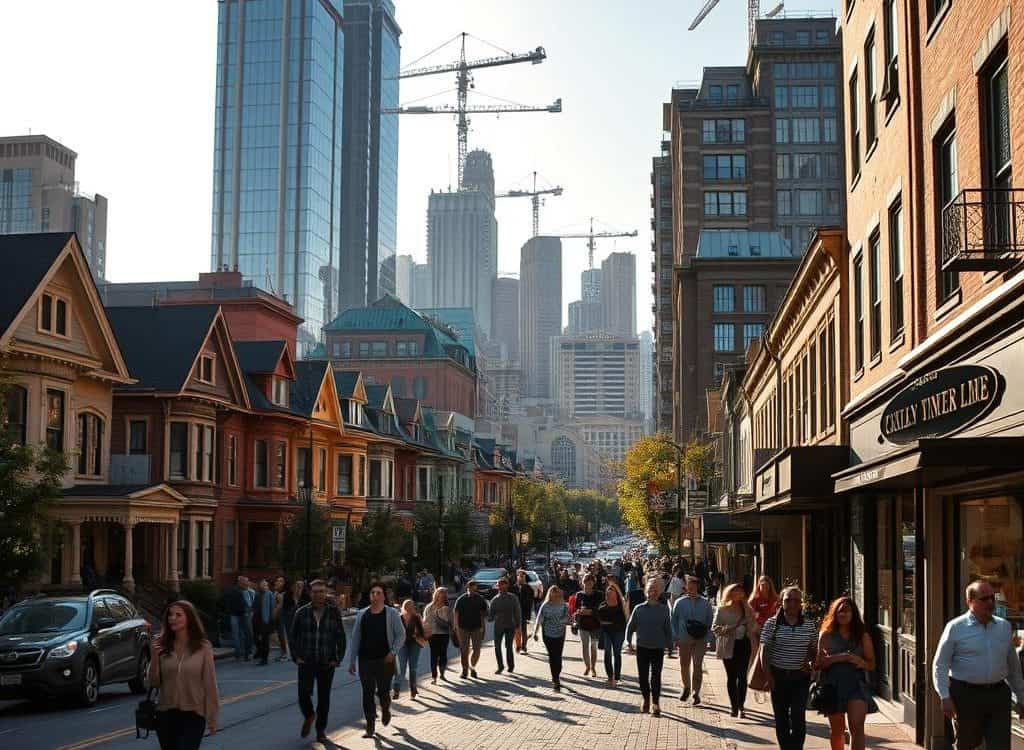
Gentrification: Who Wins and Who Gets Pushed Out?
Did you know gentrification affects about 13.2% of neighborhoods? Also, over 60% of evictions happen in low-income areas. This shows a big issue with urban renewal and neighborhood change in the U.S.
Gentrification can be good and bad. It brings in wealthier people and better services. But, it also pushes out long-time residents, mainly in poor communities. This problem started with old practices like redlining and racial covenants, hurting communities of color.
Now, the tech industry is growing fast, like in Silicon Valley. This makes housing more expensive. People are arguing about how to balance progress with keeping communities intact. In this article, we’ll look at who wins and who loses in these changes.
Key Takeaways
- Gentrification influences 13.2% of neighborhoods, with substantial effects on local populations.
- 60% of evictions occur in low-income areas, showing a stark contrast in housing stability.
- Cultural ties often weaken as communities of color face displacement during gentrification.
- The tech industry’s growth is a prominent driver of increased property values and housing costs.
- Historical policies have created systemic vulnerabilities that exacerbate the impacts of gentrification.
- Community land trusts are emerging as a resistance strategy against displacement.
Understanding Gentrification and Its Impact
Gentrification is when wealthier people move into poor neighborhoods. This changes the area and its people. It started in the mid-20th century, driven by city changes and people wanting to live close to work.
Definition and Historical Context
Gentrification means higher property values and more affluent people. Cities like Austin, Dallas, and Houston see job growth. This makes neighborhoods more valuable and attractive.
Drivers of Gentrification
Several things make housing costs go up. Tight housing markets and a desire for city life are big factors. Cultural spots and diverse areas draw in wealthier people.
Government policies, like tax breaks, help this trend. But, it hurts low-income families and minorities. They can’t afford the rising costs, changing their neighborhoods.
Who Wins in the Gentrification Process?
In the complex world of gentrification, some groups clearly come out on top. It’s important to look at the economic gains for newcomers, local governments, and developers. Understanding who benefits can help us see the big picture for the communities involved.
Economic Benefits for New Residents
Newcomers in gentrifying areas see big economic wins. As property values go up, homeowners gain more equity. This opens doors for financial growth. Investing in local businesses and improving infrastructure also boosts community resources.
Children in these areas often get better education. This is because they’re surrounded by peers who are doing well. Some studies even show that mental health can get better due to less crime and safer streets.
Job creation is another plus. New investments and spending in these areas create jobs. Better public transport, like light rail, also raises housing prices and speeds up gentrification.
Local Government and Developers
Local governments see a big financial boost from gentrification. With higher property values, they get more tax money. This lets them improve infrastructure and public services.
New businesses and amenities, like restaurants, draw in more people. This diversity fuels economic growth. Real estate development is key here. Developers make a lot from the demand for upscale housing and commercial spaces.
This demand keeps investments coming in. It changes the economic landscape of these areas. The link between new jobs and development projects drives local economies forward, reshaping neighborhoods.
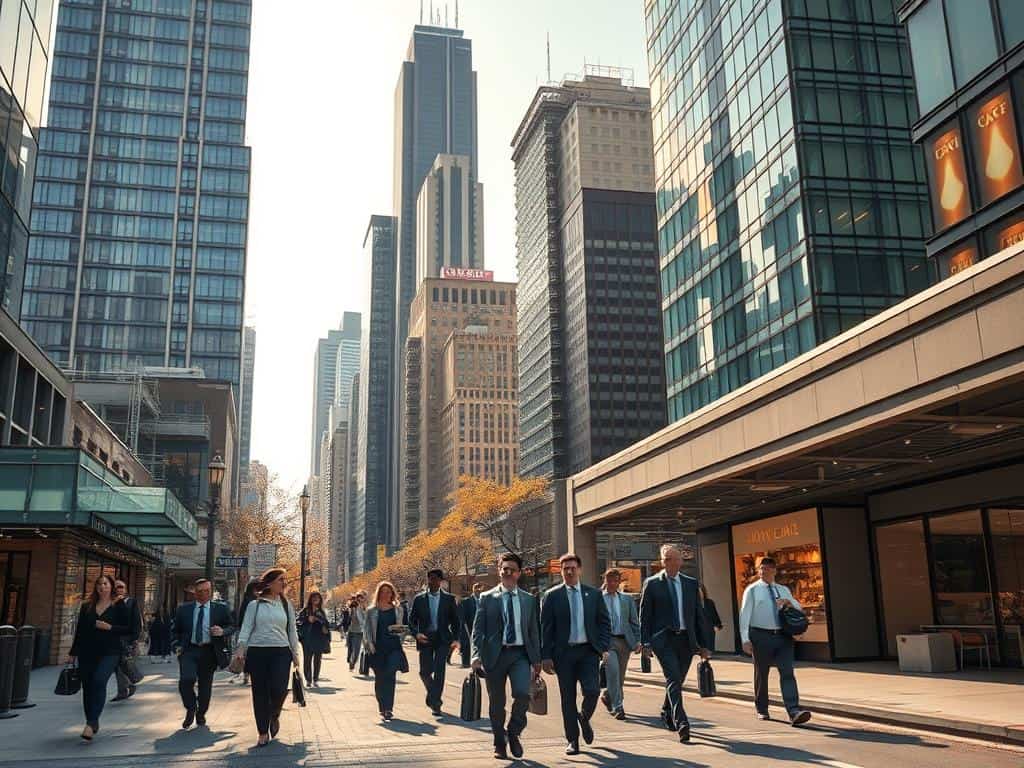
Gentrification: Who Gets Pushed Out?
Gentrification brings big challenges for long-time residents. They often get pushed out of neighborhoods they’ve lived in for generations. Rising property prices and higher rents force many low-income families and communities of color to look for new homes.
This displacement often means direct evictions. It shows a system that values profit over the needs of those already living there. The effects of such displacement are wide-reaching, changing the social fabric of neighborhoods.
Displacement of Long-Term Residents
Statistics show Hispanic and Black renters face evictions more often than White renters. This shows a deep inequality rooted in economic pressures. Mothers who get evicted are 20% more likely to feel depressed than others.
Displaced people often face behavioral and emotional challenges. These include higher risks of teenage pregnancy and substance abuse. The trauma of displacement affects not just individuals but also the community’s stability.
Cultural and Community Changes
As neighborhoods change, cultural shifts become clear. Local businesses close, replaced by new amenities for wealthier residents. This disrupts the social bonds that hold communities together.
The legacy of policies like redlining also shapes these changes. Areas once seen as “hazardous” for investment now see rising property values. This displaces vulnerable populations and weakens community organizing efforts.
Conclusion
Gentrification is a complex issue with both good and bad sides. It can bring new life to neighborhoods but also pushes out long-time residents. This problem is seen in many cities, affecting communities of color the most.
In 2010, over 75% of the poor in urban areas were African American or Latino. This shows the racial gap in cities. Gentrification can make it hard for low-income families to stay in their homes.
Only 1 in 20 poor areas have become less poor in 50 years. The number of poor areas has tripled. We need to find ways to stop displacement and make sure everyone has a place to live.
Projects like Melrose Commons in the South Bronx are good examples. They show how to develop neighborhoods without pushing people out.
To solve gentrification, we need more than just local efforts. We must tackle wealth inequality and the changing economy. Working together, we can make cities better for everyone.

Leave a Reply
You must be logged in to post a comment.