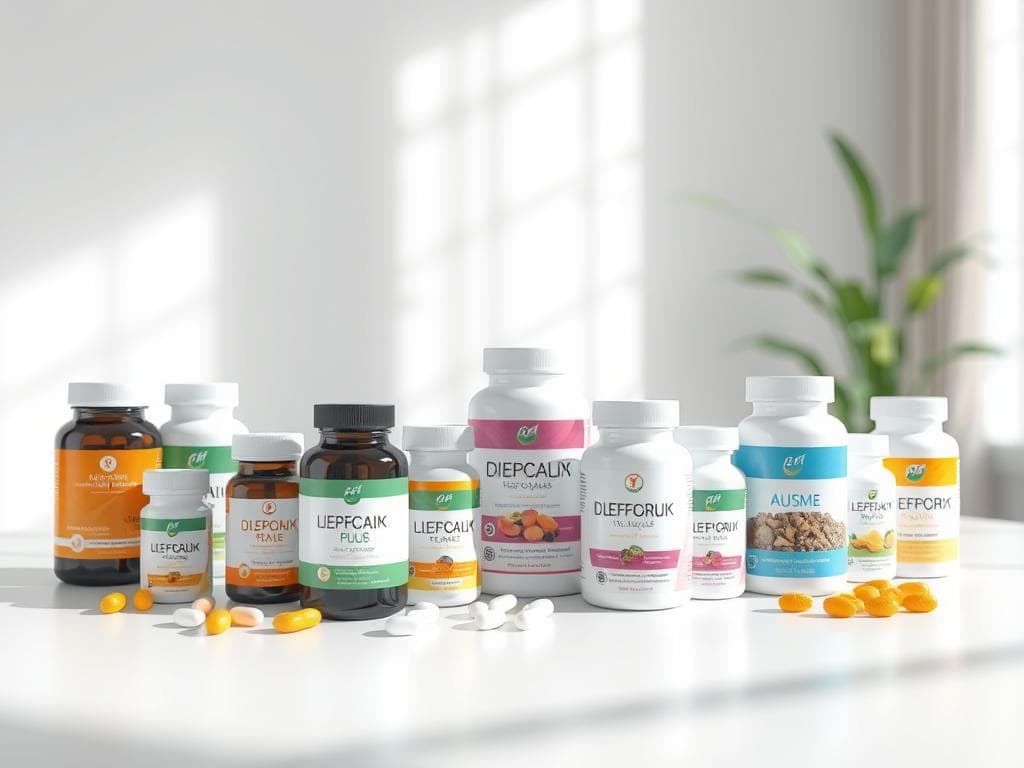
Health Supplements: Do They Really Work?
Did you know over half of all Americans take dietary supplements? This shows how much people rely on them. The health supplement industry makes over $12 billion a year. But, do these supplements really help our health?
Many think taking multivitamins boosts their health. But, experts from places like Johns Hopkins School of Medicine say it’s better to eat nutrient-rich foods. They found that multivitamins don’t really help prevent big health problems like heart disease and cancer.
So, what’s the best way to get the nutrients we need? Eating foods like fruits, vegetables, whole grains, and lean proteins is key. This way, we can get the nutrients our bodies need without relying on supplements.
Key Takeaways
- Over half of Americans regularly take dietary supplements.
- Health supplement spending exceeds $12 billion annually.
- Many multivitamins lack proven benefits for serious health conditions.
- Experts suggest focusing on whole foods for necessary nutrients.
- The FDA does not rigorously review supplements for safety or effectiveness.
Understanding the Popularity of Health Supplements
Health awareness is on the rise, and so is the market for supplements. Over three-quarters of Americans take at least one dietary supplement. They do this for various reasons, like filling nutritional gaps or seeking specific health benefits.
The Growing Market for Supplements
The market for supplements has grown a lot in recent years. The FDA says supplements are treated like food, not drugs. This means companies can add new ingredients without always telling the FDA first.
Popular items like multivitamins, vitamin D, and omega-3 fatty acids come in many forms. These include tablets, gummies, and drinks. More people are using them, with 57.6% of U.S. adults aged 20 and over taking supplements in 2017-2018. This is up from 48.4% a decade ago.
Why Do People Choose Supplements?
My choices are often driven by trends and convenience. Many, including older adults, use supplements to boost their health. Research shows women are more likely to use them than men, and this use increases with age.
For example, 80.2% of women aged 60 and over use supplements. Some take them for specific health issues, like calcium for bone health. Others follow popular advice. The belief that supplements are quick and easy solutions makes them popular, even with mixed research on their benefits.
Health Supplements: Do They Really Work?
Exploring health supplements reveals a world of mixed messages and unclear results. Many people take supplements hoping to improve their health, but the proof is often lacking. There are big gaps in supplement evidence, and many products make health claims without solid backing.
The Evidence Behind Supplements
Experts say healthy people on a good diet usually don’t need supplements. This raises questions about the need for so many products. With nearly 80,000 dietary supplements out there, many haven’t been tested for safety or how well they work.
Some products, like green tea extract, can be very dangerous. They’ve been linked to liver failure. The lack of testing means there’s a risk of contamination in supplementation safety.
Potential Risks of Supplementation
The FDA doesn’t check supplements before they hit the market. This adds to the risks of dietary supplements. The law requires labels to show what’s in the product, but some products don’t follow this rule.
Some supplements might help, like fish oil for the heart. But the evidence is not strong. For most people, taking supplements won’t make a big difference. It’s important to talk to a doctor before starting any supplements. This way, you can make smart choices in the world of health supplements.

The Role of Vitamins in Weight Loss and Muscle Gain
Vitamins are key for good health, helping with weight loss and muscle gain. They help with metabolism, but relying only on them can be disappointing. They work best when part of a balanced diet and regular exercise.
The Truth About Vitamins and Weight Management
B-complex vitamins are important for metabolism. They help turn food into energy, which is key for weight control. Foods like beans, lentils, and lean meats are good sources. Vegans might need B12 supplements because it’s hard to get from plants.
Vitamin D is linked to energy and metabolism, but its effect on weight loss is not clear. I eat foods like cod liver oil and fortified dairy to get enough. If I’m low, I might need to take supplements.
Identifying Deficiencies
Nutritional gaps can slow down weight loss and muscle gain. Iron is key for oxygen to muscles and energy. Low iron leads to tiredness, making it hard to work out.
I eat foods like shellfish and leafy greens to get enough iron. I also pair them with vitamin C to help my body absorb it better.
Magnesium helps muscles and energy. I eat nuts and seeds to get enough, but I watch how much I take to avoid stomach problems. Green tea extracts are popular for weight loss, but I prefer getting antioxidants from whole foods.
Before taking supplements, I talk to a doctor. They help figure out what I need and if supplements are safe for me. Fixing nutritional gaps can really help with health, including weight and muscle.
Conclusion
Health supplements are a big part of our diets, but their true value is debated. Many people, 35.9% of men and 43.8% of women, take them every day. They hope to fill nutrition gaps. But, most of us can get what we need from a balanced diet.
Supplements can help in some cases, like with folic acid or omega-3. But, they also have risks. Side effects and interactions with medicines are serious concerns. Sadly, 59% of users don’t talk to doctors about their supplements.
If you’re thinking about adding supplements, talk to a healthcare provider first. Knowing your health needs is key. Eating well and living healthy can boost your well-being. This way, you might not need supplements as much.

Leave a Reply
You must be logged in to post a comment.