
What Happened When They Put a Homeless Man in a Suit
Did you know that 45% of homeless people can get housing in just ten months with the right help? This fact shows how big of a difference social views and looks can make. I did a social experiment from June 4th to June 8th, 2009, where I became homeless. I saw how people’s reactions changed just by what I wore.
For five days and four nights, I had only a backpack, a $5 Wal-Mart sleeping bag, and a few important things like a notebook and my iPhone. I wanted to see how society views homelessness. By looking disheveled and not shaving, I saw how clothes change how people treat you.
This experiment showed me how looks can change how others treat you. It was a scary but eye-opening experience. I learned how important looks are in society and how they affect our dignity and self-worth.
Key Takeaways
- Appearance significantly affects social interactions and perceptions.
- Clothing can alter the way individuals are treated in public spaces.
- Experiments reveal insightful social dynamics regarding homelessness.
- Support networks play a vital role in helping those experiencing homelessness.
- Simple changes in perceived professionalism can influence public generosity.
- Understanding the psychology of appearance can encourage empathy and action.
Understanding the Impact of Appearance on Social Perception
Clothing greatly affects how we interact with others. What we wear shows our style and sends messages that shape how others react. It sets the stage for how we connect with others, based on what they first see.
How Dress Influences Human Interaction
Studies show that what we wear impacts how we’re seen. For example, people often think those who look good are smart and kind. This shows how our looks can change how others see us, in both personal and work settings. Wearing nice clothes can make us seem more approachable and friendly.
The Role of First Impressions
First impressions are key in forming opinions about someone. A study found that most people are seen as average in looks, with few being seen as very attractive. Even big changes in how we look don’t always change how others see us.
Research showed that people judge things like a teacher’s skill based on how they first look. A good first impression can lead to positive views in many areas. But a bad one can really hurt how we’re seen. Knowing this can help us better navigate social situations.
Social Experiment Results: Reactions to Homelessness
Recent studies have shown how people react to homelessness. They found big differences in how society views and helps those in need. By dressing a homeless man in a suit, researchers wanted to see if people would help more.
Comparing Reactions: Suit vs. Casual Attire
When a person wears a suit, people react differently than when they wear casual clothes. In many tests, people were more likely to help someone in a suit. This shows a big bias where how someone looks affects how much help they get.
It’s clear that people are more willing to help if someone looks put-together. This shows how big a difference clothes can make in getting help from others.
Analyzing the Differences in Help Received
The clothes someone wears can greatly affect the help they get. When dressed as homeless, people got little help. But, when dressed in a suit, they got a lot more support.
People were more eager to help when they thought someone was capable or respectable. This shows that how someone looks can change how others react to them.
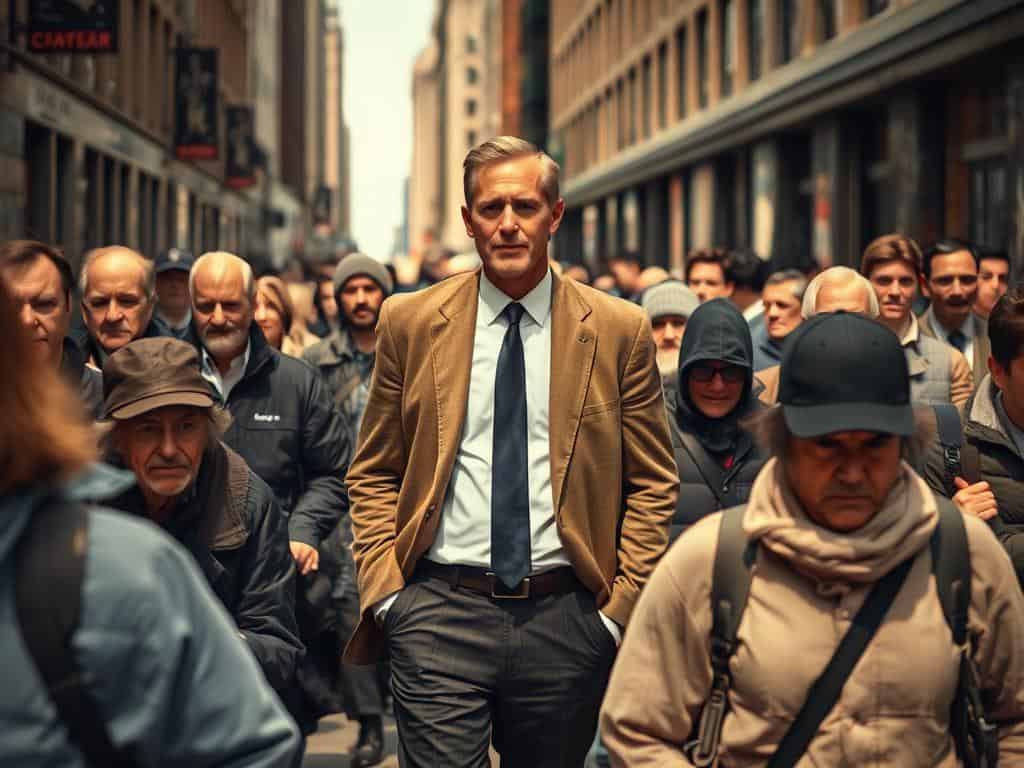
Case Study: A Homeless Man’s Journey in a Suit
Dylan is a standout in my research on homelessness. He shows incredible resilience and self-worth. Despite living on the streets, he wore a brown suit every day.
His choice was more than just fashion. It was a powerful statement about keeping dignity in tough times. Talking to him, I realized that keeping personal pride was key to his identity.
The Story of Dylan: Finding Dignity and Worth
Dylan’s story is a testament to the human spirit. Every day, he faced judgment but never lost his belief in his appearance. He believed his look could change how people saw him.
He fought for respect in a harsh world. His suit was not just clothes; it was his shield against the stigma of homelessness.
Lessons Learned from Personal Encounters
Talking to Dylan changed how I see homelessness. I saw that what looks like a facade can actually be a source of strength. Our talks showed me the power of dignity in hardship.
These moments taught me the value of empathy. They showed me that every person’s struggle is a deep life experience.
Conclusion
Looking back at Dylan’s journey, it’s clear how looks affect how we see people, like those without homes. We often judge based on how they dress, missing the chance to really see them. This shows how hard it is to break free from what society expects of us, even when it’s hard to see.
Our study showed some disturbing facts about how we act. The Asch Conformity Experiments showed many of us follow the crowd, even if it means ignoring our own feelings of kindness. This makes me think about how we can challenge these norms and think more about others.
In the end, this experiment teaches us a lot about changing. We need to look beyond what we see and understand the person inside. By doing this, we can help our society see the value in everyone, no matter their appearance. This could lead to a community that is more open and understanding.

Leave a Reply
You must be logged in to post a comment.