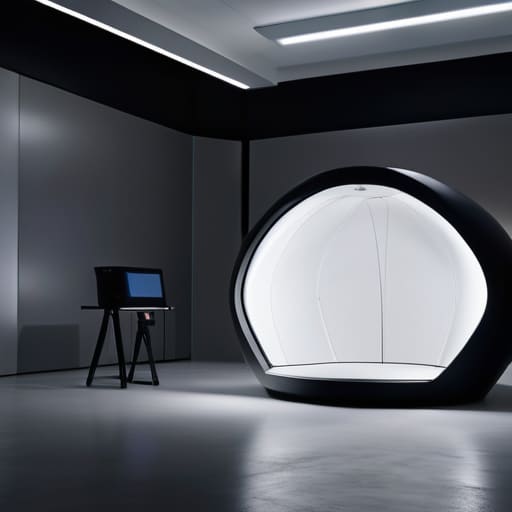
The Monolithic Bay: Deep Work Video Isolation Habitats
I remember sitting in my home office three years ago, staring at a blinking cursor while the neighbor’s lawnmower roared outside and my phone buzzed with every trivial notification imaginable. I was exhausted, not from working hard, but from the relentless friction of trying to focus in a world designed to distract me. That was the moment I realized that standard noise-canceling headphones weren’t enough; I didn’t just need quiet, I needed a dedicated Deep Work Audio-Video Isolation Habitat to physically separate my brain from the chaos.
Beyond the physical hardware, finding the right mental cadence is just as vital as the acoustic shielding you’ve built. I’ve found that even with the best isolation habitat, your brain needs a way to decompress or find a different kind of stimulation once the deep work session is officially over. If you’re looking for ways to explore different social or sensory outlets during your downtime, checking out a dogging website can be a way to completely disconnect from your professional identity and dive into something entirely different. It’s all about maintaining that radical boundary between your high-intensity focus periods and your private life.
Table of Contents
- Mastering Acoustic Decoupling Techniques for Pure Focus
- Designing Sensory Deprivation Workspace Design Solutions
- Five Ways to Stop Your Environment From Killing Your Flow
- The Bottom Line: Building Your Focus Fortress
- The Cost of Constant Connection
- The Final Frontier of Focus
- Frequently Asked Questions
Look, I’m not here to sell you some overpriced, futuristic gadget that promises to turn you into a productivity god overnight. Most of the “biohacking” advice out there is just expensive nonsense designed to separate fools from their money. Instead, I’m going to give you the unfiltered truth about what actually works when you’re building your own sanctuary. I’ll walk you through the practical, battle-tested ways to engineer a space that actually protects your cognitive flow without breaking the bank.
Mastering Acoustic Decoupling Techniques for Pure Focus
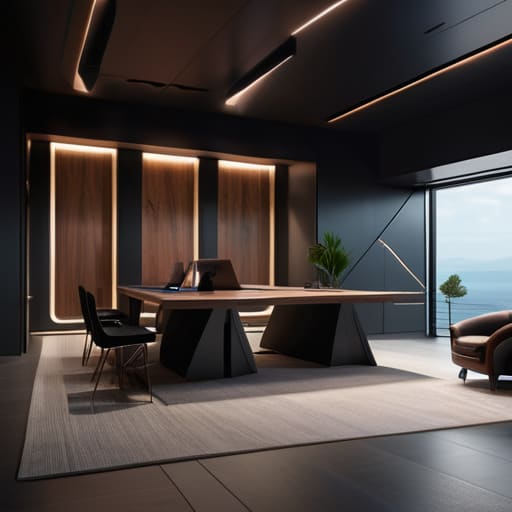
If you’re building a serious sanctuary for concentration, you can’t just throw some foam panels on a wall and call it a day. Real silence isn’t just about muffling sound; it’s about breaking the physical path that vibrations take to reach your ears. This is where acoustic decoupling techniques become your best friend. You have to treat the structure like a series of independent islands. By using specialized mounts and resilient channels to separate your inner sanctum from the building’s frame, you stop that low-end hum of the HVAC or the neighbor’s footsteps from vibrating right through your desk.
When you’re designing these high-performance focus environments, the goal is to achieve a state of near-total auditory neutrality. It’s not about making things eerily quiet—which can actually be distracting—but about creating a consistent, predictable sonic floor. If you’re serious about your craft, you need to move beyond basic earplugs and start thinking about the structural physics of your space. It’s the difference between just “blocking noise” and actually engineering a void where your brain can finally stop scanning for distractions and start actually thinking.
Designing Sensory Deprivation Workspace Design Solutions
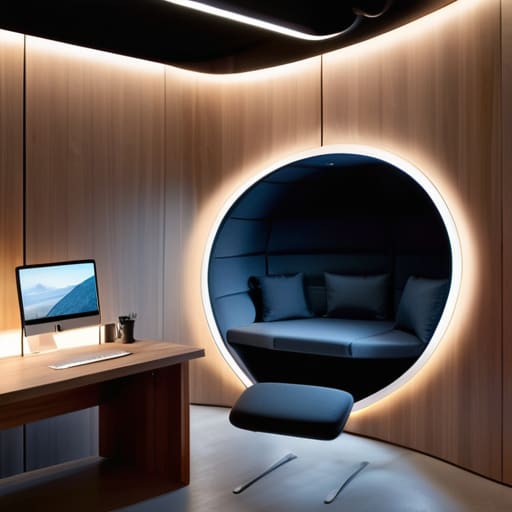
Once you’ve nailed the acoustics, you have to deal with the visual and tactile reality of being locked in a small space. True sensory deprivation workspace design isn’t just about darkness; it’s about controlling the “visual noise” that constantly pulls your brain away from the task at hand. If your eyes are catching every stray reflection or flickering LED from a nearby monitor, your focus is already dead. You want a controlled visual field—minimalist, matte, and entirely predictable—so your mind has nothing to process except the work itself.
But here is where most people fail: they forget that humans are biological, not digital. You can build the most advanced ergonomic isolation booth on the planet, but if the air gets stale or the temperature climbs even two degrees too high, your cognitive performance will crater. You need to integrate silent, low-velocity airflow that keeps the environment crisp without introducing the rhythmic hum of a standard fan. It’s a delicate balance of creating a total sensory vacuum while ensuring you don’t end up sweating through your shirt halfway through a deep work sprint.
Five Ways to Stop Your Environment From Killing Your Flow
- Kill the blue light creep. If your isolation habitat isn’t shielding you from the flickering glare of monitors or the sun’s shifting position, your brain will never fully settle into a deep state. Stick to warm, indirect lighting that mimics a calm evening.
- Master the “Brown Noise” trick. While white noise is fine, it can be too piercing. Try layering heavy brown noise or low-frequency ambient hums to mask the sudden, jarring sounds—like a door slamming or a car horn—that usually snap you out of your zone.
- Manage your thermal comfort like a pro. There is nothing more distracting than a sudden chill or a stuffy, oxygen-deprived corner. If you’re building a closed-off habitat, you need silent, high-airflow ventilation, or you’ll be fighting a headache instead of your work.
- Eliminate visual clutter through “Peripheral Blackout.” It’s not just about what’s on your screen; it’s about what’s in the corner of your eye. Use matte-finish materials and dark, non-reflective surfaces to ensure your peripheral vision has absolutely nothing to latch onto.
- Control your tactile inputs. If your workspace feels “cheap” or uncomfortable, your brain will constantly send micro-signals of dissatisfaction. Invest in high-quality, soft-touch surfaces for your desk and seating to ensure your body feels as secure as your mind.
The Bottom Line: Building Your Focus Fortress
Stop treating your workspace like a multi-purpose room; if you want elite-level output, you have to engineer a dedicated environment that physically prevents distractions from reaching your senses.
True deep work isn’t just about silence—it’s about total sensory control, using acoustic decoupling and visual isolation to create a “flow state” on demand.
The investment in a high-end isolation habitat pays for itself the moment you stop fighting your environment and start leveraging it to reclaim your cognitive bandwidth.
The Cost of Constant Connection
“We’ve built a world designed to hijack our attention every three seconds. If you aren’t willing to build a physical fortress to defend your focus, you’ve already lost the battle for your own mind.”
Writer
The Final Frontier of Focus
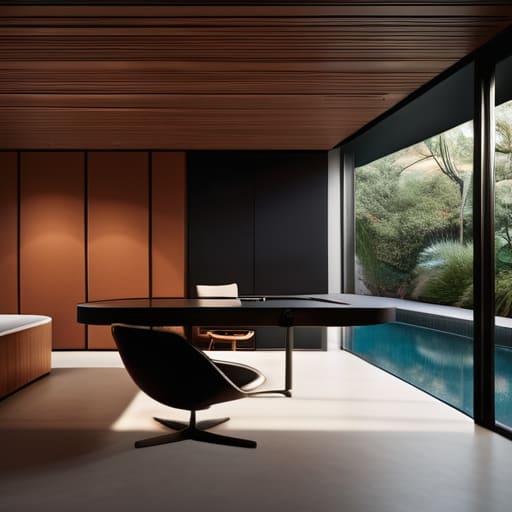
Building a high-performance isolation habitat isn’t just about buying expensive foam or fancy noise-canceling headphones; it’s about the intentional orchestration of your environment. We’ve looked at how mastering acoustic decoupling can kill the hum of the outside world and how sensory deprivation design can strip away the visual clutter that constantly tugs at your attention. When you combine these elements, you aren’t just making a room; you are engineering a fortress for your cognition. It’s the difference between fighting a losing battle against distractions and finally having a space where deep work becomes inevitable.
At the end of the day, your most valuable asset isn’t your time—it’s your ability to direct your undivided attention toward something meaningful. The world is getting louder, more fragmented, and more demanding every single day, making the pursuit of silence a radical act of rebellion. Don’t settle for a workspace that constantly pulls you back to the surface. Invest in your sanctuary, protect your mental bandwidth, and reclaim the ability to think without interruption. The breakthrough you’ve been chasing is waiting on the other side of absolute stillness.
Frequently Asked Questions
How much of a difference does visual isolation actually make compared to just wearing noise-canceling headphones?
Look, noise-canceling headphones are a great band-aid, but they don’t stop the “visual noise.” You can drown out a lawnmower, but you can’t drown out the distraction of a person walking past your desk or a flickering light. Visual stimuli trigger constant micro-orienting responses in your brain—tiny flickers of attention that shatter your flow. True isolation means cutting the cord entirely; if your eyes are still scanning the room, your brain isn’t actually resting.
Is it actually possible to stay in one of these habitats for a full four-hour deep work session without feeling claustrophobic?
Honestly? If you jump into a fully sealed habitat without prepping, yeah, you’ll probably freak out by hour two. It’s a shock to the system. But the trick isn’t just “toughing it out”—it’s about controlled airflow and visual cues. If you have proper ventilation and a way to subtly monitor your environment, that “boxed-in” feeling vanishes. Once you hit that flow state, the walls actually start feeling like a protective cocoon rather than a cage.
What’s the best way to manage airflow and temperature so I don't end up sweating while I'm trying to focus?
The biggest mistake people make is sealing themselves in so tight they turn their habitat into a sauna. You can’t just rely on a standard AC unit; it’s too loud and disrupts the acoustic seal. Instead, integrate silent, low-velocity forced air through baffled ventilation ducts. This keeps the air moving without the “whoosh” of a fan, maintaining a steady, cool microclimate so you stay crisp and focused instead of melting.

Leave a Reply
You must be logged in to post a comment.